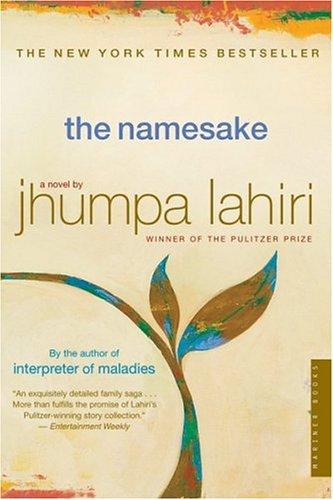
Talk to The Namesake like its author wrote you back.
Get the ideas that fit your life — not generic summaries.
- Chat with the book
- Audiobook-style main ideas
- Adapts to your life and goals
- Helps you take action
The Namesake, in detail
The Namesake follows the Ganguli family across three decades, beginning with Ashoke and Ashima's arranged marriage and their immigration from Calcutta to Cambridge, Massachusetts, and extending into the American adulthood of their son, Gogol. Gogol — named after the Russian writer Nikolai Gogol in a story rooted in Ashoke's near-death experience — grows up resenting the name that marks him as different, eventually legally changing it to Nikhil. The novel is structured around that act and everything it costs him.
The book is ultimately about what we inherit and what we try to shed. Lahiri traces how Gogol oscillates between the Bengali world of his parents — rice and fish, faded photographs, the smell of a Calcutta kitchen in a Massachusetts suburb — and an American life of girlfriends, Manhattan apartments, and a career that has little to do with his roots. His parents' sacrifice is real but unspoken; the cost of their displacement is registered in small humiliations and persistent homesickness that Gogol cannot yet recognize as such. The title is a double meaning: the name is burden and gift, the name is also what the parents carry forward.
Lahiri writes in a spare, precise prose that accumulates weight through accretion rather than dramatic events. Time moves quickly — sometimes years in a paragraph — and the result is that the book reads like a family album, full of moments you recognize from lived experience rather than from other novels. The novel won no shortage of praise partly because it handled a story that had rarely been told with this much nuance: second-generation immigrant experience in the United States, the specific friction of Bengali American identity, and the way children absorb the dislocation their parents chose to endure.
Readers who want a plot-driven novel will be slightly disappointed — the drama is interior and cumulative, not explosive. Those who have ever felt at war with a name, a heritage, or a parent's expectations will find it deeply recognizable. Lahiri's debut collection, Interpreter of Maladies, is an easier entry point; The Namesake is slower, more diffuse, and rewards patience. Comparable in emotional register to Mohsin Hamid's The Reluctant Fundamentalist or Chimamanda Ngozi Adichie's Americanah in its interest in what assimilation costs.
The big ideas
- 1.
The novel frames identity as something built over decades through small daily choices, not declared at a single moment of self-discovery.
- 2.
Names carry the accumulated weight of others' love, expectation, and longing. Changing your name is never a clean break.
- 3.
First-generation immigrants grieve their home in ways they often don't articulate to their children, and the children absorb the grief without understanding it.
