Politics · Book club
The New Jim Crow: Mass Incarceration in the Age of Colorblindness book club questions
Here are 12 book club questions for The New Jim Crow: Mass Incarceration in the Age of Colorblindness by Michelle Alexander, ordered to open easily and end somewhere worth arguing about. Copy them, print them, or bring them up one at a time.
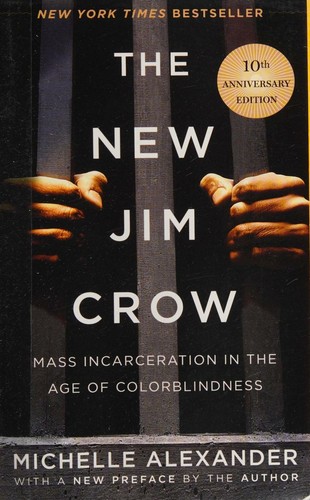
Michelle Alexander's central argument is stark: the United States has not ended racial caste, it has merely redesigned it.
Michelle Alexander · 2010 · 6h 45m
Full summary and key takeaways →The 12 questions
- 1.
Alexander argues the racial disparities in drug enforcement are too systematic to be explained by individual bias alone. What would it take to convince a skeptic that a system can be racially discriminatory without racially discriminatory intent?
- 2.
The book draws an explicit parallel between mass incarceration and Jim Crow. Where does that parallel feel most persuasive to you, and where does it feel like it overstates the case?
- 3.
Colorblindness is Alexander's central target — the belief that race-neutral laws produce race-neutral results. Where else in public life does this assumption operate, and what are its consequences there?
- 4.
Alexander contends that the War on Drugs was not primarily about drugs. What evidence from the book supports that claim, and what alternative explanations compete with it?
- 5.
The collateral consequences of felony conviction — loss of housing, voting, benefits — are legal and often invisible to people who haven't experienced them. Did learning about them change how you think about criminal sentences?
- 6.
What role does prosecutorial discretion play in the system Alexander describes? Who holds that discretion accountable, and is that sufficient?
- 7.
Alexander argues that the civil rights community made a strategic error by not fighting the War on Drugs more aggressively in the 1980s and 1990s. What political pressures do you think shaped that choice?
- 8.
The book insists that a genuine reform movement must center people with felony records rather than distance itself from them. What political or social obstacles stand in the way of that kind of coalition?
- 9.
Alexander is trained as a lawyer and writes accordingly. Did you find her argument persuasive, or did you want different kinds of evidence — statistical, ethnographic, comparative — than the book provides?
- 10.
Is it possible to hold both that individuals are responsible for their choices and that systems shape which choices are available and which carry catastrophic penalties? How do you navigate that tension?
- 11.
The book was published in 2010. Given what has happened since — Black Lives Matter, the pandemic, the 2020 uprisings, bipartisan criminal justice reform efforts — which of Alexander's predictions have aged well, and which have not?
- 12.
What would Alexander's proposed solution — a broad civil rights movement inclusive of formerly incarcerated people — require of people who have not been directly touched by the criminal justice system?
How to run the discussion
- Pick six to eight, not all of them. An hour of real discussion covers fewer questions than anyone expects, and racing the list is what makes a book club feel like homework.
- Open with what people noticed, not what they concluded. Asking for a verdict first hardens opinions before anyone has heard each other.
- Let the disagreement run. The questions below that split a room are the ones worth the time; the ones everyone answers the same way can be skipped.
- Ask the quiet person a specific question. A direct, narrow question is far easier to answer than an open invitation to contribute.
Themes worth steering toward
If the conversation stalls, these are the threads that usually restart it.
Common questions
What are good book club questions for The New Jim Crow: Mass Incarceration in the Age of Colorblindness?
Here are 12 book club questions for The New Jim Crow: Mass Incarceration in the Age of Colorblindness by Michelle Alexander, ordered to open easily and end somewhere worth arguing about. The strongest openers ask what each reader noticed rather than what they concluded, and the discussion usually turns on mass incarceration, racial caste, criminal justice.
How long should a book club discussion of The New Jim Crow: Mass Incarceration in the Age of Colorblindness last?
Most groups run 60 to 90 minutes of actual discussion. That is roughly six to eight questions, not all of them, so pick the ones that suit your group rather than working down the list in order.
What are the main themes in The New Jim Crow: Mass Incarceration in the Age of Colorblindness?
Mass incarceration, Racial caste, Criminal justice, Systemic racism, Civil rights. Those are the threads most likely to divide a room, which makes them the useful places to steer a discussion that has gone quiet.
Picking the next one? See books like The New Jim Crow: Mass Incarceration in the Age of Colorblindness or questions for other book club picks.
