Historical fiction · Book club
The Nickel Boys book club questions
Here are 12 book club questions for The Nickel Boys by Colson Whitehead, ordered to open easily and end somewhere worth arguing about. Copy them, print them, or bring them up one at a time.
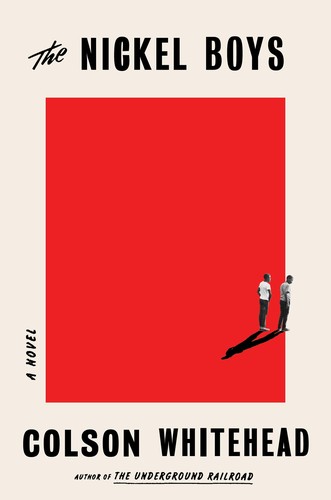
The Nickel Boys is based on the Dozier School for Boys in Florida, a reform school that operated for over a century and was the site of sustained physical, sexual, and emotional abuse — particularly of its Black students.
Colson Whitehead · 2019 · 4h 30m
Full summary and key takeaways →The 12 questions
- 1.
Elwood is sustained by his faith in King's vision of America. Does the novel suggest this faith is admirable, naive, or both? Does it change your answer that the novel is set in the early 1960s rather than the present?
- 2.
Turner tells Elwood early on that the only way to survive is to not make trouble. Is he right? Does the novel endorse his approach, or does it ultimately judge him for it?
- 3.
The Nickel Academy is based on a real school. Does knowing this change how you read the novel? Does fiction feel like the right form for this material?
- 4.
The final structural twist — which we can discuss openly here — reframes whose story this has been all along. Did you see it coming? Does it change how you understand Elwood and Turner's relationship?
- 5.
The staff at Nickel are not all depicted as sadistic monsters — some of them are mundane, rule-following people. Does that make the novel's argument more or less disturbing?
- 6.
Elwood's grandmother has a particular kind of faith in hard work and propriety as a path forward. The novel gently suggests she is wrong. Is it fair to her generation's choices?
- 7.
Compare Elwood and Turner to characters in other novels about institutional injustice you've read. What does Whitehead do differently with the idealist/realist pairing?
- 8.
The novel is very short for its subject matter. Did the compression feel like a strength or a limitation? Were there things you wanted more of?
- 9.
How does The Nickel Boys fit alongside The Underground Railroad as a body of work? Does reading both novels change what you think Whitehead is trying to do?
- 10.
The reckoning that happens at the end of the novel — the excavation of the school grounds — is real. How does historical reality function in the novel's conclusion? Does the factual ending feel earned by the fiction?
- 11.
Several real reform schools like the Dozier School are still operating today. Does the novel feel like a document of history or a description of the present?
- 12.
Who should have to read this novel? Is there a version of this question that asks whether certain American citizens have an obligation to know this history?
How to run the discussion
- Pick six to eight, not all of them. An hour of real discussion covers fewer questions than anyone expects, and racing the list is what makes a book club feel like homework.
- Open with what people noticed, not what they concluded. Asking for a verdict first hardens opinions before anyone has heard each other.
- Let the disagreement run. The questions below that split a room are the ones worth the time; the ones everyone answers the same way can be skipped.
- Ask the quiet person a specific question. A direct, narrow question is far easier to answer than an open invitation to contribute.
Themes worth steering toward
If the conversation stalls, these are the threads that usually restart it.
Common questions
What are good book club questions for The Nickel Boys?
Here are 12 book club questions for The Nickel Boys by Colson Whitehead, ordered to open easily and end somewhere worth arguing about. The strongest openers ask what each reader noticed rather than what they concluded, and the discussion usually turns on racial injustice and incarceration, lost futures, survival and complicity.
How long should a book club discussion of The Nickel Boys last?
Most groups run 60 to 90 minutes of actual discussion. That is roughly six to eight questions, not all of them, so pick the ones that suit your group rather than working down the list in order.
What are the main themes in The Nickel Boys?
Racial injustice and incarceration, Lost futures, Survival and complicity, American institutions and their violence, Memory and reckoning. Those are the threads most likely to divide a room, which makes them the useful places to steer a discussion that has gone quiet.
Picking the next one? See books like The Nickel Boys or questions for other book club picks.
