Fantasy · Book club
The Night Circus book club questions
Here are 12 book club questions for The Night Circus by Erin Morgenstern, ordered to open easily and end somewhere worth arguing about. Copy them, print them, or bring them up one at a time.
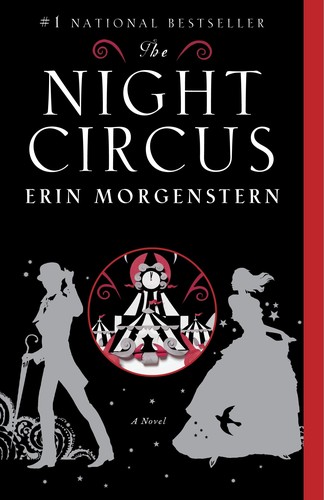
Le Cirque des Rêves appears overnight, with no announcement — black and white striped tents that smell of caramel and bonfire smoke, open only after dark, filled with impossible things.
Erin Morgenstern · 2011 · 8h 0m
Full summary and key takeaways →The 12 questions
- 1.
The novel keeps the rules of the competition deliberately vague. Did that ambiguity create productive tension, or did it feel like Morgenstern was avoiding a structural problem?
- 2.
The circus is described in loving detail across many chapters. Did those set-piece descriptions feel like the heart of the novel to you, or like beautiful digressions from the story?
- 3.
Celia and Marco fall in love partly by recognizing each other through their work before they know who the other is. Does that dynamic feel romantic, or more like a metaphor for artistic community?
- 4.
The instructors — Hector Bowen and Alexander — are never fully explained. Did their opacity feel appropriate to the novel's atmosphere, or like a missed opportunity?
- 5.
The non-linear timeline means the reader knows some outcomes before their causes. How did that affect your experience of the competition's tension?
- 6.
The secondary characters — Bailey, Poppet, Widget, Tsukiko — have their own arcs that weave around the central story. Did you find them as interesting as Celia and Marco?
- 7.
The novel is sometimes described as mood-driven rather than plot-driven. Is that a distinction that matters to you as a reader, or is it a false opposition?
- 8.
The rêveurs and their relationship to the circus raise questions about fan culture and the ethics of being enchanted by something you don't fully understand. Did that dimension register for you?
- 9.
The ending asks you to accept a resolution that is more metaphysical than narrative. Did it feel earned?
- 10.
The Night Circus is sometimes categorized with magical realism. Does that feel accurate, or is it doing something different?
- 11.
Compared to other lush, atmosphere-heavy fantasy — Jonathan Strange and Mr Norrell, say — where does The Night Circus land for you in terms of what it's actually trying to do?
- 12.
If you had visited Le Cirque des Rêves, which tent would you have gone to first? (This is the book club's palate-cleanser question, but it usually generates the best conversation.)
How to run the discussion
- Pick six to eight, not all of them. An hour of real discussion covers fewer questions than anyone expects, and racing the list is what makes a book club feel like homework.
- Open with what people noticed, not what they concluded. Asking for a verdict first hardens opinions before anyone has heard each other.
- Let the disagreement run. The questions below that split a room are the ones worth the time; the ones everyone answers the same way can be skipped.
- Ask the quiet person a specific question. A direct, narrow question is far easier to answer than an open invitation to contribute.
Themes worth steering toward
If the conversation stalls, these are the threads that usually restart it.
Common questions
What are good book club questions for The Night Circus?
Here are 12 book club questions for The Night Circus by Erin Morgenstern, ordered to open easily and end somewhere worth arguing about. The strongest openers ask what each reader noticed rather than what they concluded, and the discussion usually turns on magic and competition, love and sacrifice, art and creation.
How long should a book club discussion of The Night Circus last?
Most groups run 60 to 90 minutes of actual discussion. That is roughly six to eight questions, not all of them, so pick the ones that suit your group rather than working down the list in order.
What are the main themes in The Night Circus?
Magic and competition, Love and sacrifice, Art and creation, Fate and free will, Wonder. Those are the threads most likely to divide a room, which makes them the useful places to steer a discussion that has gone quiet.
Picking the next one? See books like The Night Circus or questions for other book club picks.
