Health · Book club
The Obesity Code book club questions
Here are 12 book club questions for The Obesity Code by Jason Fung, ordered to open easily and end somewhere worth arguing about. Copy them, print them, or bring them up one at a time.
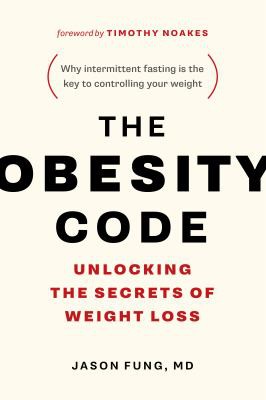
The Obesity Code is Jason Fung's argument that obesity is a hormonal disease, not a behavioral one, and that the treatment follows from that understanding.
Jason Fung · 2016 · 6h 0m
Full summary and key takeaways →The 12 questions
- 1.
Fung argues that obesity is hormonal, not behavioral. How does that reframe how you think about personal responsibility for weight?
- 2.
Most people who have dieted understand the rebound effect Fung describes. Does his hormonal explanation for why diets fail match your experience or that of people you know?
- 3.
Intermittent fasting is the book's most practical recommendation. Have you tried any form of fasting? What was the experience, and does Fung's framework change how you interpret it?
- 4.
He argues that frequent eating, even of healthy food, elevates insulin throughout the day. Does the idea of fewer meals feel manageable or impractical given your life?
- 5.
Fung is a kidney doctor, not an obesity researcher. Does his clinical vantage point strengthen or complicate his argument for you?
- 6.
The book argues that type 2 diabetes is routinely treated with medications that address the symptom (high blood sugar) while worsening the root cause (high insulin). Is that a convincing critique of standard care?
- 7.
He contrasts processed food, which spikes insulin sharply, with whole food, which produces a slower response. How much does the processing state of food factor into your current eating?
- 8.
Fung's model predicts that reducing carbohydrate quality matters more than reducing total food intake. Does that square with public health advice you've received?
- 9.
The book covers the social and environmental determinants of obesity — why poor neighborhoods have higher rates. Does his framework adequately account for those structural factors?
- 10.
If fasting is as effective as Fung claims, why isn't it standard medical practice? What institutional or commercial barriers might explain that?
- 11.
He argues that three large meals are better for insulin regulation than six small meals. How does that contradict advice you've received, and who do you believe?
- 12.
What single change from the book would be most feasible for you? What would be the hardest?
How to run the discussion
- Pick six to eight, not all of them. An hour of real discussion covers fewer questions than anyone expects, and racing the list is what makes a book club feel like homework.
- Open with what people noticed, not what they concluded. Asking for a verdict first hardens opinions before anyone has heard each other.
- Let the disagreement run. The questions below that split a room are the ones worth the time; the ones everyone answers the same way can be skipped.
- Ask the quiet person a specific question. A direct, narrow question is far easier to answer than an open invitation to contribute.
Themes worth steering toward
If the conversation stalls, these are the threads that usually restart it.
Common questions
What are good book club questions for The Obesity Code?
Here are 12 book club questions for The Obesity Code by Jason Fung, ordered to open easily and end somewhere worth arguing about. The strongest openers ask what each reader noticed rather than what they concluded, and the discussion usually turns on obesity, insulin, intermittent fasting.
How long should a book club discussion of The Obesity Code last?
Most groups run 60 to 90 minutes of actual discussion. That is roughly six to eight questions, not all of them, so pick the ones that suit your group rather than working down the list in order.
What are the main themes in The Obesity Code?
Obesity, Insulin, Intermittent fasting, Metabolic disease, Dietary science. Those are the threads most likely to divide a room, which makes them the useful places to steer a discussion that has gone quiet.
Picking the next one? See books like The Obesity Code or questions for other book club picks.
