Fantasy · Book club
The Ocean at the End of the Lane book club questions
Here are 12 book club questions for The Ocean at the End of the Lane by Neil Gaiman, ordered to open easily and end somewhere worth arguing about. Copy them, print them, or bring them up one at a time.
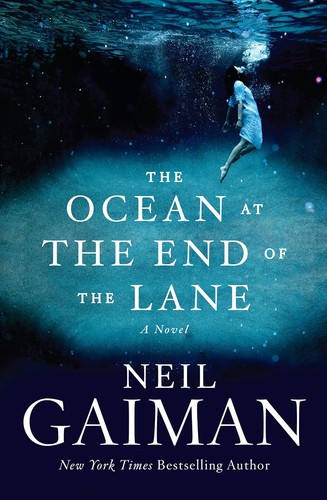
A middle-aged man returns to his childhood village for a funeral and finds himself at the end of a lane he has not visited in decades, at a farm where a girl named Lettie Hempstock once lived.
Neil Gaiman · 2013 · 5h 0m
Full summary and key takeaways →The 12 questions
- 1.
The novel hinges on the boy not being believed by his parents when he tells the truth. How did the experience of knowing and being disbelieved register for you as a reader?
- 2.
The Hempstock women are never fully explained. Did you want more explanation, or did the opacity feel right for the kind of story Gaiman is telling?
- 3.
Ursula is frightening partly because she uses her knowledge of what people want against them. How does the novel connect this to adult relationships more broadly?
- 4.
The frame narrative — middle-aged man, funeral, the return — does the work of making the childhood story feel elegiac rather than just scary. Did it succeed?
- 5.
Gaiman has said the novel is personal and draws on his own childhood. Does knowing that change how you read the childhood sections?
- 6.
The boy's father is not a villain — he is simply unable to see what his son sees and makes a terrible choice as a result. How does the novel handle culpability here?
- 7.
What does the ocean actually represent? Did you settle on an interpretation, or did you find the ambiguity generative?
- 8.
The novel's ending depends on the logic of forgetting. Is that a dark ending, a consoling one, or both?
- 9.
The Hempstock grandmother is the oldest thing in the novel, possibly older than the world. How does her presence change the scale of what the boy's experience means?
- 10.
Compared to other fairy-tale-influenced novels — say, Coraline (also Gaiman) or some of Susanna Clarke's work — where does The Ocean at the End of the Lane land in terms of its relationship to horror?
- 11.
The novel is very short for a novel. Did the compression feel right, or did you want more?
- 12.
The boy does not have a name. Did you notice this while reading? Does it matter?
How to run the discussion
- Pick six to eight, not all of them. An hour of real discussion covers fewer questions than anyone expects, and racing the list is what makes a book club feel like homework.
- Open with what people noticed, not what they concluded. Asking for a verdict first hardens opinions before anyone has heard each other.
- Let the disagreement run. The questions below that split a room are the ones worth the time; the ones everyone answers the same way can be skipped.
- Ask the quiet person a specific question. A direct, narrow question is far easier to answer than an open invitation to contribute.
Themes worth steering toward
If the conversation stalls, these are the threads that usually restart it.
Common questions
What are good book club questions for The Ocean at the End of the Lane?
Here are 12 book club questions for The Ocean at the End of the Lane by Neil Gaiman, ordered to open easily and end somewhere worth arguing about. The strongest openers ask what each reader noticed rather than what they concluded, and the discussion usually turns on childhood and memory, fear and powerlessness, sacrifice and protection.
How long should a book club discussion of The Ocean at the End of the Lane last?
Most groups run 60 to 90 minutes of actual discussion. That is roughly six to eight questions, not all of them, so pick the ones that suit your group rather than working down the list in order.
What are the main themes in The Ocean at the End of the Lane?
Childhood and memory, Fear and powerlessness, Sacrifice and protection, The uncanny, Forgetting. Those are the threads most likely to divide a room, which makes them the useful places to steer a discussion that has gone quiet.
Picking the next one? See books like The Ocean at the End of the Lane or questions for other book club picks.
