Health · Book club
The Omnivore's Dilemma book club questions
Here are 12 book club questions for The Omnivore's Dilemma by Michael Pollan, ordered to open easily and end somewhere worth arguing about. Copy them, print them, or bring them up one at a time.
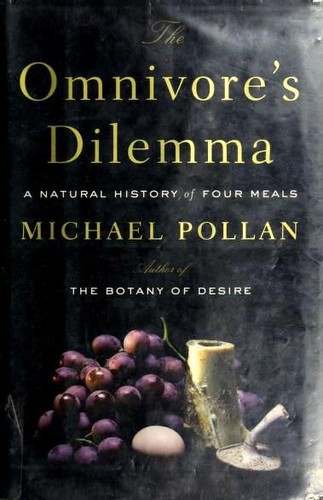
The Omnivore's Dilemma is Michael Pollan's investigation into four food chains — industrial, industrial organic, local pastoral, and hunted-and-gathered — organized around the question of what we should eat.
Michael Pollan · 2006 · 8h 0m
Full summary and key takeaways →The 12 questions
- 1.
Pollan argues that cheap food isn't actually cheap once you account for environmental and health externalities. How does that reframe the way you think about grocery prices?
- 2.
Have you ever traced a food you eat regularly back to its origin? What would you find if you did?
- 3.
Joel Salatin refuses to ship his food or scale his farm, arguing that local and transparent food systems are inherently better. Is that a principled position or a luxury available only to wealthy consumers?
- 4.
Pollan is troubled by industrial organic food. Does learning that organic farms can still be large-scale industrial operations change how you feel about buying organic?
- 5.
The book spends significant time on animal welfare in industrial feedlots. How much does the treatment of animals factor into your food choices, and has that changed over time?
- 6.
Pollan hunts a wild boar and describes it as a morally clarifying experience. What would it take for you to be willing to kill an animal you ate? Would that change what you eat?
- 7.
Corn is in almost everything. Does that bother you? Why or why not?
- 8.
If food transparency — knowing exactly how your food was raised and at what cost — were required, how do you think it would change what Americans eat?
- 9.
Pollan identifies three categories of eater: omnivore, herbivore, and carnivore by philosophy. Where do you fall, and is that consistent with what you actually eat?
- 10.
He argues that food traditions are what allow societies to eat without constant anxiety. What food traditions, if any, do you carry from your family or culture?
- 11.
Polyface Farm is compelling but cannot scale. Does the fact that sustainable alternatives can't feed everyone make them irrelevant, or are they valuable for other reasons?
- 12.
After reading this book, is there a food you would stop eating, eat less of, or source differently? What's preventing you from acting on that?
How to run the discussion
- Pick six to eight, not all of them. An hour of real discussion covers fewer questions than anyone expects, and racing the list is what makes a book club feel like homework.
- Open with what people noticed, not what they concluded. Asking for a verdict first hardens opinions before anyone has heard each other.
- Let the disagreement run. The questions below that split a room are the ones worth the time; the ones everyone answers the same way can be skipped.
- Ask the quiet person a specific question. A direct, narrow question is far easier to answer than an open invitation to contribute.
Themes worth steering toward
If the conversation stalls, these are the threads that usually restart it.
Common questions
What are good book club questions for The Omnivore's Dilemma?
Here are 12 book club questions for The Omnivore's Dilemma by Michael Pollan, ordered to open easily and end somewhere worth arguing about. The strongest openers ask what each reader noticed rather than what they concluded, and the discussion usually turns on food systems, industrial agriculture, ecology.
How long should a book club discussion of The Omnivore's Dilemma last?
Most groups run 60 to 90 minutes of actual discussion. That is roughly six to eight questions, not all of them, so pick the ones that suit your group rather than working down the list in order.
What are the main themes in The Omnivore's Dilemma?
Food systems, Industrial agriculture, Ecology, Eating ethics, Sustainability. Those are the threads most likely to divide a room, which makes them the useful places to steer a discussion that has gone quiet.
Picking the next one? See books like The Omnivore's Dilemma or questions for other book club picks.
