Philosophy · Book club
The Painted Word book club questions
Here are 11 book club questions for The Painted Word by Tom Wolfe, ordered to open easily and end somewhere worth arguing about. Copy them, print them, or bring them up one at a time.
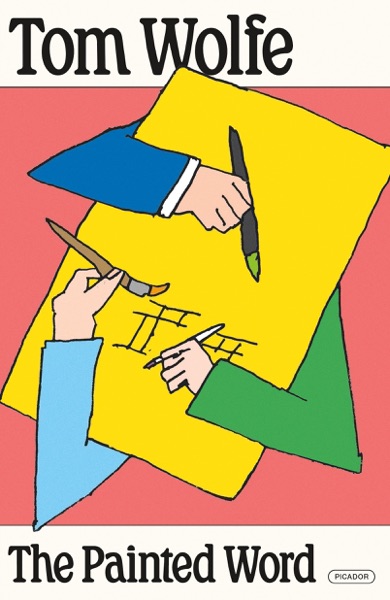
The Painted Word began as a provocation and became a minor classic.
Tom Wolfe · 1975 · 2h 0m
Full summary and key takeaways →The 11 questions
- 1.
Wolfe argues art became illustration for theory. Does that description match any contemporary art you've encountered?
- 2.
Who plays the role of Clement Greenberg in contemporary art, design, or other creative fields you're familiar with?
- 3.
Is there art you've found more interesting after reading critical analysis of it, or less? What does that suggest about the relationship Wolfe is describing?
- 4.
The 'boho dance' — performing rebellion while needing establishment approval — seems to appear in many fields. Where else do you see it?
- 5.
Wolfe is dismissive of Abstract Expressionism and what followed. Does the satirical tone strengthen or weaken his argument for you?
- 6.
How much of your own aesthetic judgment is formed independently, and how much is shaped by trusted intermediaries — critics, friends, algorithms?
- 7.
If the art world really was captured by three critics in mid-century New York, what structural features allowed that to happen? Could it happen in the same way today?
- 8.
Conceptual Art sometimes produces work where the idea entirely replaces the object. Does that represent the collapse Wolfe predicts, or something else?
- 9.
Is there a difference between 'art that requires explanation' and 'art that rewards explanation'? Does Wolfe's argument collapse that distinction too quickly?
- 10.
What is the book's own relationship to the dynamic it describes? Is Wolfe's critique itself a form of theory asserting dominance over objects?
- 11.
What would it mean to look at a painting without any prior knowledge of its context, movement, or critical reception? Is that even possible?
How to run the discussion
- Pick six to eight, not all of them. An hour of real discussion covers fewer questions than anyone expects, and racing the list is what makes a book club feel like homework.
- Open with what people noticed, not what they concluded. Asking for a verdict first hardens opinions before anyone has heard each other.
- Let the disagreement run. The questions below that split a room are the ones worth the time; the ones everyone answers the same way can be skipped.
- Ask the quiet person a specific question. A direct, narrow question is far easier to answer than an open invitation to contribute.
Themes worth steering toward
If the conversation stalls, these are the threads that usually restart it.
Common questions
What are good book club questions for The Painted Word?
Here are 11 book club questions for The Painted Word by Tom Wolfe, ordered to open easily and end somewhere worth arguing about. The strongest openers ask what each reader noticed rather than what they concluded, and the discussion usually turns on art criticism, modern art, cultural gatekeeping.
How long should a book club discussion of The Painted Word last?
Most groups run 60 to 90 minutes of actual discussion. That is roughly six to eight questions, not all of them, so pick the ones that suit your group rather than working down the list in order.
What are the main themes in The Painted Word?
Art criticism, Modern art, Cultural gatekeeping, Theory and practice, Elite institutions. Those are the threads most likely to divide a room, which makes them the useful places to steer a discussion that has gone quiet.
Picking the next one? See books like The Painted Word or questions for other book club picks.
