Historical fiction · Book club
The Paris Library book club questions
Here are 12 book club questions for The Paris Library by Janet Skeslien Charles, ordered to open easily and end somewhere worth arguing about. Copy them, print them, or bring them up one at a time.
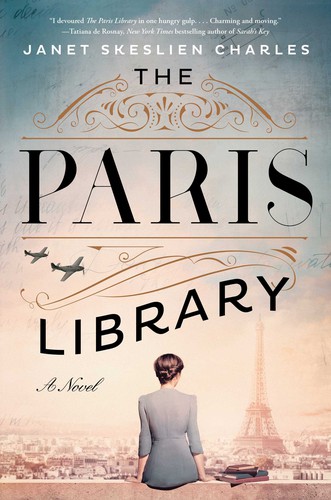
The Paris Library moves between two timelines: Paris in 1939–1944, where young Odile Souchet becomes a librarian at the American Library of Paris just as war is approaching; and rural Montana in the 1980s, where a teenage girl named Lily befriends her French neighbor, the now-elderly Odile, and slowly uncovers the history Odile has never spoken about.
Janet Skeslien Charles · 2021 · 6h 15m
Full summary and key takeaways →The 12 questions
- 1.
Odile makes a choice during the Occupation that defines the rest of her life. Did you find it understandable? Forgivable?
- 2.
The novel is based on real history — the American Library of Paris genuinely continued operating under Occupation. Does knowing that change how you read the fictional elements?
- 3.
The Montana timeline frames everything we learn about Odile. Did Lily feel like a fully realized character to you, or more like a narrative device?
- 4.
Charles draws a range of French characters — resisters, collaborators, people trying to survive without doing either. Which of them stayed with you, and why?
- 5.
Books and libraries are central to the novel's symbolism. Did that register as earned resonance or as the kind of thing book-lovers are meant to love?
- 6.
Odile's silence over decades is treated as a burden rather than a protection. What does the novel say about the costs of keeping secrets from people you love?
- 7.
Compared to The Nightingale or All the Light We Cannot See, where does The Paris Library land in the sub-genre of WWII women's fiction? What does it do differently?
- 8.
The dual timeline creates a 'when will we find out' structure. Did the revelation feel proportionate to the buildup, or was the secret smaller than expected?
- 9.
The female friendships in the novel — both in Paris and in Montana — are central. How does the novel characterize female solidarity?
- 10.
The novel ends in a particular emotional register. Did it feel earned?
- 11.
Who in the novel do you most want to have known in person, and who do you think you would have been — which character are you most honest with yourself about resembling?
- 12.
Charles researched this book for years and worked at the American Library of Paris herself. Does the depth of research show, and does it ever feel like it gets in the way of the story?
How to run the discussion
- Pick six to eight, not all of them. An hour of real discussion covers fewer questions than anyone expects, and racing the list is what makes a book club feel like homework.
- Open with what people noticed, not what they concluded. Asking for a verdict first hardens opinions before anyone has heard each other.
- Let the disagreement run. The questions below that split a room are the ones worth the time; the ones everyone answers the same way can be skipped.
- Ask the quiet person a specific question. A direct, narrow question is far easier to answer than an open invitation to contribute.
Themes worth steering toward
If the conversation stalls, these are the threads that usually restart it.
Common questions
What are good book club questions for The Paris Library?
Here are 12 book club questions for The Paris Library by Janet Skeslien Charles, ordered to open easily and end somewhere worth arguing about. The strongest openers ask what each reader noticed rather than what they concluded, and the discussion usually turns on resistance and complicity, friendship across difference, occupation and survival.
How long should a book club discussion of The Paris Library last?
Most groups run 60 to 90 minutes of actual discussion. That is roughly six to eight questions, not all of them, so pick the ones that suit your group rather than working down the list in order.
What are the main themes in The Paris Library?
Resistance and complicity, Friendship across difference, Occupation and survival, Books and community, Secrets and silence. Those are the threads most likely to divide a room, which makes them the useful places to steer a discussion that has gone quiet.
Picking the next one? See books like The Paris Library or questions for other book club picks.
