Religion & Spirituality · Book club
The Perennial Philosophy book club questions
Here are 11 book club questions for The Perennial Philosophy by Aldous Huxley, ordered to open easily and end somewhere worth arguing about. Copy them, print them, or bring them up one at a time.
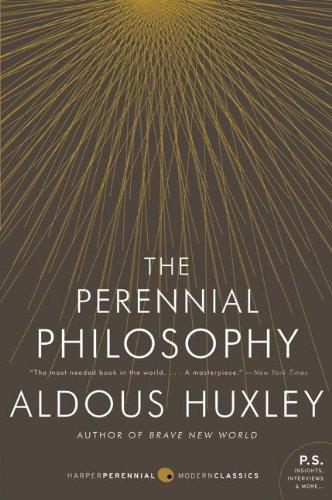
The Perennial Philosophy is Aldous Huxley's anthology and commentary on the mystical traditions of the world, arguing that behind the diversity of religious forms lies a single metaphysical core: the divine ground or ultimate reality is one; the human soul contains a spark of this reality; the purpose of human existence is to realize this identity; and the path to that realization requires ego-transcendence through contemplation, virtue, and love.
Aldous Huxley · 1945 · 7h 40m
Full summary and key takeaways →The 11 questions
- 1.
Huxley argues that behind the diversity of religious forms lies a single core. Is the evidence for that convergence compelling, or does it depend on selective reading?
- 2.
He distinguishes the contemplative dimensions of religion from the exoteric, institutional, and doctrinal dimensions. Is that distinction as clean as the book suggests?
- 3.
The perennial philosophy privileges mystical experience as the standard by which religious traditions are evaluated. What gets lost in that framing?
- 4.
Which of the mystical sources quoted resonated most with you? Why that one rather than another?
- 5.
Huxley argues that ego-transcendence is the central requirement of genuine spiritual practice. Is that claim compatible with a healthy sense of self, or does it require its demolition?
- 6.
The book was written during World War II. Does knowing that context change how you read the argument for a universal spiritual core beneath conflicting traditions?
- 7.
Huxley later experimented with mescaline and wrote The Doors of Perception, arguing that psychedelics can induce mystical experience. Does that supplement or undermine the argument in this book?
- 8.
The book largely ignores the prophetic and political dimensions of religion — the tradition of justice, liberation, and historical action. Is that a significant absence?
- 9.
Is the perennial philosophy itself a kind of ideology — a particular intellectual framework masquerading as universal truth?
- 10.
How does Huxley's account of contemplation compare to secular mindfulness practice? What does the mystical framing add or require?
- 11.
The book ends with a vision of a culture organized around the perennial philosophy. What would the practical implications of that be?
How to run the discussion
- Pick six to eight, not all of them. An hour of real discussion covers fewer questions than anyone expects, and racing the list is what makes a book club feel like homework.
- Open with what people noticed, not what they concluded. Asking for a verdict first hardens opinions before anyone has heard each other.
- Let the disagreement run. The questions below that split a room are the ones worth the time; the ones everyone answers the same way can be skipped.
- Ask the quiet person a specific question. A direct, narrow question is far easier to answer than an open invitation to contribute.
Themes worth steering toward
If the conversation stalls, these are the threads that usually restart it.
Common questions
What are good book club questions for The Perennial Philosophy?
Here are 11 book club questions for The Perennial Philosophy by Aldous Huxley, ordered to open easily and end somewhere worth arguing about. The strongest openers ask what each reader noticed rather than what they concluded, and the discussion usually turns on mysticism, divine unity, comparative religion.
How long should a book club discussion of The Perennial Philosophy last?
Most groups run 60 to 90 minutes of actual discussion. That is roughly six to eight questions, not all of them, so pick the ones that suit your group rather than working down the list in order.
What are the main themes in The Perennial Philosophy?
Mysticism, Divine unity, Comparative religion, Contemplation, The self. Those are the threads most likely to divide a room, which makes them the useful places to steer a discussion that has gone quiet.
Picking the next one? See books like The Perennial Philosophy or questions for other book club picks.
