Literary fiction · Book club
The Plague book club questions
Here are 12 book club questions for The Plague by Albert Camus, ordered to open easily and end somewhere worth arguing about. Copy them, print them, or bring them up one at a time.
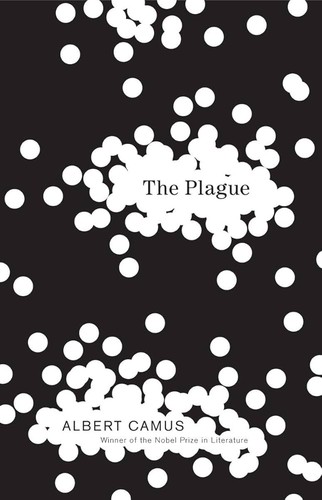
The town of Oran, on the Algerian coast, is sealed off after an outbreak of bubonic plague.
Albert Camus · 1947 · 6h 10m
Full summary and key takeaways →The 12 questions
- 1.
Rieux refuses to call himself heroic and describes his work as simply doing what had to be done. Is that genuine humility, or is it a way of maintaining distance from what the work costs him?
- 2.
Paneloux's first sermon frames the plague as divine punishment; his second sermon, after the child's death, is theological but anguished. Which Paneloux is more honest, and does either position survive contact with what he witnessed?
- 3.
Tarrou wants sainthood without God. Is that coherent? Is it admirable? And does his death at the epidemic's end feel like the novel's verdict on his aspiration?
- 4.
Rambert spends most of the novel trying to escape to his girlfriend in Paris and is condemned for it by the reader (and by himself). But is his desire to leave legitimate? Does the novel judge him fairly?
- 5.
Grand is the novel's most unlikely hero. What does making him the center of the book's emotional resolution accomplish that a more conventionally heroic protagonist would not?
- 6.
The plague-as-fascism allegory was how contemporary French readers received it. If you read it as purely about disease, does the moral argument change?
- 7.
Many readers encountered this novel during COVID-19 quarantine. Did that context change what you found in it — for better or worse?
- 8.
Camus describes the plague as indifferent to virtue: good people die randomly alongside bad ones. How does the novel square that randomness with its argument that individual action matters?
- 9.
The narrator's identity is concealed until near the end, when we learn it is Rieux. Why does Camus withhold that information, and does the revelation change how you read what came before?
- 10.
Rieux's wife is ill and offstage throughout; she dies near the epidemic's end. Is her absence from the novel an artistic choice or a failure of the novel's humanism?
- 11.
Camus writes: 'There is more to admire in men than to despise.' Does the novel earn that line, or is it sentiment that the narrative doesn't fully support?
- 12.
Compare Camus's vision of collective response to catastrophe to how actual communities have responded to crises you know about. Where does the novel feel accurate and where idealized?
How to run the discussion
- Pick six to eight, not all of them. An hour of real discussion covers fewer questions than anyone expects, and racing the list is what makes a book club feel like homework.
- Open with what people noticed, not what they concluded. Asking for a verdict first hardens opinions before anyone has heard each other.
- Let the disagreement run. The questions below that split a room are the ones worth the time; the ones everyone answers the same way can be skipped.
- Ask the quiet person a specific question. A direct, narrow question is far easier to answer than an open invitation to contribute.
Themes worth steering toward
If the conversation stalls, these are the threads that usually restart it.
Common questions
What are good book club questions for The Plague?
Here are 12 book club questions for The Plague by Albert Camus, ordered to open easily and end somewhere worth arguing about. The strongest openers ask what each reader noticed rather than what they concluded, and the discussion usually turns on collective suffering, solidarity and isolation, resistance and complicity.
How long should a book club discussion of The Plague last?
Most groups run 60 to 90 minutes of actual discussion. That is roughly six to eight questions, not all of them, so pick the ones that suit your group rather than working down the list in order.
What are the main themes in The Plague?
Collective suffering, Solidarity and isolation, Resistance and complicity, Meaning in the face of death, Bureaucracy and human scale. Those are the threads most likely to divide a room, which makes them the useful places to steer a discussion that has gone quiet.
Picking the next one? See books like The Plague or questions for other book club picks.
