Health · Book club
The Plant Paradox book club questions
Here are 11 book club questions for The Plant Paradox by Steven R. Gundry, ordered to open easily and end somewhere worth arguing about. Copy them, print them, or bring them up one at a time.
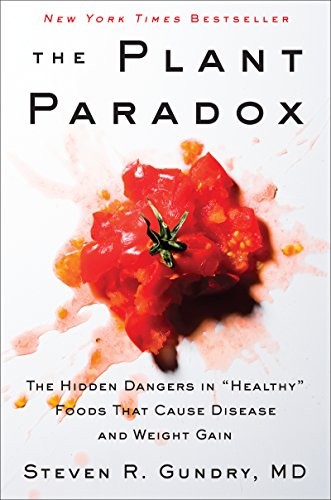
Steven Gundry, a cardiac surgeon turned nutrition researcher, argues in The Plant Paradox that many health problems attributed to processed food, red meat, or fat are actually caused by lectins — proteins found in plants, particularly grains, legumes, and nightshade vegetables.
Steven R. Gundry · 2017 · 6h 0m
Full summary and key takeaways →The 11 questions
- 1.
Gundry's argument centers on a mechanism most nutritionists don't emphasize. How do you evaluate a health claim that is biologically plausible but lacks strong RCT evidence?
- 2.
Traditional cultures have eaten beans and grains safely for millennia using preparation methods that neutralize lectins. Does that undermine the book's alarm about these foods?
- 3.
Have you ever tried an elimination diet? What did you learn from reintroducing foods?
- 4.
Gundry is a credentialed cardiac surgeon presenting heterodox nutrition ideas. How much does the author's credentials affect how you weigh their evidence?
- 5.
The book is full of dramatic patient transformations. How much do individual case studies move you compared to population-level studies?
- 6.
Do you think the emphasis on gut permeability as a root cause of chronic disease will be vindicated, overstated, or somewhere in between in ten years?
- 7.
Gundry recommends pasture-raised and grass-fed animal products. How practical is that advice for someone with a limited grocery budget?
- 8.
The Plant Paradox Program excludes many foods considered healthy by mainstream dieticians — tomatoes, beans, whole wheat. How would you decide whether to try it?
- 9.
What is the cost of following Gundry's protocol if it turns out not to be correct? What is the cost of ignoring it if it is?
- 10.
Do you think dietary books aimed at a popular audience have a responsibility to be more cautious about causation claims than they typically are?
- 11.
How does your approach to evaluating nutritional science differ from how you'd evaluate a claim in, say, physics or oncology?
How to run the discussion
- Pick six to eight, not all of them. An hour of real discussion covers fewer questions than anyone expects, and racing the list is what makes a book club feel like homework.
- Open with what people noticed, not what they concluded. Asking for a verdict first hardens opinions before anyone has heard each other.
- Let the disagreement run. The questions below that split a room are the ones worth the time; the ones everyone answers the same way can be skipped.
- Ask the quiet person a specific question. A direct, narrow question is far easier to answer than an open invitation to contribute.
Themes worth steering toward
If the conversation stalls, these are the threads that usually restart it.
Common questions
What are good book club questions for The Plant Paradox?
Here are 11 book club questions for The Plant Paradox by Steven R. Gundry, ordered to open easily and end somewhere worth arguing about. The strongest openers ask what each reader noticed rather than what they concluded, and the discussion usually turns on lectins, gut health, inflammation.
How long should a book club discussion of The Plant Paradox last?
Most groups run 60 to 90 minutes of actual discussion. That is roughly six to eight questions, not all of them, so pick the ones that suit your group rather than working down the list in order.
What are the main themes in The Plant Paradox?
Lectins, Gut health, Inflammation, Diet, Autoimmune disease. Those are the threads most likely to divide a room, which makes them the useful places to steer a discussion that has gone quiet.
Picking the next one? See books like The Plant Paradox or questions for other book club picks.
