Science fiction · Book club
The Player of Games book club questions
Here are 12 book club questions for The Player of Games by Iain M. Banks, ordered to open easily and end somewhere worth arguing about. Copy them, print them, or bring them up one at a time.
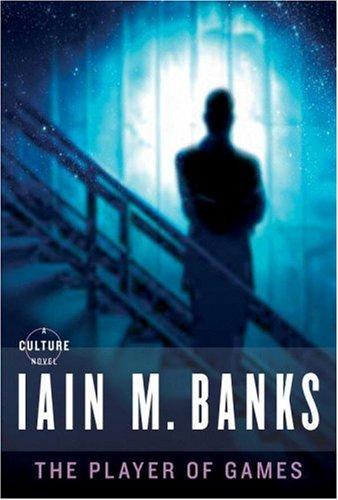
Jernau Gurgeh is the greatest game player in the Culture — an interstellar post-scarcity civilization governed by benevolent AIs called Minds.
Iain M. Banks · 1988 · 5h 45m
Full summary and key takeaways →The 12 questions
- 1.
Gurgeh is recruited partly because he is vulnerable — he's done something compromising and Special Circumstances knows about it. Does this make him complicit in what follows, or is he also a victim?
- 2.
The Azadian Empire encodes its values in Azad in a way that makes winning the game identical to embodying those values. Can you think of real-world games, competitions, or systems that work similarly?
- 3.
The Culture is presented as genuinely better than the Empire, but it operates through manipulation. By the novel's logic, is there a meaningful difference between the two civilizations' methods?
- 4.
Gurgeh feels empty and purposeless in the Culture despite having everything. Banks seems to take this seriously rather than dismissing it as ingratitude. What is the novel suggesting about meaning and constraint?
- 5.
The twist near the end — what Gurgeh was actually being used to do — is telegraphed to careful readers earlier in the novel. If you caught it, how did knowing affect your reading of Gurgeh's journey?
- 6.
The Azadian hierarchy involves not just class but embodied violence against lower-status people. Banks doesn't spare the detail. Is that necessary to make the political point, or does it go further than needed?
- 7.
Flere-Imsaho, Gurgeh's drone companion, is evasive throughout. At what point did you realize the extent of the deception, and how did that affect your trust in the Culture more broadly?
- 8.
Compare the Culture to an ideal you've encountered in political philosophy — libertarian, socialist, utilitarian. Which tradition does it most resemble, and where does it deviate?
- 9.
The ending suggests that the Culture's intervention in Azad was strategically successful but morally complicated. Does Banks seem to think the intervention was worth it?
- 10.
Banks wrote the Culture series over several decades. The Player of Games is one of the earliest. How does the Culture of this novel compare to how you imagine a post-scarcity civilization would actually function?
- 11.
Gurgeh is the best player in the Culture but loses early rounds at Azad. How does Banks use those losses to develop Gurgeh's character, and does the novel suggest he becomes a different person by the end?
- 12.
The novel ends with an epitaph of sorts. Given everything that has happened, how do you read that ending line — as irony, celebration, elegy, or something else?
How to run the discussion
- Pick six to eight, not all of them. An hour of real discussion covers fewer questions than anyone expects, and racing the list is what makes a book club feel like homework.
- Open with what people noticed, not what they concluded. Asking for a verdict first hardens opinions before anyone has heard each other.
- Let the disagreement run. The questions below that split a room are the ones worth the time; the ones everyone answers the same way can be skipped.
- Ask the quiet person a specific question. A direct, narrow question is far easier to answer than an open invitation to contribute.
Themes worth steering toward
If the conversation stalls, these are the threads that usually restart it.
Common questions
What are good book club questions for The Player of Games?
Here are 12 book club questions for The Player of Games by Iain M. Banks, ordered to open easily and end somewhere worth arguing about. The strongest openers ask what each reader noticed rather than what they concluded, and the discussion usually turns on power and empire, identity and performance, manipulation and free will.
How long should a book club discussion of The Player of Games last?
Most groups run 60 to 90 minutes of actual discussion. That is roughly six to eight questions, not all of them, so pick the ones that suit your group rather than working down the list in order.
What are the main themes in The Player of Games?
Power and empire, Identity and performance, Manipulation and free will, Game theory and civilization, Complicity. Those are the threads most likely to divide a room, which makes them the useful places to steer a discussion that has gone quiet.
Picking the next one? See books like The Player of Games or questions for other book club picks.
