Literary fiction · Book club
The Portrait of a Lady book club questions
Here are 12 book club questions for The Portrait of a Lady by Henry James, ordered to open easily and end somewhere worth arguing about. Copy them, print them, or bring them up one at a time.
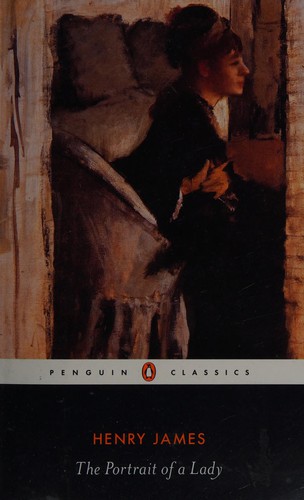
Isabel Archer is an intelligent, independent young American woman who arrives in Europe convinced that she wants nothing more than to be free — free from convention, from the pressure to marry, from the enclosures that other women seem to accept without complaint.
Henry James · 1881 · 14h 45m
Full summary and key takeaways →The 12 questions
- 1.
Isabel turns down two solid proposals before accepting Osmond. What does James think she was actually looking for in a husband?
- 2.
Madame Merle tells Isabel that we are each made up of our house, our furniture, our clothes. Isabel objects. Who is right, and does the novel settle the question?
- 3.
Ralph Touchett arranges Isabel's inheritance because he wants to watch what she does with freedom. Is that a kindness or a cruelty?
- 4.
Isabel discovers the truth about Osmond and Merle's relationship before the midpoint. She stays anyway. What is James saying about the psychology of people who stay in bad marriages?
- 5.
Osmond is presented as purely evil by the end, but James gives him real intelligence and a coherent worldview. Does the novel earn that portrayal, or does it tip into melodrama?
- 6.
The ending — Isabel returning to Rome — has divided readers for 140 years. What do you think she decided, and why does James refuse to tell us directly?
- 7.
Henrietta Stackpole, the American journalist, is comic relief but also the only character who says exactly what she thinks. What does her presence mean to the novel?
- 8.
James revised the novel heavily in 1908 for the New York Edition, making the prose denser and more convoluted. Does difficulty of style feel like an obstacle here or an enhancement?
- 9.
Compared to Edith Wharton's treatment of similar material in The Age of Innocence, where does James place the blame for Isabel's fate — on society, on Osmond, or on Isabel herself?
- 10.
The novel is called a 'portrait.' What kind of portrait is it — sympathetic, critical, clinical? Does James like Isabel?
- 11.
Caspar Goodwood's final scene is one of the most physically charged passages in Victorian fiction. What does it mean that Isabel runs from him?
- 12.
Isabel believes her choices are entirely free. The novel suggests otherwise. What are the forces — internal and external — that actually constrain her?
How to run the discussion
- Pick six to eight, not all of them. An hour of real discussion covers fewer questions than anyone expects, and racing the list is what makes a book club feel like homework.
- Open with what people noticed, not what they concluded. Asking for a verdict first hardens opinions before anyone has heard each other.
- Let the disagreement run. The questions below that split a room are the ones worth the time; the ones everyone answers the same way can be skipped.
- Ask the quiet person a specific question. A direct, narrow question is far easier to answer than an open invitation to contribute.
Themes worth steering toward
If the conversation stalls, these are the threads that usually restart it.
Common questions
What are good book club questions for The Portrait of a Lady?
Here are 12 book club questions for The Portrait of a Lady by Henry James, ordered to open easily and end somewhere worth arguing about. The strongest openers ask what each reader noticed rather than what they concluded, and the discussion usually turns on freedom and constraint, marriage as trap, american innocence abroad.
How long should a book club discussion of The Portrait of a Lady last?
Most groups run 60 to 90 minutes of actual discussion. That is roughly six to eight questions, not all of them, so pick the ones that suit your group rather than working down the list in order.
What are the main themes in The Portrait of a Lady?
Freedom and constraint, Marriage as trap, American innocence abroad, Self-knowledge, Manipulation and power. Those are the threads most likely to divide a room, which makes them the useful places to steer a discussion that has gone quiet.
Picking the next one? See books like The Portrait of a Lady or questions for other book club picks.
