Business · Book club
The Power Law book club questions
Here are 12 book club questions for The Power Law by Sebastian Mallaby, ordered to open easily and end somewhere worth arguing about. Copy them, print them, or bring them up one at a time.
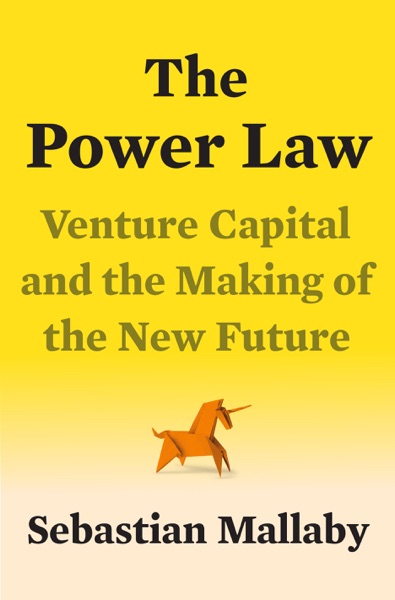
The Power Law is Sebastian Mallaby's history of venture capital, told through the people who built the industry from its roots in postwar military research to its current position as the primary financing mechanism for technology startups worldwide.
Sebastian Mallaby · 2022 · 9h 45m
Full summary and key takeaways →The 12 questions
- 1.
The power law means a VC portfolio's returns come almost entirely from a few investments. What does that imply about how VCs should spend their time once a portfolio is assembled?
- 2.
Mallaby argues VC has funded genuinely valuable innovation. How would you weigh that against the criticism that it has also funded extractive, privacy-invading, or anti-competitive businesses?
- 3.
Benchmark's flat, egalitarian model has produced outstanding returns. Why isn't it the industry standard?
- 4.
The SoftBank Vision Fund is treated as an object lesson in what happens when capital outstrips discipline. What was the mechanism by which massive capital led to bad outcomes?
- 5.
Many of the book's protagonists are portrayed as brilliant and deeply flawed simultaneously. Is that combination a cause or consequence of success in venture capital?
- 6.
How does the power-law logic of venture capital compare to other fields where a few outcomes dominate? Publishing? Film? Academic research?
- 7.
Mallaby gives a lot of attention to the interpersonal dynamics of VC partnerships. What does that suggest about how important organizational design is relative to individual talent?
- 8.
The book covers venture capital's role in building Chinese tech companies. Should American VCs have thought harder about the geopolitical implications of those investments?
- 9.
What gets funded and what doesn't is partly a function of who VCs are and what they understand. What kinds of problems or founders does the current system systematically miss?
- 10.
If you were designing a venture capital firm from scratch in 2026, what would you do differently from the models the book describes?
- 11.
The book argues that VC is uniquely well-suited to funding innovation under uncertainty. Are there alternative models—corporate R&D, government funding, crowdfunding—that work better in some domains?
- 12.
Does knowing how VC works change how you think about the technology companies you use every day?
How to run the discussion
- Pick six to eight, not all of them. An hour of real discussion covers fewer questions than anyone expects, and racing the list is what makes a book club feel like homework.
- Open with what people noticed, not what they concluded. Asking for a verdict first hardens opinions before anyone has heard each other.
- Let the disagreement run. The questions below that split a room are the ones worth the time; the ones everyone answers the same way can be skipped.
- Ask the quiet person a specific question. A direct, narrow question is far easier to answer than an open invitation to contribute.
Themes worth steering toward
If the conversation stalls, these are the threads that usually restart it.
Common questions
What are good book club questions for The Power Law?
Here are 12 book club questions for The Power Law by Sebastian Mallaby, ordered to open easily and end somewhere worth arguing about. The strongest openers ask what each reader noticed rather than what they concluded, and the discussion usually turns on venture capital, silicon valley, entrepreneurship.
How long should a book club discussion of The Power Law last?
Most groups run 60 to 90 minutes of actual discussion. That is roughly six to eight questions, not all of them, so pick the ones that suit your group rather than working down the list in order.
What are the main themes in The Power Law?
Venture capital, Silicon Valley, Entrepreneurship, Innovation, Risk. Those are the threads most likely to divide a room, which makes them the useful places to steer a discussion that has gone quiet.
Picking the next one? See books like The Power Law or questions for other book club picks.
