Psychology · Book club
The Power of Habit book club questions
Here are 12 book club questions for The Power of Habit by Charles Duhigg, ordered to open easily and end somewhere worth arguing about. Copy them, print them, or bring them up one at a time.
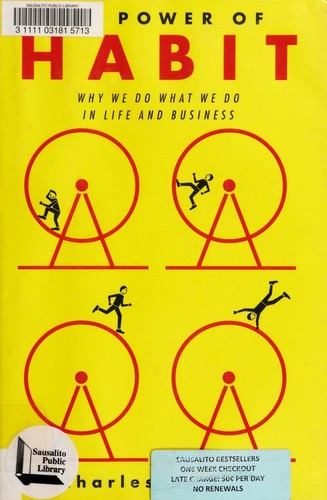
The Power of Habit is Charles Duhigg's investigation into why habits exist and how they can be changed.
Charles Duhigg · 2012 · 5h 15m
Full summary and key takeaways →The 12 questions
- 1.
Think of a habit you have that you didn't consciously choose. What is the cue, the routine, and the reward? When did it form?
- 2.
Duhigg's golden rule says to keep the cue and reward while changing the routine. What's a habit you'd want to change, and what alternative routine could serve the same reward?
- 3.
He argues that craving drives loops more than the reward itself. Can you find an example in your own life where you were pursuing the anticipation of a reward more than the reward?
- 4.
Which habit in your life would you nominate as a keystone habit — one that, if you changed it, would ripple through other behaviors?
- 5.
Duhigg says belief — often held within a community — is what allows habits to survive stress and disruption. Where does that belief come from for you?
- 6.
The Starbucks example focuses on training workers to handle emotional disruption using pre-committed routines. What situations in your life would benefit from a plan written out in advance?
- 7.
How does the organizational habits chapter change how you think about your own workplace or team? What are the unwritten routines that shape what actually happens there?
- 8.
The book treats willpower as finite. Looking at your own day, where are you spending it on tasks that could be automated into habits instead?
- 9.
Duhigg's account of social movements argues that strong ties get people to act and weak ties spread the action. Think of a change effort you've been part of — formal or informal. Which dynamic was more important?
- 10.
Some habits feel good to have even when you know they're not serving you well. What does the habit loop framework offer that willpower-based explanations don't?
- 11.
The book ends with a chapter on moral responsibility — whether knowing how habits work makes you more responsible for the ones you keep. Do you find that argument convincing?
- 12.
If you were designing an environment from scratch to make one good habit automatic, what would you change about your physical space, your schedule, or the people around you?
How to run the discussion
- Pick six to eight, not all of them. An hour of real discussion covers fewer questions than anyone expects, and racing the list is what makes a book club feel like homework.
- Open with what people noticed, not what they concluded. Asking for a verdict first hardens opinions before anyone has heard each other.
- Let the disagreement run. The questions below that split a room are the ones worth the time; the ones everyone answers the same way can be skipped.
- Ask the quiet person a specific question. A direct, narrow question is far easier to answer than an open invitation to contribute.
Themes worth steering toward
If the conversation stalls, these are the threads that usually restart it.
Common questions
What are good book club questions for The Power of Habit?
Here are 12 book club questions for The Power of Habit by Charles Duhigg, ordered to open easily and end somewhere worth arguing about. The strongest openers ask what each reader noticed rather than what they concluded, and the discussion usually turns on habits, behavior change, neuroscience.
How long should a book club discussion of The Power of Habit last?
Most groups run 60 to 90 minutes of actual discussion. That is roughly six to eight questions, not all of them, so pick the ones that suit your group rather than working down the list in order.
What are the main themes in The Power of Habit?
Habits, Behavior change, Neuroscience, Willpower, Organizational culture. Those are the threads most likely to divide a room, which makes them the useful places to steer a discussion that has gone quiet.
Picking the next one? See books like The Power of Habit or questions for other book club picks.
