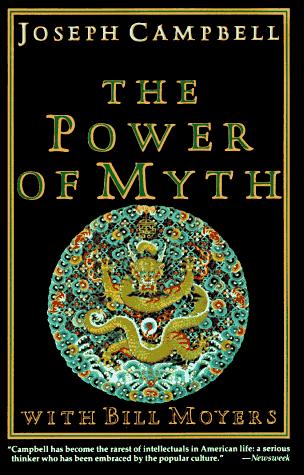
The Power of Myth by Joseph Campbell is a 1988 philosophy book about mythology, meaning, religion. Mythology is the symbolic language through which human beings have always oriented themselves in the cosmos and navigated the passages of life. Its loss leaves people symbolically homeless.
Summary
The Power of Myth is the transcript of six hours of conversations between Joseph Campbell and journalist Bill Moyers, filmed at George Lucas's Skywalker Ranch in 1985 and 1986 and broadcast on PBS in 1988, shortly after Campbell's death. The format — a wide-ranging dialogue rather than a systematic exposition — makes it the most accessible of Campbell's major works and the one that introduced his ideas to the largest audience.
The conversations range across world mythology, the function of ritual, the relationship between myth and science, the psychological significance of the hero's journey, the meaning of love, and the nature of the sacred. Campbell's consistent message is that mythology is not outdated superstition but the living symbolic language through which human beings orient themselves in the cosmos and navigate the passages of individual life. When a mythological tradition dies without being replaced, the people who lived by it become, in Campbell's phrase, "unrooted" — functionally homeless in an existential sense.
The book contains Campbell's most famous formulation: "Follow your bliss." The phrase has been widely misread as permission for self-indulgence. Campbell's actual meaning is more demanding: bliss is not pleasure or preference but the deep current of aliveness that connects a person to their genuine vocation. Following it requires sustained courage, not just good feeling. Campbell himself found it by ignoring a job market that had no place for mythology scholars during the Depression and reading for five years without institutional support.
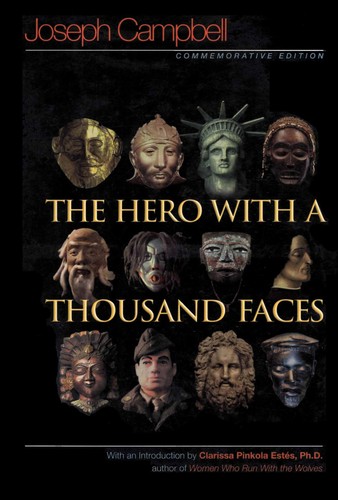
The Power of Myth does not attempt the scholarly rigor of The Hero with a Thousand Faces. Campbell covers the same ground more quickly and more conversationally, and the book is better understood as an invitation to his larger work than as a standalone argument. Its value lies in the range of questions it raises and in Campbell's unusual combination of wide learning and genuine conviction — the sense that these questions about myth, meaning, and the sacred are not academic but urgent.
Talk to The Power of Myth like its author wrote you back.
Get the ideas that fit your life — not generic summaries.
- Chat with the book
- Audiobook-style main ideas
- Adapts to your life and goals
- Helps you take action
Key takeaways
- 1.
Mythology is the symbolic language through which human beings have always oriented themselves in the cosmos and navigated the passages of life. Its loss leaves people symbolically homeless.
- 2.
'Follow your bliss' means pursuing the deep current of aliveness that connects you to your genuine vocation — not following pleasure or preference, but finding where you are truly alive.
- 3.
The hero's journey is a map for the psychological work that genuine adult development requires: departure from the familiar, encounter with the unknown, transformation, and return.
- 4.
Rituals are meant to be experienced from the inside, not observed from the outside. A ritual that is only observed has lost its power; one that is lived can transform the person who performs it.
- 5.
The sacred is not reserved for temples. It can be encountered in nature, in art, in love, in the face of death — anywhere that the ordinary is suddenly experienced as charged with something larger.
- 6.
Modern Western culture suffers from the absence of functioning mythology. Science explains how the universe works but not what it means. The resulting gap produces widespread alienation.
- 7.
The separation of the sacred from the secular — the idea that some experiences are spiritual and others merely material — is itself a mythological construction that many traditions do not share.
- 8.
Myths teach us how to die as well as how to live. Without a symbolic framework for confronting mortality, the fact of death remains an unspeakable terror rather than a passage to be understood.
Discussion questions
Use these on your own, with a book club, or as chat starters in Superbook. Book club version, ready to copy or print →
- 1.
Campbell says mythology helps people navigate life's passages. Which passage in your own life could have been eased by a clearer symbolic framework or story?
- 2.
'Follow your bliss' is Campbell's most famous phrase. How do you understand it? Do you think it is a reliable guide, and how do you distinguish bliss from mere preference?
- 3.
Campbell distinguishes between experiencing a ritual from the inside versus observing it from the outside. Think of a ritual — religious, cultural, or personal — that you have genuinely experienced from the inside. What made it different?
- 4.
Where do you encounter the sacred in your own life? Not necessarily in formally religious contexts, but in the sense Campbell describes: the ordinary suddenly charged with something larger?
- 5.
Campbell argues that modern Western culture is mythologically unmoored. Do you agree? What stories or symbols do you see providing genuine orientation to people around you?
- 6.
The book was based on conversations filmed in 1985–86. Which of Campbell's concerns feel more relevant now than they did then, and which feel less urgent?
- 7.
Campbell's 'follow your bliss' has been criticized as naïve or self-centered. How would you defend or refine his argument against that criticism?
- 8.
Campbell treats love as a mythological category — a kind of initiation into a reality larger than the individual ego. Does that account match your experience of significant love?
- 9.
Myths teach us how to die. What story or symbolic framework, if any, helps you think about mortality? Where did you find it, or is it still missing?
- 10.
Bill Moyers asks pointed, skeptical questions throughout. Which of Moyers's challenges do you find most effective, and how well does Campbell answer it?
- 11.
George Lucas credited Campbell with providing the structural backbone of Star Wars. Does knowing that origin story change how you watch the films or think about popular mythology?
Themes
Frequently asked questions
-
What is The Power of Myth about?
It is the transcript of six hours of conversations between Joseph Campbell and journalist Bill Moyers. The two discuss world mythology, the hero's journey, the nature of the sacred, love, death, and what contemporary Western culture has lost with the decline of living mythological traditions.
-
Is The Power of Myth worth reading?
Yes, especially as an introduction to Campbell's ideas. The conversational format is more accessible than The Hero with a Thousand Faces, and the dialogue with Moyers draws out implications and challenges that a lecture format would not. It works well as a standalone and as a gateway to Campbell's deeper work.
-
How long does it take to read The Power of Myth?
About four hours at average reading pace. The book is around 230 pages in most editions, and the dialogue format reads quickly. Some readers find it worth pausing to watch the PBS film alongside the text.
-
What does 'follow your bliss' actually mean?
Campbell did not mean follow your pleasure or pursue happiness. He meant: identify the activity or direction where you feel genuinely, deeply alive — where time disappears and effort feels meaningful — and organize your life around that. He found his own bliss in mythology during the Depression, when there was no institutional support for such work.
-
Is The Power of Myth or The Hero with a Thousand Faces a better starting point?
The Power of Myth is the better starting point. It is shorter, more accessible, and more conversational. The Hero with a Thousand Faces goes deeper but requires more patience. Many readers find it more rewarding after The Power of Myth has established the framework.