Philosophy · Book club
The Power of the Powerless book club questions
Here are 11 book club questions for The Power of the Powerless by Václav Havel, ordered to open easily and end somewhere worth arguing about. Copy them, print them, or bring them up one at a time.
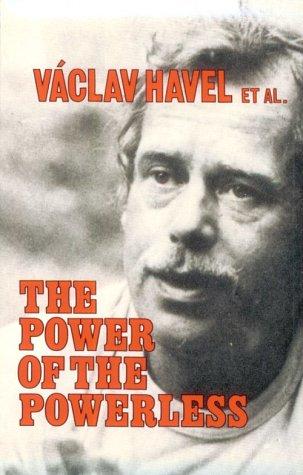
Written in 1978 and circulated as samizdat in Czechoslovakia, Václav Havel's essay is one of the most penetrating analyses of how totalitarian power actually works — and how ordinary people can resist it without armies, parties, or manifestos.
Václav Havel · 1978 · 2h 0m
Full summary and key takeaways →The 11 questions
- 1.
Havel describes participation in rituals you don't believe in as the core mechanism of totalitarian power. Where do you see analogous dynamics in non-totalitarian societies?
- 2.
The greengrocer thought putting up the sign was trivial. Havel argues it is not. What small performances of compliance do you make that you haven't examined?
- 3.
Is 'living within the truth' a realistic prescription, or does it require a level of personal courage that most people cannot sustain under pressure?
- 4.
Havel is suspicious of political movements and programs. Does that skepticism hold up when you consider how actual change has happened historically?
- 5.
He argues that parallel structures — independent institutions outside the official system — are the seeds of a successor society. What parallel structures exist in your context?
- 6.
The essay was written under communist rule, but Havel explicitly says its analysis isn't limited to communist systems. Which of his mechanisms do you see operating in democratic societies?
- 7.
What is the difference between a principled refusal to perform and an impractical purity that accomplishes nothing?
- 8.
Havel became president of Czechoslovakia after the system he described collapsed. Does that outcome validate his argument, or was there something else going on?
- 9.
The essay argues that the system's strength is also its weakness: mass complicity is inherently fragile. Does that seem right to you given what you know about how regimes actually fall?
- 10.
What does it mean to treat a person as an end rather than a means in a political context where nearly every action has strategic consequences?
- 11.
Havel is a playwright and the essay is philosophical rather than programmatic. Does that form suit the argument, or does it limit its practical usefulness?
How to run the discussion
- Pick six to eight, not all of them. An hour of real discussion covers fewer questions than anyone expects, and racing the list is what makes a book club feel like homework.
- Open with what people noticed, not what they concluded. Asking for a verdict first hardens opinions before anyone has heard each other.
- Let the disagreement run. The questions below that split a room are the ones worth the time; the ones everyone answers the same way can be skipped.
- Ask the quiet person a specific question. A direct, narrow question is far easier to answer than an open invitation to contribute.
Themes worth steering toward
If the conversation stalls, these are the threads that usually restart it.
Common questions
What are good book club questions for The Power of the Powerless?
Here are 11 book club questions for The Power of the Powerless by Václav Havel, ordered to open easily and end somewhere worth arguing about. The strongest openers ask what each reader noticed rather than what they concluded, and the discussion usually turns on dissent, political power, authenticity.
How long should a book club discussion of The Power of the Powerless last?
Most groups run 60 to 90 minutes of actual discussion. That is roughly six to eight questions, not all of them, so pick the ones that suit your group rather than working down the list in order.
What are the main themes in The Power of the Powerless?
Dissent, Political power, Authenticity, Totalitarianism, Civil society. Those are the threads most likely to divide a room, which makes them the useful places to steer a discussion that has gone quiet.
Picking the next one? See books like The Power of the Powerless or questions for other book club picks.
