History · Book club
The Prize book club questions
Here are 12 book club questions for The Prize by Daniel Yergin, ordered to open easily and end somewhere worth arguing about. Copy them, print them, or bring them up one at a time.
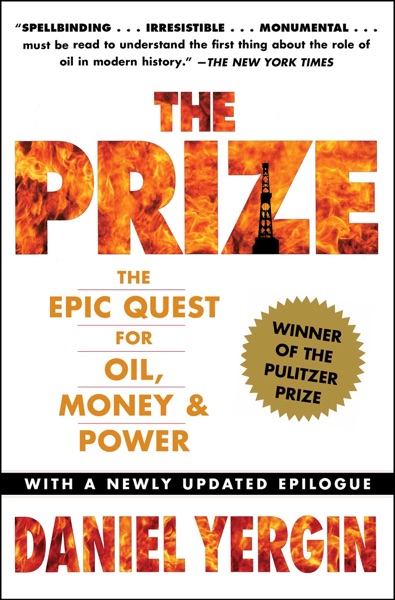
The Prize is Daniel Yergin's comprehensive history of the oil industry from its origins in Pennsylvania in 1859 through the Gulf War of 1990 and 1991.
Daniel Yergin · 1991 · 20h 0m
Full summary and key takeaways →The 12 questions
- 1.
Yergin argues that oil is fundamentally different from other commodities because of its strategic nature. Does that framing help explain current energy politics, or has something changed since 1991?
- 2.
The breakup of Standard Oil is often cited as a success of antitrust policy. Based on what you know from this book and elsewhere, is that the right lesson?
- 3.
Britain's decision to convert its navy to oil in 1912 was a gamble that paid off. How would you evaluate that kind of strategic bet in today's energy context?
- 4.
The US-Saudi relationship that Yergin traces was built on mutual interest, not mutual values. Is that a stable foundation for an alliance? What does the subsequent history tell you?
- 5.
OPEC's 1973 embargo was politically motivated but had economic effects that its organizers didn't fully anticipate. What does that tell you about the use of commodity supply as a geopolitical weapon?
- 6.
The US response to the 1973 oil shock—price controls, allocation rules—was widely criticized as counterproductive. Why do governments keep reaching for those tools despite the evidence?
- 7.
The book ends with the Gulf War. Looking at energy history since 1991, which of Yergin's themes from the book seem most prescient, and which seem most dated?
- 8.
Oil shaped the modern Middle East more than almost any other factor. What alternative histories were foreclosed by the discovery of oil in that region?
- 9.
Yergin is largely neutral about whether the oil industry has been good or bad for humanity. Where do you come down, and what evidence from the book informs your view?
- 10.
What parallels do you see between the history of oil and the emerging politics of critical minerals for batteries and renewable energy?
- 11.
The Prize was written before climate change became the dominant frame for thinking about energy. Does the book hold up, or does that omission fundamentally change what questions matter?
- 12.
What surprised you most about the history of oil as Yergin tells it?
How to run the discussion
- Pick six to eight, not all of them. An hour of real discussion covers fewer questions than anyone expects, and racing the list is what makes a book club feel like homework.
- Open with what people noticed, not what they concluded. Asking for a verdict first hardens opinions before anyone has heard each other.
- Let the disagreement run. The questions below that split a room are the ones worth the time; the ones everyone answers the same way can be skipped.
- Ask the quiet person a specific question. A direct, narrow question is far easier to answer than an open invitation to contribute.
Themes worth steering toward
If the conversation stalls, these are the threads that usually restart it.
Common questions
What are good book club questions for The Prize?
Here are 12 book club questions for The Prize by Daniel Yergin, ordered to open easily and end somewhere worth arguing about. The strongest openers ask what each reader noticed rather than what they concluded, and the discussion usually turns on oil industry, geopolitics, energy.
How long should a book club discussion of The Prize last?
Most groups run 60 to 90 minutes of actual discussion. That is roughly six to eight questions, not all of them, so pick the ones that suit your group rather than working down the list in order.
What are the main themes in The Prize?
Oil industry, Geopolitics, Energy, Business history, War. Those are the threads most likely to divide a room, which makes them the useful places to steer a discussion that has gone quiet.
Picking the next one? See books like The Prize or questions for other book club picks.
