Philosophy · Book club
The Road Less Traveled book club questions
Here are 12 book club questions for The Road Less Traveled by M. Scott Peck, ordered to open easily and end somewhere worth arguing about. Copy them, print them, or bring them up one at a time.
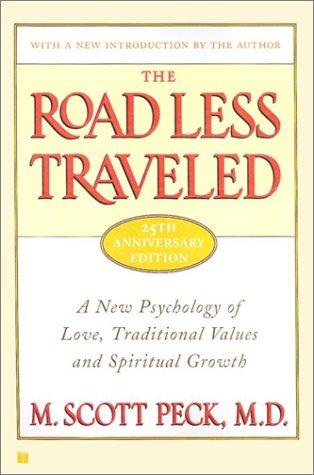
The Road Less Traveled opens with one of the most direct sentences in self-help literature: "Life is difficult." Peck's argument is that this is not a complaint but a liberation — once you genuinely accept that suffering is intrinsic to life rather than a problem to be solved, you stop wasting energy resisting it and can begin the actual work of growth.
M. Scott Peck · 1978 · 5h 20m
Full summary and key takeaways →The 12 questions
- 1.
Peck opens with 'Life is difficult.' Has accepting this statement — rather than fighting it — changed anything in your own life?
- 2.
Which of Peck's four tools of discipline do you find hardest to practice consistently: delaying gratification, accepting responsibility, dedication to truth, or balancing?
- 3.
Peck argues that falling in love is not love. How does his definition of love as an act of will sit with your own experience of close relationships?
- 4.
Think of a relationship where you extended yourself for someone else's growth at real cost to yourself. What made you willing to do that?
- 5.
Peck distinguishes neurosis (avoiding legitimate suffering) from character disorder (avoiding responsibility). Which tendency do you recognize more in yourself?
- 6.
What is a belief about reality you currently hold that you suspect might need revising? What would it take to actually revise it?
- 7.
Peck argues that responsibility is the foundation of psychological health. Where in your life are you still waiting for circumstances or other people to change?
- 8.
The section on grace suggests that people are pulled toward growth by forces beyond their conscious will. Does that match your experience? What examples do you have?
- 9.
Peck's clinical case studies reflect 1970s therapeutic assumptions. Which parts of the book feel dated, and which parts still land?
- 10.
Balancing means giving up one value for a higher one. What have you genuinely given up in the name of growth, and was the tradeoff worth it?
- 11.
Peck says the goal of spiritual growth is to merge one's self with a larger intelligence. How do you relate to that claim, regardless of your religious or philosophical commitments?
- 12.
If you read this book earlier in your life, what did you take from it then? Reading it now (or for the first time), what do you take from it?
How to run the discussion
- Pick six to eight, not all of them. An hour of real discussion covers fewer questions than anyone expects, and racing the list is what makes a book club feel like homework.
- Open with what people noticed, not what they concluded. Asking for a verdict first hardens opinions before anyone has heard each other.
- Let the disagreement run. The questions below that split a room are the ones worth the time; the ones everyone answers the same way can be skipped.
- Ask the quiet person a specific question. A direct, narrow question is far easier to answer than an open invitation to contribute.
Themes worth steering toward
If the conversation stalls, these are the threads that usually restart it.
Common questions
What are good book club questions for The Road Less Traveled?
Here are 12 book club questions for The Road Less Traveled by M. Scott Peck, ordered to open easily and end somewhere worth arguing about. The strongest openers ask what each reader noticed rather than what they concluded, and the discussion usually turns on discipline, love, spiritual growth.
How long should a book club discussion of The Road Less Traveled last?
Most groups run 60 to 90 minutes of actual discussion. That is roughly six to eight questions, not all of them, so pick the ones that suit your group rather than working down the list in order.
What are the main themes in The Road Less Traveled?
Discipline, Love, Spiritual growth, Responsibility, Grace. Those are the threads most likely to divide a room, which makes them the useful places to steer a discussion that has gone quiet.
Picking the next one? See books like The Road Less Traveled or questions for other book club picks.
