History · Book club
The Road to Wigan Pier book club questions
Here are 11 book club questions for The Road to Wigan Pier by George Orwell, ordered to open easily and end somewhere worth arguing about. Copy them, print them, or bring them up one at a time.
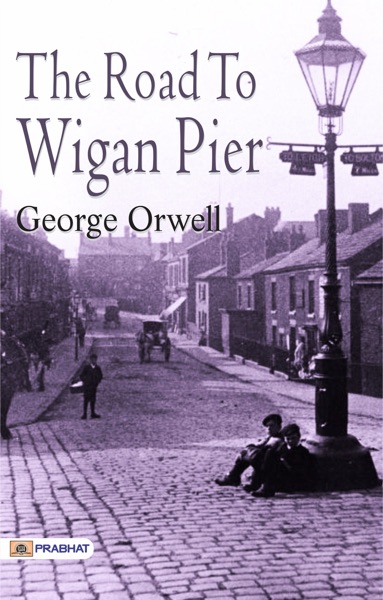
The Road to Wigan Pier is George Orwell's two-part investigation into industrial poverty in the north of England and a confessional essay on the failures of the British left to connect with the working class it claimed to represent.
George Orwell · 1937 · 6h 0m
Full summary and key takeaways →The 11 questions
- 1.
Orwell goes underground into a coal mine specifically to see the labor his comfortable life depends on. What labor that supports your own life have you never seen close up?
- 2.
The first part of the book is descriptive; the second is polemical and self-critical. Which did you find more valuable, and does the shift in register change your trust in him as a narrator?
- 3.
Orwell argues that middle-class socialists condescend to the working class even while claiming to represent it. Can you identify analogues to that dynamic in contemporary politics?
- 4.
He describes the working-class culture of the 1930s as having genuine value that progressive ideology failed to take seriously. What aspects of that culture does he portray most sympathetically?
- 5.
Orwell's class identity shaped his perceptions regardless of his political commitments. How much do you think your own class background shapes what you notice and what you miss?
- 6.
The Left Book Club added a preface distancing itself from Orwell's critique. What does that response say about the relationship between political movements and honest internal criticism?
- 7.
Orwell says working people can detect condescension through manner and smell rather than content. Has that observation aged well, or does it romanticize working-class discernment?
- 8.
The book was written in 1937. How much of the class landscape it describes — the markers, the distances, the resentments — persists in a form you recognize today?
- 9.
Orwell is ambivalent about mechanization and industrial progress throughout. Is that ambivalence an intellectual strength or a limitation?
- 10.
The poverty Orwell describes was material and measurable. What contemporary forms of poverty are harder to see from the outside because they don't map onto 1930s categories?
- 11.
Orwell uses himself as a data point repeatedly — his feelings of revulsion, his discomfort, his prejudices. Is that method more or less reliable than attempting to write objectively?
How to run the discussion
- Pick six to eight, not all of them. An hour of real discussion covers fewer questions than anyone expects, and racing the list is what makes a book club feel like homework.
- Open with what people noticed, not what they concluded. Asking for a verdict first hardens opinions before anyone has heard each other.
- Let the disagreement run. The questions below that split a room are the ones worth the time; the ones everyone answers the same way can be skipped.
- Ask the quiet person a specific question. A direct, narrow question is far easier to answer than an open invitation to contribute.
Themes worth steering toward
If the conversation stalls, these are the threads that usually restart it.
Common questions
What are good book club questions for The Road to Wigan Pier?
Here are 11 book club questions for The Road to Wigan Pier by George Orwell, ordered to open easily and end somewhere worth arguing about. The strongest openers ask what each reader noticed rather than what they concluded, and the discussion usually turns on working class, poverty, class consciousness.
How long should a book club discussion of The Road to Wigan Pier last?
Most groups run 60 to 90 minutes of actual discussion. That is roughly six to eight questions, not all of them, so pick the ones that suit your group rather than working down the list in order.
What are the main themes in The Road to Wigan Pier?
Working class, Poverty, Class consciousness, Socialism, Industrial Britain. Those are the threads most likely to divide a room, which makes them the useful places to steer a discussion that has gone quiet.
Picking the next one? See books like The Road to Wigan Pier or questions for other book club picks.
