Contemporary fiction · Book club
The Rosie Project book club questions
Here are 12 book club questions for The Rosie Project by Graeme Simsion, ordered to open easily and end somewhere worth arguing about. Copy them, print them, or bring them up one at a time.
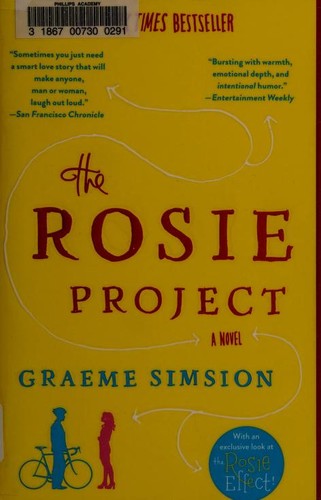
Don Tillman is a genetics professor who has never quite understood why other people find him odd.
Graeme Simsion · 2013 · 5h 30m
Full summary and key takeaways →The 12 questions
- 1.
Don never receives a formal diagnosis in the novel. Does keeping the label absent make the portrayal more or less effective? What would change if he were explicitly identified?
- 2.
The Wife Project questionnaire is absurd, but Don's logic for designing it isn't. Which of his criteria are actually reasonable, and which reveal blind spots?
- 3.
Rosie treats Don instrumentally for much of the book — using him to solve her own problem. Is that fair? Does the novel judge her for it?
- 4.
Don changes over the course of the book, but does he change fundamentally, or just tactically? Is the ending satisfying on those terms?
- 5.
Gene has affairs with his wife's apparent awareness. The book doesn't quite condemn this. What do you make of how it's handled?
- 6.
Don's rituals and schedules are presented as something to work around in a relationship. Do you read that as a compromise or as a loss for Don?
- 7.
The novel is narrated entirely from Don's perspective, which means we only hear his interpretation of what others think. What might Rosie's version of events look like?
- 8.
Several characters tell Don he is different without explaining how or why. How does that experience — knowing you're different without being told the terms — shape a person?
- 9.
The book is a comedy, but it skirts close to loneliness several times. Which scene or moment did you find most unexpectedly affecting?
- 10.
Don is professionally distinguished. Would the novel work if he were less successful — if his intelligence and rigor were traits he had without the career to validate them?
- 11.
Compared to a book like Normal People, where the central couple's incompatibility is agonizing, where does The Rosie Project land? Is this a more or less honest portrait of a relationship?
- 12.
By the end, has Don actually learned to read people better, or has he learned to manage his responses to them? Is there a meaningful difference?
How to run the discussion
- Pick six to eight, not all of them. An hour of real discussion covers fewer questions than anyone expects, and racing the list is what makes a book club feel like homework.
- Open with what people noticed, not what they concluded. Asking for a verdict first hardens opinions before anyone has heard each other.
- Let the disagreement run. The questions below that split a room are the ones worth the time; the ones everyone answers the same way can be skipped.
- Ask the quiet person a specific question. A direct, narrow question is far easier to answer than an open invitation to contribute.
Themes worth steering toward
If the conversation stalls, these are the threads that usually restart it.
Common questions
What are good book club questions for The Rosie Project?
Here are 12 book club questions for The Rosie Project by Graeme Simsion, ordered to open easily and end somewhere worth arguing about. The strongest openers ask what each reader noticed rather than what they concluded, and the discussion usually turns on neurodiversity and identity, love and self-discovery, social convention.
How long should a book club discussion of The Rosie Project last?
Most groups run 60 to 90 minutes of actual discussion. That is roughly six to eight questions, not all of them, so pick the ones that suit your group rather than working down the list in order.
What are the main themes in The Rosie Project?
Neurodiversity and identity, Love and self-discovery, Social convention, Rationality vs. emotion, Acceptance. Those are the threads most likely to divide a room, which makes them the useful places to steer a discussion that has gone quiet.
Picking the next one? See books like The Rosie Project or questions for other book club picks.
