Literary fiction · Book club
The Scarlet Letter book club questions
Here are 12 book club questions for The Scarlet Letter by Nathaniel Hawthorne, ordered to open easily and end somewhere worth arguing about. Copy them, print them, or bring them up one at a time.
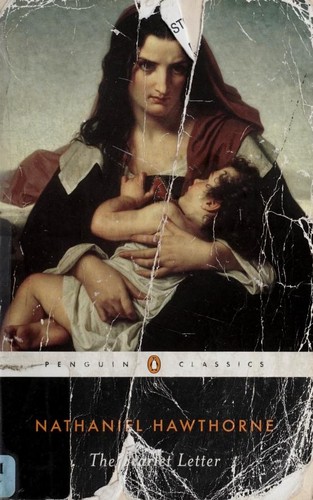
The Scarlet Letter is set in Puritan Boston in the 1640s and opens with Hester Prynne, a young woman who has given birth to a child while her husband is absent, being released from prison into the public square.
Nathaniel Hawthorne · 1850 · 5h 45m
Full summary and key takeaways →The 12 questions
- 1.
Hester accepts her punishment and does not flee, even when she could. What do you think keeps her in Boston, and does the novel want us to admire that choice?
- 2.
Dimmesdale's public reputation is at its height while he is privately destroying himself. Is Hawthorne suggesting that public virtue and private integrity are incompatible, or something more specific?
- 3.
Chillingworth begins the novel as a wronged husband with some claim to sympathy. Where does that sympathy run out for you, and why?
- 4.
The letter 'A' eventually becomes ambiguous — the community starts to see it differently. Is that a redemption story, or is Hawthorne showing us something more unsettling about how symbols work?
- 5.
Pearl is described as wild, uncanny, and unresponsive to ordinary social expectations. What function does she serve in the novel's moral argument?
- 6.
Hawthorne sets the novel in the 1640s but was writing in the 1840s. What is he saying about his own time by going two centuries back?
- 7.
The scaffold scenes give the novel a formal structure unusual for nineteenth-century American fiction. Did that structure feel meaningful or schematic to you?
- 8.
Hester contemplates, at one point, whether the moral law governing her community is just, and whether she is bound by it. Does the novel endorse or question her reasoning?
- 9.
The novel ends with Dimmesdale's public confession and death. Is that an ending about redemption, or about the limits of redemption?
- 10.
Roger Chillingworth is sometimes described as the novel's villain, but he has real grievances. How much sympathy does Hawthorne extend to him?
- 11.
Why do you think The Scarlet Letter became a fixture of high school education in America? What is the culture trying to transmit by assigning it?
- 12.
Reading it now, which character do you find most sympathetic, and does that say something about where you are in your own life?
How to run the discussion
- Pick six to eight, not all of them. An hour of real discussion covers fewer questions than anyone expects, and racing the list is what makes a book club feel like homework.
- Open with what people noticed, not what they concluded. Asking for a verdict first hardens opinions before anyone has heard each other.
- Let the disagreement run. The questions below that split a room are the ones worth the time; the ones everyone answers the same way can be skipped.
- Ask the quiet person a specific question. A direct, narrow question is far easier to answer than an open invitation to contribute.
Themes worth steering toward
If the conversation stalls, these are the threads that usually restart it.
Common questions
What are good book club questions for The Scarlet Letter?
Here are 12 book club questions for The Scarlet Letter by Nathaniel Hawthorne, ordered to open easily and end somewhere worth arguing about. The strongest openers ask what each reader noticed rather than what they concluded, and the discussion usually turns on guilt and public shame, sin and redemption, identity and symbol.
How long should a book club discussion of The Scarlet Letter last?
Most groups run 60 to 90 minutes of actual discussion. That is roughly six to eight questions, not all of them, so pick the ones that suit your group rather than working down the list in order.
What are the main themes in The Scarlet Letter?
Guilt and public shame, Sin and redemption, Identity and symbol, Law and conscience, Hidden truth. Those are the threads most likely to divide a room, which makes them the useful places to steer a discussion that has gone quiet.
Picking the next one? See books like The Scarlet Letter or questions for other book club picks.
