Science · Book club
The Selfish Gene book club questions
Here are 12 book club questions for The Selfish Gene by Richard Dawkins, ordered to open easily and end somewhere worth arguing about. Copy them, print them, or bring them up one at a time.
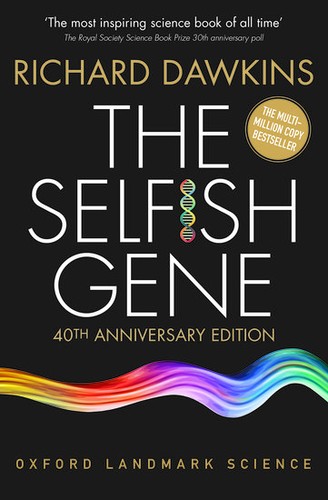
The Selfish Gene reframes evolution from the organism's point of view to the gene's.
Richard Dawkins · 1976 · 6h 15m
Full summary and key takeaways →The 12 questions
- 1.
Dawkins distinguishes the gene's-eye view from the organism's-eye view. Before reading, which level did you instinctively think evolution acted on, and has that changed?
- 2.
The book argues that organisms are 'survival machines' for genes. Does that framing feel liberating, disturbing, or simply neutral to you, and why?
- 3.
Kin selection predicts that we'll sacrifice more for close relatives than distant ones. Does your own experience match that prediction, or are there cases in your life where it clearly doesn't?
- 4.
Dawkins says selfishness is built in at the genetic level but conscious cooperation is possible at the organism level. What does that mean for how we think about designing institutions, laws, or norms?
- 5.
The evolutionarily stable strategy shows how cooperation can be rational even among self-interested actors. Where do you see ESS-style equilibria in human social or economic life?
- 6.
The tit-for-tat strategy succeeds not because it's the cleverest, but because it's simple, forgiving, and retaliatory in proportion. Where have you seen that pattern succeed or fail in real relationships?
- 7.
Dawkins introduces memes in a single chapter and acknowledged the analogy was incomplete. Do you think cultural evolution actually works like genetic evolution, or does the analogy break down in important ways?
- 8.
The book was controversial partly because critics thought it lent scientific cover to selfishness as a natural norm. Dawkins explicitly rejects that reading. Who do you think is right, and where does the confusion come from?
- 9.
Consider an example of animal altruism that surprised you before reading this book. Does the gene-centered explanation actually satisfy you as an explanation, or does it feel like it leaves something out?
- 10.
The extended phenotype concept blurs the boundary between an organism and its environment. What human-made things — products, institutions, buildings — could be described as extended phenotypes of human genes or memes?
- 11.
Dawkins wrote this book as a scientist writing for a general audience in 1976. Which parts feel dated, and which still feel like live debates?
- 12.
If genes are fundamentally selfish, what grounds do we have for moral obligations to strangers, to other species, or to future generations?
How to run the discussion
- Pick six to eight, not all of them. An hour of real discussion covers fewer questions than anyone expects, and racing the list is what makes a book club feel like homework.
- Open with what people noticed, not what they concluded. Asking for a verdict first hardens opinions before anyone has heard each other.
- Let the disagreement run. The questions below that split a room are the ones worth the time; the ones everyone answers the same way can be skipped.
- Ask the quiet person a specific question. A direct, narrow question is far easier to answer than an open invitation to contribute.
Themes worth steering toward
If the conversation stalls, these are the threads that usually restart it.
Common questions
What are good book club questions for The Selfish Gene?
Here are 12 book club questions for The Selfish Gene by Richard Dawkins, ordered to open easily and end somewhere worth arguing about. The strongest openers ask what each reader noticed rather than what they concluded, and the discussion usually turns on evolution, genetics, natural selection.
How long should a book club discussion of The Selfish Gene last?
Most groups run 60 to 90 minutes of actual discussion. That is roughly six to eight questions, not all of them, so pick the ones that suit your group rather than working down the list in order.
What are the main themes in The Selfish Gene?
Evolution, Genetics, Natural selection, Animal behavior, Cooperation. Those are the threads most likely to divide a room, which makes them the useful places to steer a discussion that has gone quiet.
Picking the next one? See books like The Selfish Gene or questions for other book club picks.
