Literary fiction · Book club
The Sense of an Ending book club questions
Here are 12 book club questions for The Sense of an Ending by Julian Barnes, ordered to open easily and end somewhere worth arguing about. Copy them, print them, or bring them up one at a time.
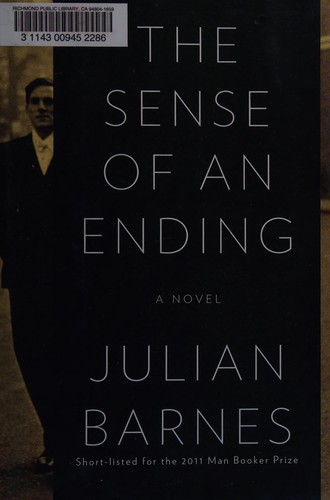
The Sense of an Ending is a short novel in two parts.
Julian Barnes · 2011 · 3h 0m
Full summary and key takeaways →The 12 questions
- 1.
Tony tells us from the start that his memory is imperfect. Does that admission make him more or less trustworthy as a narrator?
- 2.
The letter Tony wrote to Adrian and Veronica is described in part one as an act of adolescent spite that he later regrets. When its full contents are revealed in part two, does that change how you read the regret?
- 3.
Barnes argues, through Tony, that we revise the past to serve the present. Do you think that's universally true, or does Tony represent a specific psychological type?
- 4.
Veronica is a difficult character — Tony finds her infuriating, and the reader is filtered through his view. Did you find her sympathetic despite his framing? What did you think she knew and chose not to say?
- 5.
The ending requires the reader to reconstruct an event the novel never directly depicts. Did that feel earned or evasive?
- 6.
The novel is very short for a Booker winner. Do you think its brevity is a strength — compression as form — or does it leave too much unexplored?
- 7.
Adrian is described as philosophically exceptional, the most intelligent of Tony's group. His suicide is framed by Tony as a kind of intellectual decision. Does the novel ultimately accept that framing, or does it undercut it?
- 8.
Tony's complacent retirement — his mild contentment, his preference for not being disturbed — is presented as both ordinary and as something that enabled the harm he caused. Is that a moral argument, or just a personality sketch?
- 9.
Compared to Never Let Me Go, which also revisits a past that turns out to be other than it seemed, where does this novel's structure feel similar or different?
- 10.
The novel is very much about a specific English male type — educated, emotionally cautious, retrospectively self-satisfied. How universal does that character feel to you?
- 11.
Margaret, Tony's ex-wife, appears to see him more clearly than he sees himself. What does the novel do with her perspective?
- 12.
By the end, Tony cannot fully determine what he is guilty of — the novel stops just short of complete explanation. Was that the right place to stop?
How to run the discussion
- Pick six to eight, not all of them. An hour of real discussion covers fewer questions than anyone expects, and racing the list is what makes a book club feel like homework.
- Open with what people noticed, not what they concluded. Asking for a verdict first hardens opinions before anyone has heard each other.
- Let the disagreement run. The questions below that split a room are the ones worth the time; the ones everyone answers the same way can be skipped.
- Ask the quiet person a specific question. A direct, narrow question is far easier to answer than an open invitation to contribute.
Themes worth steering toward
If the conversation stalls, these are the threads that usually restart it.
Common questions
What are good book club questions for The Sense of an Ending?
Here are 12 book club questions for The Sense of an Ending by Julian Barnes, ordered to open easily and end somewhere worth arguing about. The strongest openers ask what each reader noticed rather than what they concluded, and the discussion usually turns on memory and self-deception, guilt, the unreliable past.
How long should a book club discussion of The Sense of an Ending last?
Most groups run 60 to 90 minutes of actual discussion. That is roughly six to eight questions, not all of them, so pick the ones that suit your group rather than working down the list in order.
What are the main themes in The Sense of an Ending?
Memory and self-deception, Guilt, The unreliable past, Time and aging, Complicity. Those are the threads most likely to divide a room, which makes them the useful places to steer a discussion that has gone quiet.
Picking the next one? See books like The Sense of an Ending or questions for other book club picks.
