Fantasy · Book club
The Silmarillion book club questions
Here are 12 book club questions for The Silmarillion by J.R.R. Tolkien, ordered to open easily and end somewhere worth arguing about. Copy them, print them, or bring them up one at a time.
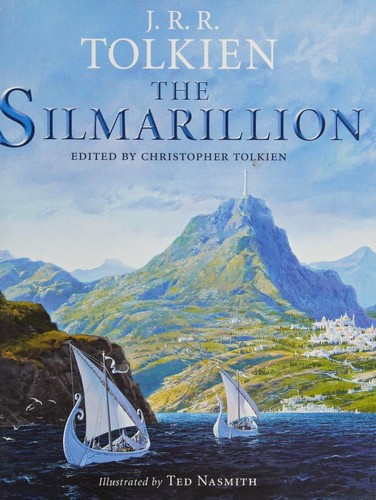
The Silmarillion is Tolkien's attempt to do for English literature what the Norse Eddas and Finnish Kalevala did for their cultures: create a complete mythology from scratch.
J.R.R. Tolkien · 1977 · 8h 45m
Full summary and key takeaways →The 12 questions
- 1.
Fëanor is described as the greatest of the Elves — gifted, brilliant, fierce. Does the book present his fall as inevitable given who he was, or as a genuine moral failure he could have avoided?
- 2.
The Oath of Fëanor binds his sons to acts they know are wrong. The book treats oath-breaking as equally monstrous. Is there a coherent ethical framework here, or is Tolkien simply describing a worldview of doom?
- 3.
Melkor — later Morgoth — is the original Dark Lord, and Sauron is merely his lieutenant. How does knowing this change how you read The Lord of the Rings? Does Sauron feel diminished?
- 4.
The Valar are essentially angelic powers who watch Middle-earth but often fail to intervene at crucial moments. Does the book justify their passivity, or critique it?
- 5.
Tolkien embedded Beren and Lúthien in the mythology as a tribute to his wife Edith. Does knowing that backstory change how you read the tale? Does it feel personal in the text?
- 6.
The Fall of Gondolin and the Children of Húrin were Tolkien's two favorite chapters of the legendarium. What do they share? What makes them feel different from the broader mythological sections?
- 7.
The Silmarillion ends on a note of loss — the world diminished, the great Elves departed. Is this a pessimistic book, or does Tolkien find something redemptive in the pattern of grief and sacrifice?
- 8.
Reading The Silmarillion after The Lord of the Rings, which detail or backstory changed how you understood the main trilogy most?
- 9.
Tolkien spent fifty years on this material and never published it in his lifetime. What do you think held him back? Is there any sense in which it is deliberately unfinished?
- 10.
The prose style is deliberately archaic and impersonal. Did it work for you? Were there moments where the distance made the tragedy hit harder rather than softer?
- 11.
Compared to actual mythologies — the Norse Eddas, Greek myth, the Mahabharata — where does The Silmarillion hold up and where does it feel like imitation?
- 12.
The book presents evil as discord — literally, Melkor's theme in the music of creation. Is this a satisfying account of evil, or does it make Morgoth feel less threatening than Sauron?
How to run the discussion
- Pick six to eight, not all of them. An hour of real discussion covers fewer questions than anyone expects, and racing the list is what makes a book club feel like homework.
- Open with what people noticed, not what they concluded. Asking for a verdict first hardens opinions before anyone has heard each other.
- Let the disagreement run. The questions below that split a room are the ones worth the time; the ones everyone answers the same way can be skipped.
- Ask the quiet person a specific question. A direct, narrow question is far easier to answer than an open invitation to contribute.
Themes worth steering toward
If the conversation stalls, these are the threads that usually restart it.
Common questions
What are good book club questions for The Silmarillion?
Here are 12 book club questions for The Silmarillion by J.R.R. Tolkien, ordered to open easily and end somewhere worth arguing about. The strongest openers ask what each reader noticed rather than what they concluded, and the discussion usually turns on creation and destruction, pride and hubris, loss and grief.
How long should a book club discussion of The Silmarillion last?
Most groups run 60 to 90 minutes of actual discussion. That is roughly six to eight questions, not all of them, so pick the ones that suit your group rather than working down the list in order.
What are the main themes in The Silmarillion?
Creation and destruction, Pride and hubris, Loss and grief, Light and darkness, Fate and free will. Those are the threads most likely to divide a room, which makes them the useful places to steer a discussion that has gone quiet.
Picking the next one? See books like The Silmarillion or questions for other book club picks.
