Talk to The Silmarillion like its author wrote you back.
Get the ideas that fit your life — not generic summaries.
- Chat with the book
- Audiobook-style main ideas
- Adapts to your life and goals
- Helps you take action
What it argues
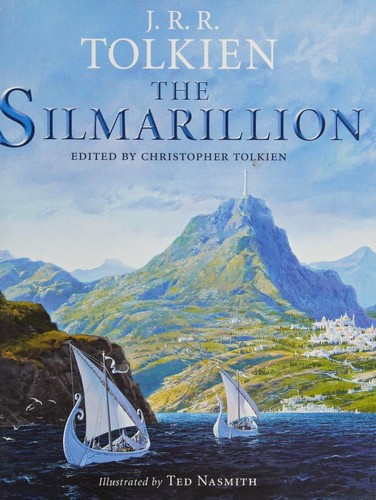
The Silmarillion is Tolkien's attempt to do for English literature what the Norse Eddas and Finnish Kalevala did for their cultures: create a complete mythology from scratch. Published posthumously in 1977 by his son Christopher from decades of drafts and fragments, the book covers the creation of the universe, the first wars between good and evil, and the deep history of elves and men that forms the foundation beneath The Lord of the Rings. It is not a novel. It is closer to the Old Testament or Hesiod's Theogony — a collection of myths, legends, and cosmological accounts.
At its core, The Silmarillion is a tragedy about beauty, pride, and loss. The Silmarils — three jewels containing the light of the Two Trees of Valinor — become the obsession that drives a dynasty of Elven princes to oath-bound catastrophe. Fëanor's refusal to surrender them, the Kinslaying at Alqualondë, the doom of Mandos, and the long centuries of war that follow form the emotional spine of the book. The central question is whether anything of beauty can be created without becoming an instrument of destruction — whether love of the good can curdle into possessiveness, betrayal, and ruin.
What it gets right
- 1.
The Silmarillion is myth, not novel — written in the register of scripture and legend, which means it rewards a different kind of attention than fiction usually demands.
- 2.
Fëanor is one of fantasy literature's most compelling tragedies: brilliant, passionate, and utterly destroyed by his inability to give away what he loves most.
- 3.
The Oath of Fëanor functions the way Greek fate does — a self-imposed doom that characters cannot escape and that justifies everything terrible they subsequently do.
What it covers
Who wrote it
J.R.R. Tolkien (1892–1973) was an English author, poet, and Oxford professor of Anglo-Saxon and English Language and Literature. He is best known for The Hobbit (1937) and The Lord of the Rings trilogy (1954–55), which established the template for modern high fantasy. Tolkien spent most of his adult life building the mythology of Middle-earth; The Silmarillion, edited by his son Christopher, was published posthumously in 1977. He was a founding member of the Inklings literary group alongside C.S. Lewis and Charles Williams.
