Talk to The Silmarillion like its author wrote you back.
Get the ideas that fit your life — not generic summaries.
- Chat with the book
- Audiobook-style main ideas
- Adapts to your life and goals
- Helps you take action
The Silmarillion, in detail
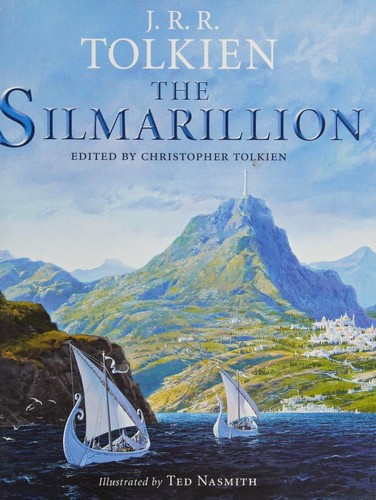
The Silmarillion is Tolkien's attempt to do for English literature what the Norse Eddas and Finnish Kalevala did for their cultures: create a complete mythology from scratch. Published posthumously in 1977 by his son Christopher from decades of drafts and fragments, the book covers the creation of the universe, the first wars between good and evil, and the deep history of elves and men that forms the foundation beneath The Lord of the Rings. It is not a novel. It is closer to the Old Testament or Hesiod's Theogony — a collection of myths, legends, and cosmological accounts.
At its core, The Silmarillion is a tragedy about beauty, pride, and loss. The Silmarils — three jewels containing the light of the Two Trees of Valinor — become the obsession that drives a dynasty of Elven princes to oath-bound catastrophe. Fëanor's refusal to surrender them, the Kinslaying at Alqualondë, the doom of Mandos, and the long centuries of war that follow form the emotional spine of the book. The central question is whether anything of beauty can be created without becoming an instrument of destruction — whether love of the good can curdle into possessiveness, betrayal, and ruin.
What makes the book distinctive is its register. Tolkien writes in a high, archaic style — the prose of myth, not of fiction. Sentences are stately and impersonal. Characters appear and disappear across centuries without the psychological intimacy of a novel. This is entirely intentional: Tolkien was building a legend-cycle where the distance of time is part of the meaning. Embedded within the mythology are several shorter tales — Beren and Lúthien, the Children of Húrin, the Fall of Gondolin — that read more like conventional narratives and are widely considered among the most powerful stories in the entire legendarium.
Readers who approach The Silmarillion expecting The Lord of the Rings will be disappointed, and that disappointment is fair. This is a book for people who loved Middle-earth so much they want to understand where it came from — who want the etymology behind the names, the genealogy behind the alliances, the theology behind the world. Read after The Lord of the Rings (never before), it transforms retrospectively everything you encountered there. Read cold, it can feel relentless and remote.
The big ideas
- 1.
The Silmarillion is myth, not novel — written in the register of scripture and legend, which means it rewards a different kind of attention than fiction usually demands.
- 2.
Fëanor is one of fantasy literature's most compelling tragedies: brilliant, passionate, and utterly destroyed by his inability to give away what he loves most.
- 3.
The Oath of Fëanor functions the way Greek fate does — a self-imposed doom that characters cannot escape and that justifies everything terrible they subsequently do.
