Self-help · Book club
The Simple Path to Wealth book club questions
Here are 12 book club questions for The Simple Path to Wealth by JL Collins, ordered to open easily and end somewhere worth arguing about. Copy them, print them, or bring them up one at a time.
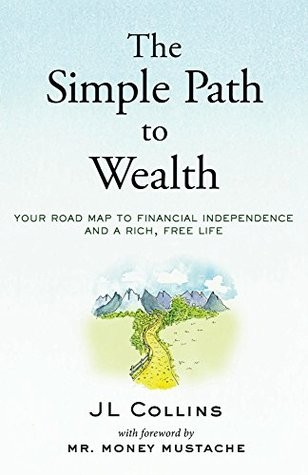
The Simple Path to Wealth is JL Collins's guide to building wealth and financial independence through a deliberately simple investment approach, originally written as a series of letters to his daughter.
JL Collins · 2016 · 3h 45m
Full summary and key takeaways →The 12 questions
- 1.
Collins's single-fund recommendation — one total stock market index fund — is simpler than most professional recommendations. What do you gain and what do you give up with that level of simplicity?
- 2.
The book was originally written as letters to Collins's daughter. Does that origin change how you read the advice — does it feel more personal, more opinionated, or more applicable to your situation?
- 3.
Collins argues against international diversification, which puts him at odds with most portfolio theory. What's the strongest argument for his position, and what's the strongest argument against it?
- 4.
F-you money is one of the book's most emotionally resonant concepts. Have you ever been in a situation where financial independence would have materially changed your choices?
- 5.
Collins's accumulation target — 25 times annual spending — implies that reducing spending is as powerful as increasing investment returns in reaching financial independence. How does that framing change your priorities?
- 6.
The 4 percent rule emerged from research on historical US market returns. Does that research translate to your specific situation — retirement age, spending needs, asset mix, global market exposure?
- 7.
Collins says stocks are less risky than bonds over long time horizons. Have you internalized that statement enough to hold a stock-heavy portfolio through a 50 percent decline without selling?
- 8.
The book's emphasis on a single fund simplifies decisions but means your portfolio looks like everyone else's. Does the lack of differentiation bother you, or is homogeneity the point?
- 9.
Collins is explicit that his approach is not the only path. What specifically in your financial situation makes the simple path harder or easier to follow?
- 10.
The distribution phase — actually spending down the portfolio — requires a different psychological orientation than accumulation. Have you thought through what that transition would feel like for you?
- 11.
Collins writes with unusual directness and is willing to disagree with mainstream advice on bonds and international stocks. How do you evaluate contrarian positions in personal finance — when is disagreement a signal of insight and when is it overconfidence?
- 12.
The FIRE community that this book is part of has been criticized for being available mainly to high-income professionals. Is the book's path genuinely accessible across income levels, or does it assume a level of earnings that makes the numbers work easily?
How to run the discussion
- Pick six to eight, not all of them. An hour of real discussion covers fewer questions than anyone expects, and racing the list is what makes a book club feel like homework.
- Open with what people noticed, not what they concluded. Asking for a verdict first hardens opinions before anyone has heard each other.
- Let the disagreement run. The questions below that split a room are the ones worth the time; the ones everyone answers the same way can be skipped.
- Ask the quiet person a specific question. A direct, narrow question is far easier to answer than an open invitation to contribute.
Themes worth steering toward
If the conversation stalls, these are the threads that usually restart it.
Common questions
What are good book club questions for The Simple Path to Wealth?
Here are 12 book club questions for The Simple Path to Wealth by JL Collins, ordered to open easily and end somewhere worth arguing about. The strongest openers ask what each reader noticed rather than what they concluded, and the discussion usually turns on financial independence, index investing, debt avoidance.
How long should a book club discussion of The Simple Path to Wealth last?
Most groups run 60 to 90 minutes of actual discussion. That is roughly six to eight questions, not all of them, so pick the ones that suit your group rather than working down the list in order.
What are the main themes in The Simple Path to Wealth?
Financial independence, Index investing, Debt avoidance, FIRE movement, Investment simplicity. Those are the threads most likely to divide a room, which makes them the useful places to steer a discussion that has gone quiet.
Picking the next one? See books like The Simple Path to Wealth or questions for other book club picks.
