Science · Book club
The Sixth Extinction: An Unnatural History book club questions
Here are 12 book club questions for The Sixth Extinction: An Unnatural History by Elizabeth Kolbert, ordered to open easily and end somewhere worth arguing about. Copy them, print them, or bring them up one at a time.
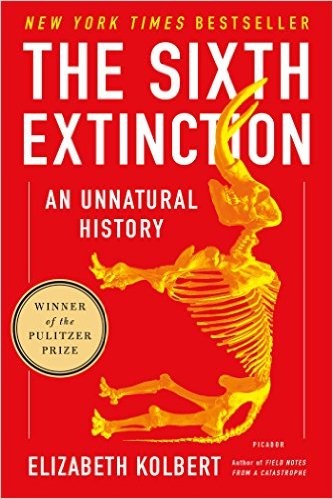
The Sixth Extinction is Elizabeth Kolbert's account of the mass extinction event currently underway — the sixth in Earth's history, and the first caused by a single species.
Elizabeth Kolbert · 2014 · 6h 0m
Full summary and key takeaways →The 12 questions
- 1.
Kolbert reports without prescribing solutions. Did that choice make the argument more or less persuasive for you?
- 2.
The chytrid fungus spread globally through the movement of people and goods. What other invisible vectors of harm do we carry without knowing it?
- 3.
Kolbert describes scientists who spend careers studying species likely to vanish within their lifetimes. What kind of psychological posture does that work require?
- 4.
The book argues that habitat fragmentation can be as lethal as outright destruction. How does that change how you think about development, roads, and land use?
- 5.
Ocean acidification is called the 'evil twin' of climate change — receiving far less attention despite comparable consequences. Why do some crises get less attention than their scale warrants?
- 6.
Kolbert notes that the concept of extinction had to be proven. Before Cuvier, people assumed continuity. What assumptions about continuity might future generations have to dismantle?
- 7.
The sixth extinction is driven by a species with the cognitive capacity to understand what it's doing. Does awareness carry moral weight, and if so, how much?
- 8.
Which species or ecosystem Kolbert describes stayed with you most? What does that reaction tell you about how we allocate concern?
- 9.
The book ends without solutions. Is that an honest reckoning or an abdication? What would a solutions chapter have needed to say to be credible?
- 10.
Kolbert compares human impact to an asteroid strike in its geological consequences. Is that comparison clarifying or distorting?
- 11.
How does the scale of millions of years of evolutionary consequence change how you think about political and economic choices made on timescales of years or decades?
- 12.
The book treats extinction as irreversible. De-extinction research suggests otherwise for some species. Does that prospect change the urgency of prevention, or is it a distraction?
How to run the discussion
- Pick six to eight, not all of them. An hour of real discussion covers fewer questions than anyone expects, and racing the list is what makes a book club feel like homework.
- Open with what people noticed, not what they concluded. Asking for a verdict first hardens opinions before anyone has heard each other.
- Let the disagreement run. The questions below that split a room are the ones worth the time; the ones everyone answers the same way can be skipped.
- Ask the quiet person a specific question. A direct, narrow question is far easier to answer than an open invitation to contribute.
Themes worth steering toward
If the conversation stalls, these are the threads that usually restart it.
Common questions
What are good book club questions for The Sixth Extinction: An Unnatural History?
Here are 12 book club questions for The Sixth Extinction: An Unnatural History by Elizabeth Kolbert, ordered to open easily and end somewhere worth arguing about. The strongest openers ask what each reader noticed rather than what they concluded, and the discussion usually turns on extinction, climate change, biodiversity.
How long should a book club discussion of The Sixth Extinction: An Unnatural History last?
Most groups run 60 to 90 minutes of actual discussion. That is roughly six to eight questions, not all of them, so pick the ones that suit your group rather than working down the list in order.
What are the main themes in The Sixth Extinction: An Unnatural History?
Extinction, Climate change, Biodiversity, Evolution, Human impact. Those are the threads most likely to divide a room, which makes them the useful places to steer a discussion that has gone quiet.
Picking the next one? See books like The Sixth Extinction: An Unnatural History or questions for other book club picks.
