Philosophy · Book club
The Social Contract book club questions
Here are 12 book club questions for The Social Contract by Jean-Jacques Rousseau, ordered to open easily and end somewhere worth arguing about. Copy them, print them, or bring them up one at a time.
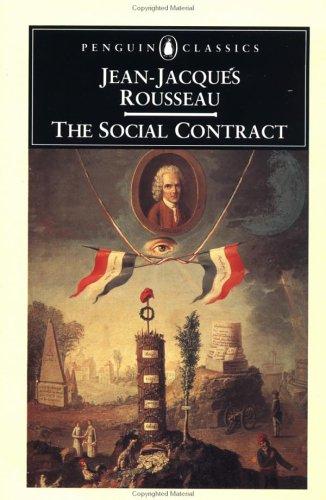
The Social Contract opens with one of philosophy's most famous sentences: "Man is born free, and everywhere he is in chains." Rousseau's 1762 treatise sets out to explain how political authority can be legitimate rather than merely imposed by force.
Jean-Jacques Rousseau · 1762 · 3h 0m
Full summary and key takeaways →The 12 questions
- 1.
Rousseau says sovereignty cannot be represented. Does that argument apply to any modern democracy you know, or has the problem of scale made it irrelevant?
- 2.
The general will is not the same as the will of the majority. How would you go about identifying what the general will actually is in a diverse society?
- 3.
Rousseau is skeptical of large states. Given that we live in them anyway, what elements of his vision can still be applied locally or institutionally?
- 4.
The phrase 'forced to be free' has been used to defend both democratic citizenship and authoritarian coercion. Where do you think the line is?
- 5.
'Man is born free, and everywhere he is in chains.' Is Rousseau's diagnosis of political chains still accurate? What form do those chains take today?
- 6.
Rousseau distinguishes civil freedom from natural freedom and argues the former is superior. Do you find that argument convincing?
- 7.
How does Rousseau's concept of the general will compare to how we currently think about public interest or the common good in political debate?
- 8.
Rousseau says citizens must participate actively, not merely vote occasionally. What would genuine political participation look like in your own community?
- 9.
The French Revolution invoked Rousseau constantly. Do you think the Terror was a logical consequence of his ideas, or a distortion of them?
- 10.
Rousseau proposes a civic religion to provide social cohesion. Is there an equivalent in modern pluralist democracies, and is that good or dangerous?
- 11.
Which institutions in a contemporary democracy do you think Rousseau would approve of, and which would he reject as illegitimate?
- 12.
How does the social contract framework apply to global problems — climate, trade, migration — that operate beyond the scale of any single nation?
How to run the discussion
- Pick six to eight, not all of them. An hour of real discussion covers fewer questions than anyone expects, and racing the list is what makes a book club feel like homework.
- Open with what people noticed, not what they concluded. Asking for a verdict first hardens opinions before anyone has heard each other.
- Let the disagreement run. The questions below that split a room are the ones worth the time; the ones everyone answers the same way can be skipped.
- Ask the quiet person a specific question. A direct, narrow question is far easier to answer than an open invitation to contribute.
Themes worth steering toward
If the conversation stalls, these are the threads that usually restart it.
Common questions
What are good book club questions for The Social Contract?
Here are 12 book club questions for The Social Contract by Jean-Jacques Rousseau, ordered to open easily and end somewhere worth arguing about. The strongest openers ask what each reader noticed rather than what they concluded, and the discussion usually turns on political legitimacy, sovereignty, freedom.
How long should a book club discussion of The Social Contract last?
Most groups run 60 to 90 minutes of actual discussion. That is roughly six to eight questions, not all of them, so pick the ones that suit your group rather than working down the list in order.
What are the main themes in The Social Contract?
Political legitimacy, Sovereignty, Freedom, Democratic theory, General will. Those are the threads most likely to divide a room, which makes them the useful places to steer a discussion that has gone quiet.
Picking the next one? See books like The Social Contract or questions for other book club picks.
