Talk to The Song of Achilles like its author wrote you back.
Get the ideas that fit your life — not generic summaries.
- Chat with the book
- Audiobook-style main ideas
- Adapts to your life and goals
- Helps you take action
What it argues
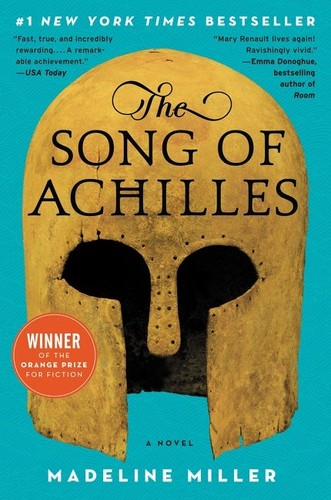
The Song of Achilles retells the story of the Trojan War through the eyes of Patroclus, a clumsy and unexceptional prince who is exiled in childhood and sent to be raised alongside Achilles at Peleus's court. Patroclus is the narrator, and what he narrates is a love story — his own slow understanding that he loves Achilles, Achilles's certainty that the feeling is mutual, and the arc of their partnership from boyhood through the siege of Troy. Madeline Miller is not revising the myth so much as illuminating what Homer treats as known: that the relationship between Achilles and Patroclus was the center of the Iliad's emotional world.
The book is about what it costs to be bound to greatness and what greatness costs the person who possesses it. Achilles is beautiful, physically perfect, fated for glory — and Miller shows that fate as a trap. He was shaped before he could choose, given only one life-path: die at Troy and be remembered forever, or live in obscurity. Patroclus chose Achilles; Achilles did not choose his fate. The novel's heartbreak is structural: you know from the beginning how it ends, and that knowledge makes every happy scene elegiac.
What it gets right
- 1.
Patroclus's ordinariness is deliberate — narrating from the margins of legend gives Miller access to emotions the heroic tradition excludes.
- 2.
The prophecy that structures Achilles's life is not a gift but a prison; Miller is interested in what heroic destiny actually costs.
- 3.
The love between Achilles and Patroclus is the novel's center — Miller makes it specific and physical without making it mythological.
What it covers
Who wrote it
Madeline Miller is an American author who studied Classics at Brown University and spent a decade teaching Greek and Latin before writing The Song of Achilles, which won the Orange Prize for Fiction in 2012. Her second novel, Circe, was published in 2018 and became an international bestseller. Both novels draw on her deep engagement with ancient Greek literature. She is among the most successful living authors writing literary fiction rooted in classical mythology.
