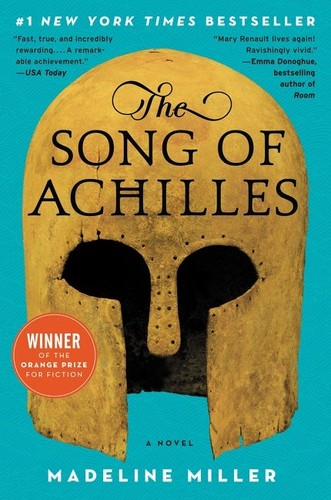
The Song of Achilles by Madeline Miller is a 2011 historical fiction book about love and devotion, glory and mortality, war's cost. Patroclus's ordinariness is deliberate — narrating from the margins of legend gives Miller access to emotions the heroic tradition excludes.
Summary
The Song of Achilles retells the story of the Trojan War through the eyes of Patroclus, a clumsy and unexceptional prince who is exiled in childhood and sent to be raised alongside Achilles at Peleus's court. Patroclus is the narrator, and what he narrates is a love story — his own slow understanding that he loves Achilles, Achilles's certainty that the feeling is mutual, and the arc of their partnership from boyhood through the siege of Troy. Madeline Miller is not revising the myth so much as illuminating what Homer treats as known: that the relationship between Achilles and Patroclus was the center of the Iliad's emotional world.
The book is about what it costs to be bound to greatness and what greatness costs the person who possesses it. Achilles is beautiful, physically perfect, fated for glory — and Miller shows that fate as a trap. He was shaped before he could choose, given only one life-path: die at Troy and be remembered forever, or live in obscurity. Patroclus chose Achilles; Achilles did not choose his fate. The novel's heartbreak is structural: you know from the beginning how it ends, and that knowledge makes every happy scene elegiac.
The prose is precise and clear, occasionally luminous. Miller trained as a Classicist and it shows in how the mythological world functions — the logic of prophecy, divine interference, and heroic code is internally consistent. The Trojan War backdrop is rendered vividly but always subordinated to the intimate story. The Achilles and Patroclus relationship is given the full weight of a great love story without being sentimentalized; Miller trusts that the reader understands what loss means.
The Song of Achilles is the kind of novel where you find yourself reading slower near the end. It won the Orange Prize for Fiction in 2012 and has accumulated a devoted readership, particularly among readers who came to it via social media recommendations years after publication. If you already know the Iliad, the novel is a companion that deepens what you know. If you don't, it functions as a beautiful gateway into that world.
Talk to The Song of Achilles like its author wrote you back.
Get the ideas that fit your life — not generic summaries.
- Chat with the book
- Audiobook-style main ideas
- Adapts to your life and goals
- Helps you take action
Key takeaways
- 1.
Patroclus's ordinariness is deliberate — narrating from the margins of legend gives Miller access to emotions the heroic tradition excludes.
- 2.
The prophecy that structures Achilles's life is not a gift but a prison; Miller is interested in what heroic destiny actually costs.
- 3.
The love between Achilles and Patroclus is the novel's center — Miller makes it specific and physical without making it mythological.
- 4.
Thetis, Achilles's divine mother, is one of the novel's most unsettling figures: protective in a way that is indistinguishable from ownership.
- 5.
Grief in the novel is rendered as loss of purpose — when Patroclus dies, Achilles stops being able to want anything except revenge and death.
- 6.
The Trojan War is shown as both heroic set piece and grinding atrocity; the gap between the epic frame and the human cost is where the novel lives.
- 7.
Miller handles the novel's known ending as the Iliad does — not as a surprise but as an inevitability that charges every prior scene with meaning.
- 8.
The final chapter shifts perspective in a way that is structurally unusual for the novel but emotionally essential to its resolution.
Discussion questions
Use these on your own, with a book club, or as chat starters in Superbook. Book club version, ready to copy or print →
- 1.
Miller chooses Patroclus as narrator partly because he is ordinary. Did having an unremarkable protagonist help or complicate your connection to the story?
- 2.
Achilles is fated for glory or long life — not both. Does the novel present this as a tragedy, or does it take seriously that Achilles might have genuinely wanted the glory?
- 3.
Thetis's attitude toward Patroclus — cold, contemptuous, never quite hostile enough to act — is one of the book's most interesting dynamics. What do you think she represents?
- 4.
The novel is set in a world where divine intervention is real and prophecy is accurate. Does that determinism undercut the emotional stakes, or does it intensify them?
- 5.
Patroclus puts on Achilles's armor and goes to battle knowing it may kill him. The novel handles his motivations carefully. Were you convinced by his reasoning?
- 6.
The Trojan War is a catastrophe for almost everyone involved — Trojans more than Greeks. Does Miller allow the Trojan perspective enough space, or is it a limitation of the first-person Patroclus narration?
- 7.
The relationship between Achilles and Patroclus is treated as central to the Iliad by many classical scholars; others disagree. Does it matter for the novel whether Homer intended them as lovers?
- 8.
The novel is elegiac almost from the first page — you know how it ends. Did knowing the ending change how you read the happy parts?
- 9.
Briseis is a more developed character in Miller's version than in Homer. How does her relationship with Patroclus change the dynamic in the Greek camp?
- 10.
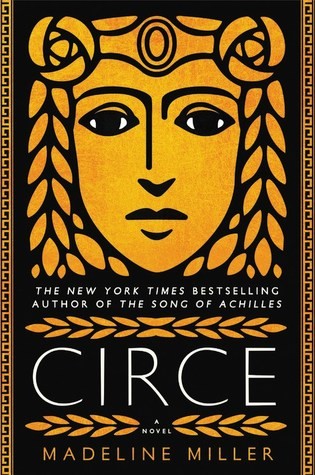
Compared to Circe, which Miller published later, The Song of Achilles is less interested in autonomy and more interested in devotion. Which mode of storytelling do you find more interesting?
- 11.
The title belongs to Patroclus's perspective, not Achilles's. By the end, do you read the song as being sung by Patroclus, about Achilles, or as something else?
- 12.
The novel was a word-of-mouth phenomenon for years before it hit bestseller lists. Why do you think it took that long for the book to find its widest audience?
Themes
Frequently asked questions
-
Do I need to have read the Iliad first?
No. Miller provides enough context that readers unfamiliar with the Iliad can follow and enjoy the novel. Knowledge of Homer enriches the experience — you'll catch the structural ironies and departures — but it is not required.
-
Is this a romance novel?
It is a love story, though the genre conventions of romance don't apply. The relationship between Achilles and Patroclus is central and explicitly romantic, but the novel's emotional register is closer to tragedy than to romance — you know from early on that this ends badly.
-
Is The Song of Achilles hard to read?
Not technically. The prose is clear and accessible. Emotionally it is demanding near the end. Several readers report having to stop or slow down in the final chapters. That's a feature of how the book is built, not a flaw.
-
Why is this book so popular on social media?
It has a devoted following among readers who found it through word of mouth and recommendation, often years after its publication. The combination of accessible prose, a central love story, and an emotionally devastating ending makes it shareable in ways that more subdued literary fiction is not.
-
Who shouldn't read it?
Readers who need plot momentum over emotional intensity, or who find predetermined tragic endings structurally deflating rather than poignant. Also readers with no patience for mythological world-building as such — the logic of gods and prophecy is load-bearing here.