Science · Book club
The Song of the Cell book club questions
Here are 12 book club questions for The Song of the Cell by Siddhartha Mukherjee, ordered to open easily and end somewhere worth arguing about. Copy them, print them, or bring them up one at a time.
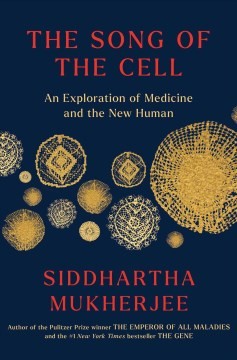
The Song of the Cell is Siddhartha Mukherjee's account of how the cell — the basic unit of life — was discovered, decoded, and eventually harnessed to rebuild and repair the human body.
Siddhartha Mukherjee · 2022 · 6h 20m
Full summary and key takeaways →The 12 questions
- 1.
Mukherjee frames medicine as moving from an organ-based to a cell-based paradigm. Do you find that shift convincing, or does the distinction feel artificial?
- 2.
The CAR-T cases in the book involve extraordinary cost and uncertainty. How should medicine weigh individual benefit against systemic resource constraints?
- 3.
Mukherjee uses musical metaphor throughout — cells as instruments, the body as composition. Did that framing help you understand the biology, or did it get in the way?
- 4.
The book traces how the germ theory of disease shaped medicine for more than a century. What assumptions in today's medicine might the next century's doctors find similarly partial?
- 5.
Stem cell research has been entangled with ethics from the start. How do you think about the moral status of embryonic cells used in research?
- 6.
Mukherjee is both an oncologist and a writer. Does his dual identity make the book more trustworthy, or does it sometimes feel like advocacy dressed as explanation?
- 7.
Which patient story in the book stayed with you most? What does it reveal about the gap between scientific possibility and clinical reality?
- 8.
Mukherjee acknowledges that many cellular therapies remain inaccessible to most people. Does scientific progress feel differently when its benefits are distributed this unevenly?
- 9.
The book argues that reductionism — breaking biology into genes and proteins — has reached its limit. Do you find that argument persuasive?
- 10.
Cellular senescence — the accumulation of cells that no longer divide but refuse to die — is one mechanism of aging. Does thinking about aging cellularly change how you think about it personally?
- 11.
How does The Song of the Cell change, if at all, how you think about what the human body actually is?
- 12.
Mukherjee's earlier book, The Emperor of All Maladies, covered cancer as a disease of cells. Does reading this book retroactively change how you understood that one?
How to run the discussion
- Pick six to eight, not all of them. An hour of real discussion covers fewer questions than anyone expects, and racing the list is what makes a book club feel like homework.
- Open with what people noticed, not what they concluded. Asking for a verdict first hardens opinions before anyone has heard each other.
- Let the disagreement run. The questions below that split a room are the ones worth the time; the ones everyone answers the same way can be skipped.
- Ask the quiet person a specific question. A direct, narrow question is far easier to answer than an open invitation to contribute.
Themes worth steering toward
If the conversation stalls, these are the threads that usually restart it.
Common questions
What are good book club questions for The Song of the Cell?
Here are 12 book club questions for The Song of the Cell by Siddhartha Mukherjee, ordered to open easily and end somewhere worth arguing about. The strongest openers ask what each reader noticed rather than what they concluded, and the discussion usually turns on cell biology, medicine, evolution.
How long should a book club discussion of The Song of the Cell last?
Most groups run 60 to 90 minutes of actual discussion. That is roughly six to eight questions, not all of them, so pick the ones that suit your group rather than working down the list in order.
What are the main themes in The Song of the Cell?
Cell biology, Medicine, Evolution, Human body, Scientific discovery. Those are the threads most likely to divide a room, which makes them the useful places to steer a discussion that has gone quiet.
Picking the next one? See books like The Song of the Cell or questions for other book club picks.
