History · Book club
The Souls of Black Folk book club questions
Here are 12 book club questions for The Souls of Black Folk by W.E.B. Du Bois, ordered to open easily and end somewhere worth arguing about. Copy them, print them, or bring them up one at a time.
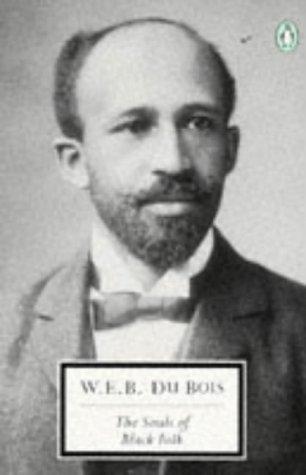
The Souls of Black Folk, published in 1903, is W.E.B.
W.E.B. Du Bois · 1903 · 5h 0m
Full summary and key takeaways →The 12 questions
- 1.
Du Bois introduces double consciousness in the first essay. How does that concept hold up as a description of living with a marginalized identity — does it generalize, or is it specific to the Black American experience he describes?
- 2.
His debate with Booker T. Washington is a disagreement about tactics as much as principles. Under what conditions, if any, does accommodation make sense as a political strategy?
- 3.
Du Bois argues that the veil is a condition of knowledge as much as suffering — that it produces insight as well as pain. Do you find that argument convincing or does it romanticize an injury?
- 4.
The book mixes genres: history, essay, memoir, music. Does that mixture strengthen or weaken his argument?
- 5.
Du Bois writes about Reconstruction in detail. How does your sense of that period compare to what you learned in school?
- 6.
The spirituals are present throughout the book as epigraphs but rarely analyzed directly. What do you make of that formal choice?
- 7.
The chapter on his son's death is one of the most personal in the book. What does it contribute that the more analytical chapters cannot?
- 8.
Du Bois was writing in 1903 about a problem he described as global. Which parts of his analysis apply outside the United States?
- 9.
He argues that the talented tenth must lead Black advancement. That argument has been criticized as elitist. Is the criticism fair?
- 10.
The veil metaphor runs through the entire book. By the end, does Du Bois offer any way through or past it, or is it a permanent condition?
- 11.
What would Du Bois make of America in 2026? Which of his diagnoses would he consider confirmed, and which resolved?
- 12.
Between Du Bois's analytical voice and his personal voice, which do you find more persuasive? Which do you find more moving?
How to run the discussion
- Pick six to eight, not all of them. An hour of real discussion covers fewer questions than anyone expects, and racing the list is what makes a book club feel like homework.
- Open with what people noticed, not what they concluded. Asking for a verdict first hardens opinions before anyone has heard each other.
- Let the disagreement run. The questions below that split a room are the ones worth the time; the ones everyone answers the same way can be skipped.
- Ask the quiet person a specific question. A direct, narrow question is far easier to answer than an open invitation to contribute.
Themes worth steering toward
If the conversation stalls, these are the threads that usually restart it.
Common questions
What are good book club questions for The Souls of Black Folk?
Here are 12 book club questions for The Souls of Black Folk by W.E.B. Du Bois, ordered to open easily and end somewhere worth arguing about. The strongest openers ask what each reader noticed rather than what they concluded, and the discussion usually turns on double consciousness, race in america, reconstruction.
How long should a book club discussion of The Souls of Black Folk last?
Most groups run 60 to 90 minutes of actual discussion. That is roughly six to eight questions, not all of them, so pick the ones that suit your group rather than working down the list in order.
What are the main themes in The Souls of Black Folk?
Double consciousness, Race in America, Reconstruction, Education, Identity. Those are the threads most likely to divide a room, which makes them the useful places to steer a discussion that has gone quiet.
Picking the next one? See books like The Souls of Black Folk or questions for other book club picks.
