Science · Book club
The Sports Gene book club questions
Here are 12 book club questions for The Sports Gene by David Epstein, ordered to open easily and end somewhere worth arguing about. Copy them, print them, or bring them up one at a time.
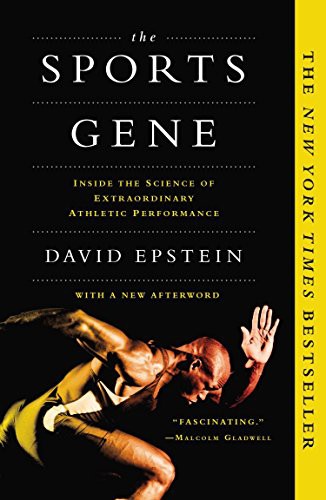
The Sports Gene is David Epstein's investigation into the science of athletic performance — specifically the question of how much genetics determines who becomes elite.
David Epstein · 2013 · 6h 40m
Full summary and key takeaways →The 12 questions
- 1.
Epstein disputes the 10,000-hours rule's implication that anyone can become elite with enough deliberate practice. Does that reframing feel like realism or an excuse to give up on difficult goals?
- 2.
The book documents genetic clustering in specific sports — West Africans in sprinting, East Africans in distance running. How should sports and coaching communities think about genetic advantage without sliding into racial essentialism?
- 3.
He covers the variability in how people respond to identical training. Have you observed in yourself or others that some people respond dramatically better to the same exercise program? What did you attribute that to?
- 4.
Some parents have begun genetic testing children for sports potential. Does that seem like useful information or a problematic shortcut?
- 5.
Epstein covers the ethical issues around genetic testing in sport — for potential, for doping detection, for injury risk. Where are the appropriate limits?
- 6.
The book argues that genetic luck is a major determinant of elite performance. How does that change how you think about celebrating or emulating athletic greatness?
- 7.
He covers cases like Eero Mäntyranta, the Finnish cross-country skier who had a genetic mutation giving him dramatically elevated red blood cell counts. Is that natural doping? Where is the line between genetic advantage and unfair advantage?
- 8.
If you could know your own genetic athletic profile with current testing, would you want to? What would you do with that information?
- 9.
Epstein covers the role of early childhood physical activity and sport sampling in developing athletic potential. How does the current model of youth sport specialization compare to what the science suggests?
- 10.
The book describes athletes with unusual anatomical features — extreme wingspan, rare heart morphology — that are advantages in their sport. Does that change your awe of elite performance?
- 11.
Epstein finds that elite athletes in many sports have specific advantages that are not about raw athleticism but about sport-specific physical traits. What does that suggest about the breadth of athletic potential across different physical profiles?
- 12.
How does knowing the genetic component of athletic performance affect what you think parents should tell children about their athletic potential?
How to run the discussion
- Pick six to eight, not all of them. An hour of real discussion covers fewer questions than anyone expects, and racing the list is what makes a book club feel like homework.
- Open with what people noticed, not what they concluded. Asking for a verdict first hardens opinions before anyone has heard each other.
- Let the disagreement run. The questions below that split a room are the ones worth the time; the ones everyone answers the same way can be skipped.
- Ask the quiet person a specific question. A direct, narrow question is far easier to answer than an open invitation to contribute.
Themes worth steering toward
If the conversation stalls, these are the threads that usually restart it.
Common questions
What are good book club questions for The Sports Gene?
Here are 12 book club questions for The Sports Gene by David Epstein, ordered to open easily and end somewhere worth arguing about. The strongest openers ask what each reader noticed rather than what they concluded, and the discussion usually turns on athletic genetics, human performance, nature vs nurture.
How long should a book club discussion of The Sports Gene last?
Most groups run 60 to 90 minutes of actual discussion. That is roughly six to eight questions, not all of them, so pick the ones that suit your group rather than working down the list in order.
What are the main themes in The Sports Gene?
Athletic genetics, Human performance, Nature vs nurture, Sports science, Training and talent. Those are the threads most likely to divide a room, which makes them the useful places to steer a discussion that has gone quiet.
Picking the next one? See books like The Sports Gene or questions for other book club picks.
