History · Book club
The Spy and the Traitor: The Greatest Espionage Story of the Cold War book club questions
Here are 12 book club questions for The Spy and the Traitor: The Greatest Espionage Story of the Cold War by Ben Macintyre, ordered to open easily and end somewhere worth arguing about. Copy them, print them, or bring them up one at a time.
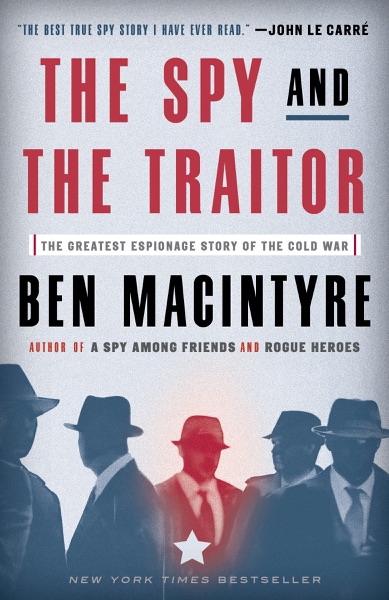
Ben Macintyre tells the story of Oleg Gordievsky, a KGB officer who became the most important British spy of the Cold War.
Ben Macintyre · 2018 · 6h 0m
Full summary and key takeaways →The 12 questions
- 1.
Gordievsky risked his life for years for an intelligence service that could not fully protect him. What do you think kept him going during the long years of no escape plan and no acknowledgment?
- 2.
Macintyre argues Gordievsky's motives were mixed rather than purely ideological. Does that make him more or less sympathetic to you as a subject?
- 3.
The ABLE ARCHER crisis showed that intelligence failures can push nuclear powers toward war without either side intending it. What does that suggest about how international crises should be managed?
- 4.
Gordievsky's wife did not know he was a spy and initially stayed loyal to the Soviet system after his defection. How do you read her position in the story?
- 5.
Aldrich Ames's betrayal sacrificed Gordievsky and others for money. What does the Ames case suggest about the structural vulnerabilities in intelligence sharing between allies?
- 6.
Macintyre depicts the relationship between Gordievsky and his MI6 handlers as genuinely warm. Does that surprise you, given the professional nature of the relationship?
- 7.
The escape plan required years of preparation and a tiny window. What does that level of operational patience say about how intelligence services work compared to the popular image?
- 8.
Gordievsky spent years watching KGB colleagues punish and destroy people for dissent. How do you think that daily exposure shaped his willingness to take risk?
- 9.
The KGB called Gordievsky a traitor; the British called him a hero. How does Macintyre navigate that tension, and do you find his framing convincing?
- 10.
If Gordievsky had been caught, his intelligence record would largely have been buried. What does that say about how history is shaped by survival and luck?
- 11.
Does reading this book change how you think about the morality of espionage — particularly the use of individuals as assets in a larger geopolitical conflict?
- 12.
What does this story suggest about how authoritarian systems rot from within over time?
How to run the discussion
- Pick six to eight, not all of them. An hour of real discussion covers fewer questions than anyone expects, and racing the list is what makes a book club feel like homework.
- Open with what people noticed, not what they concluded. Asking for a verdict first hardens opinions before anyone has heard each other.
- Let the disagreement run. The questions below that split a room are the ones worth the time; the ones everyone answers the same way can be skipped.
- Ask the quiet person a specific question. A direct, narrow question is far easier to answer than an open invitation to contribute.
Themes worth steering toward
If the conversation stalls, these are the threads that usually restart it.
Common questions
What are good book club questions for The Spy and the Traitor: The Greatest Espionage Story of the Cold War?
Here are 12 book club questions for The Spy and the Traitor: The Greatest Espionage Story of the Cold War by Ben Macintyre, ordered to open easily and end somewhere worth arguing about. The strongest openers ask what each reader noticed rather than what they concluded, and the discussion usually turns on espionage, cold war, loyalty.
How long should a book club discussion of The Spy and the Traitor: The Greatest Espionage Story of the Cold War last?
Most groups run 60 to 90 minutes of actual discussion. That is roughly six to eight questions, not all of them, so pick the ones that suit your group rather than working down the list in order.
What are the main themes in The Spy and the Traitor: The Greatest Espionage Story of the Cold War?
Espionage, Cold War, Loyalty, Identity, Betrayal. Those are the threads most likely to divide a room, which makes them the useful places to steer a discussion that has gone quiet.
Picking the next one? See books like The Spy and the Traitor: The Greatest Espionage Story of the Cold War or questions for other book club picks.
