Business · Book club
The Startup Playbook book club questions
Here are 12 book club questions for The Startup Playbook by David S. Kidder, ordered to open easily and end somewhere worth arguing about. Copy them, print them, or bring them up one at a time.
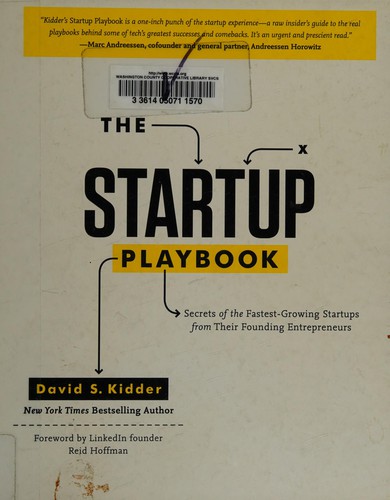
The Startup Playbook is David Kidder's collection of firsthand lessons from forty prominent founders, including Reid Hoffman, Sara Blakely, Kevin Plank, and Alexis Ohanian.
David S. Kidder · 2012 · 4h 15m
Full summary and key takeaways →The 12 questions
- 1.
The book covers forty founders with very different businesses. What patterns across their stories surprised you most?
- 2.
Almost every founder describes a near-death moment. What do you think separates the founders who survive those moments from the ones who don't?
- 3.
The founders are nearly unanimous that early employees shape culture more than founders can by intention. What does that suggest about how to hire your first ten people?
- 4.
Kidder presses each founder on what they wish they'd known earlier. Across the book, is there a consensus answer to that question?
- 5.
The book was published in 2012. How does the startup environment described by these founders compare to what you'd expect from a founder today?
- 6.
Several founders describe a crucial early customer or user who changed everything. Have you had a similar experience — someone who gave you feedback that reframed the whole problem?
- 7.
The pivot is a recurring theme. What distinguishes a necessary pivot from a loss of nerve or a distraction?
- 8.
Most founders describe underestimating the hiring challenge. If you've built or managed a team, what part of hiring was harder than you expected?
- 9.
Kidder is himself a serial entrepreneur. Does his framing of the interviews shape what you take from the stories? What might a different editor have drawn out instead?
- 10.
Failure is described as education throughout the book. Is there a risk in making that framing too comfortable — in treating failure as almost necessary rather than something to minimize?
- 11.
Which of the forty founders' stories stayed with you most, and why?
- 12.
If you were starting a company tomorrow, which one piece of advice from this book would you actually follow, and which would you consciously reject?
How to run the discussion
- Pick six to eight, not all of them. An hour of real discussion covers fewer questions than anyone expects, and racing the list is what makes a book club feel like homework.
- Open with what people noticed, not what they concluded. Asking for a verdict first hardens opinions before anyone has heard each other.
- Let the disagreement run. The questions below that split a room are the ones worth the time; the ones everyone answers the same way can be skipped.
- Ask the quiet person a specific question. A direct, narrow question is far easier to answer than an open invitation to contribute.
Themes worth steering toward
If the conversation stalls, these are the threads that usually restart it.
Common questions
What are good book club questions for The Startup Playbook?
Here are 12 book club questions for The Startup Playbook by David S. Kidder, ordered to open easily and end somewhere worth arguing about. The strongest openers ask what each reader noticed rather than what they concluded, and the discussion usually turns on entrepreneurship, startups, founder stories.
How long should a book club discussion of The Startup Playbook last?
Most groups run 60 to 90 minutes of actual discussion. That is roughly six to eight questions, not all of them, so pick the ones that suit your group rather than working down the list in order.
What are the main themes in The Startup Playbook?
Entrepreneurship, Startups, Founder stories, Leadership, Innovation. Those are the threads most likely to divide a room, which makes them the useful places to steer a discussion that has gone quiet.
Picking the next one? See books like The Startup Playbook or questions for other book club picks.
