Memoir · Book club
The Stranger in the Woods: The Extraordinary Story of the Last True Hermit book club questions
Here are 12 book club questions for The Stranger in the Woods: The Extraordinary Story of the Last True Hermit by Michael Finkel, ordered to open easily and end somewhere worth arguing about. Copy them, print them, or bring them up one at a time.
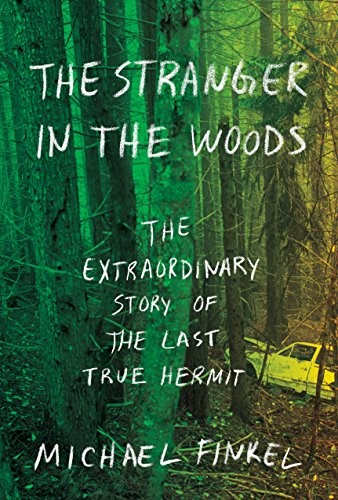
In 1986, a twenty-year-old named Christopher Knight drove into the woods of central Maine, abandoned his car, and walked into the forest.
Michael Finkel · 2017 · 4h 30m
Full summary and key takeaways →The 12 questions
- 1.
Knight walked away from society without trauma or manifesto. Is there a version of that impulse — however muted — that you recognize in yourself?
- 2.
Finkel raises the ethics of Knight's thefts directly. Can a life of radical solitude ever be morally clean if it depends on taking from others?
- 3.
The book surveys hermits across history, from religious recluses to Thoreau. What distinguishes chosen solitude from antisocial withdrawal?
- 4.
Knight reportedly did not feel lonely during his twenty-seven years. What does that suggest about the relationship between solitude and social need?
- 5.
If Knight had lived in a society that provided for him without requiring social participation, would his choice look different morally?
- 6.
Finkel is drawn to Knight in ways he admits he doesn't fully understand. What do you think the author is really looking for in telling this story?
- 7.
The locals near North Pond were both victims of Knight's thefts and, in some cases, quietly admirers of his accomplishment. How do you reconcile those two responses?
- 8.
Knight seems to lack regret about his years alone but expresses difficulty adjusting to jail and to human contact. What does that tell you about the nature of adaptation?
- 9.
Would Knight's story read differently if it were a woman who had done the same thing? What assumptions about gender shape how we receive accounts of radical solitude?
- 10.
Thoreau spent two years at Walden, then left. Knight spent twenty-seven, then was forced out. Does the length of the commitment change the meaning of it?
- 11.
After reading this book, did your sense of what constitutes a wasted life shift at all? Why or why not?
- 12.
What would you personally lose if you disappeared from society for a year? What might you discover?
How to run the discussion
- Pick six to eight, not all of them. An hour of real discussion covers fewer questions than anyone expects, and racing the list is what makes a book club feel like homework.
- Open with what people noticed, not what they concluded. Asking for a verdict first hardens opinions before anyone has heard each other.
- Let the disagreement run. The questions below that split a room are the ones worth the time; the ones everyone answers the same way can be skipped.
- Ask the quiet person a specific question. A direct, narrow question is far easier to answer than an open invitation to contribute.
Themes worth steering toward
If the conversation stalls, these are the threads that usually restart it.
Common questions
What are good book club questions for The Stranger in the Woods: The Extraordinary Story of the Last True Hermit?
Here are 12 book club questions for The Stranger in the Woods: The Extraordinary Story of the Last True Hermit by Michael Finkel, ordered to open easily and end somewhere worth arguing about. The strongest openers ask what each reader noticed rather than what they concluded, and the discussion usually turns on solitude, wilderness, identity.
How long should a book club discussion of The Stranger in the Woods: The Extraordinary Story of the Last True Hermit last?
Most groups run 60 to 90 minutes of actual discussion. That is roughly six to eight questions, not all of them, so pick the ones that suit your group rather than working down the list in order.
What are the main themes in The Stranger in the Woods: The Extraordinary Story of the Last True Hermit?
Solitude, Wilderness, Identity, Freedom, Society. Those are the threads most likely to divide a room, which makes them the useful places to steer a discussion that has gone quiet.
Picking the next one? See books like The Stranger in the Woods: The Extraordinary Story of the Last True Hermit or questions for other book club picks.
