Science · Book club
The Structure of Scientific Revolutions book club questions
Here are 12 book club questions for The Structure of Scientific Revolutions by Thomas S. Kuhn, ordered to open easily and end somewhere worth arguing about. Copy them, print them, or bring them up one at a time.
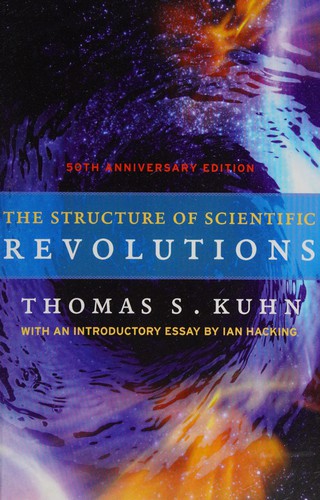
The Structure of Scientific Revolutions, first published in 1962, changed how historians, philosophers, and scientists think about how science advances.
Thomas S. Kuhn · 1962 · 5h 0m
Full summary and key takeaways →The 12 questions
- 1.
Kuhn distinguishes normal science from revolutionary science. Can you think of a field you know well where this distinction applies?
- 2.
He argues anomalies are initially ignored or explained away rather than treated as refutations. Is that a flaw in scientific practice or a reasonable feature of how communities manage uncertainty?
- 3.
What's an example of a paradigm shift from outside natural science — in medicine, economics, social science, or your own field — that fits Kuhn's pattern?
- 4.
The incommensurability thesis says scientists in different paradigms partly speak different languages. Does that explain anything about current scientific debates — for instance, over nutrition, economics, or AI?
- 5.
Kuhn's book was widely read as relativist even though he insisted it wasn't. Why do you think that reading took hold, and is there something in the text that invites it?
- 6.
He argues paradigm shifts are partly social processes. Does that make you more or less confident in scientific consensus, or does it depend on the field?
- 7.
Normal science solves puzzles within a framework without questioning the framework itself. Is that conservative approach valuable, or does it slow progress?
- 8.
Max Planck famously said science advances one funeral at a time, because old scientists don't change their minds — they just die. Is Kuhn's account compatible with that cynicism?
- 9.
Which of the historical examples — Copernican revolution, oxygen discovery, relativity — did you find most illuminating as an illustration of the theory?
- 10.
Kuhn's concept of paradigm has spread far beyond science into management, politics, and popular culture. Is that a useful generalization or a dilution of a precise idea?
- 11.
If you were a scientist in 1962 reading this book, would you find it threatening or liberating?
- 12.
What would it take for a paradigm shift to happen in a field that currently seems to have strong consensus — climate science, vaccine safety, or cosmology?
How to run the discussion
- Pick six to eight, not all of them. An hour of real discussion covers fewer questions than anyone expects, and racing the list is what makes a book club feel like homework.
- Open with what people noticed, not what they concluded. Asking for a verdict first hardens opinions before anyone has heard each other.
- Let the disagreement run. The questions below that split a room are the ones worth the time; the ones everyone answers the same way can be skipped.
- Ask the quiet person a specific question. A direct, narrow question is far easier to answer than an open invitation to contribute.
Themes worth steering toward
If the conversation stalls, these are the threads that usually restart it.
Common questions
What are good book club questions for The Structure of Scientific Revolutions?
Here are 12 book club questions for The Structure of Scientific Revolutions by Thomas S. Kuhn, ordered to open easily and end somewhere worth arguing about. The strongest openers ask what each reader noticed rather than what they concluded, and the discussion usually turns on paradigm shifts, scientific progress, philosophy of science.
How long should a book club discussion of The Structure of Scientific Revolutions last?
Most groups run 60 to 90 minutes of actual discussion. That is roughly six to eight questions, not all of them, so pick the ones that suit your group rather than working down the list in order.
What are the main themes in The Structure of Scientific Revolutions?
Paradigm shifts, Scientific progress, Philosophy of science, History of science, Epistemology. Those are the threads most likely to divide a room, which makes them the useful places to steer a discussion that has gone quiet.
Picking the next one? See books like The Structure of Scientific Revolutions or questions for other book club picks.
