Self-help · Book club
The Subtle Art of Not Giving a F*ck book club questions
Here are 12 book club questions for The Subtle Art of Not Giving a F*ck by Mark Manson, ordered to open easily and end somewhere worth arguing about. Copy them, print them, or bring them up one at a time.
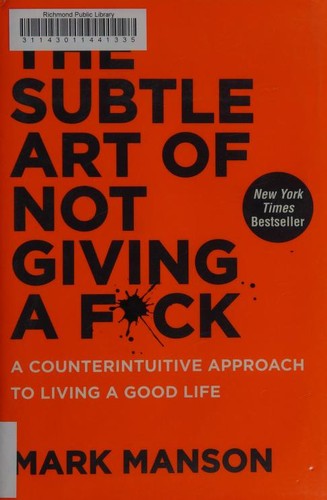
Mark Manson's argument is that the relentless pursuit of positivity is itself a source of misery.
Mark Manson · 2016 · 4h 15m
Full summary and key takeaways →The 12 questions
- 1.
Manson says we choose our problems by choosing our values. What problems are you currently living with, and what values do they point to?
- 2.
He distinguishes good values (process-based, internally controlled) from bad ones (outcome-based, dependent on others). Where in your own life do you hold a bad value that's causing predictable frustration?
- 3.
The book argues that the self-help industry makes people worse by constantly telling them to feel better. Do you think that's fair? Have you encountered self-help that made you more anxious rather than less?
- 4.
Manson claims that being ordinary is not a failure — that the pressure to be exceptional is itself a source of suffering. How much does the need to feel special shape your decisions?
- 5.
The 'do something' principle says you act first and motivation follows. Think of a time when you waited to feel ready before starting. What happened?
- 6.
He argues that you are always choosing what to give your attention to, even when it feels like the choice is being made for you. Where in your life do you feel like a passive recipient of your own circumstances?
- 7.
What would it mean in practice to take full responsibility for your emotional reactions — not blaming yourself, but also not outsourcing your response to what other people did?
- 8.
Manson has a chapter on the value of saying no. What are you currently tolerating — a commitment, a relationship, a standard — that you have quietly decided isn't worth the cost?
- 9.
He uses his own failed music career and early adulthood as examples. Does the personal, confessional style make the ideas more convincing for you, or does it make the book feel less rigorous?
- 10.
The chapter on death argues that confronting mortality clarifies what matters. Has a personal experience with loss or near-loss changed what you give your attention to?
- 11.
Manson argues that choosing a problem you're willing to struggle with is more important than pursuing happiness directly. What struggle are you currently choosing, and is it one you'd choose again?
- 12.
He credits the Stoics without much attribution. How much of this material felt genuinely new to you versus recognizable under a different style?
How to run the discussion
- Pick six to eight, not all of them. An hour of real discussion covers fewer questions than anyone expects, and racing the list is what makes a book club feel like homework.
- Open with what people noticed, not what they concluded. Asking for a verdict first hardens opinions before anyone has heard each other.
- Let the disagreement run. The questions below that split a room are the ones worth the time; the ones everyone answers the same way can be skipped.
- Ask the quiet person a specific question. A direct, narrow question is far easier to answer than an open invitation to contribute.
Themes worth steering toward
If the conversation stalls, these are the threads that usually restart it.
Common questions
What are good book club questions for The Subtle Art of Not Giving a F*ck?
Here are 12 book club questions for The Subtle Art of Not Giving a F*ck by Mark Manson, ordered to open easily and end somewhere worth arguing about. The strongest openers ask what each reader noticed rather than what they concluded, and the discussion usually turns on values, responsibility, acceptance.
How long should a book club discussion of The Subtle Art of Not Giving a F*ck last?
Most groups run 60 to 90 minutes of actual discussion. That is roughly six to eight questions, not all of them, so pick the ones that suit your group rather than working down the list in order.
What are the main themes in The Subtle Art of Not Giving a F*ck?
Values, Responsibility, Acceptance, Meaning, Resilience. Those are the threads most likely to divide a room, which makes them the useful places to steer a discussion that has gone quiet.
Picking the next one? See books like The Subtle Art of Not Giving a F*ck or questions for other book club picks.
