Thriller · Book club
The Talented Mr. Ripley book club questions
Here are 12 book club questions for The Talented Mr. Ripley by Patricia Highsmith, ordered to open easily and end somewhere worth arguing about. Copy them, print them, or bring them up one at a time.
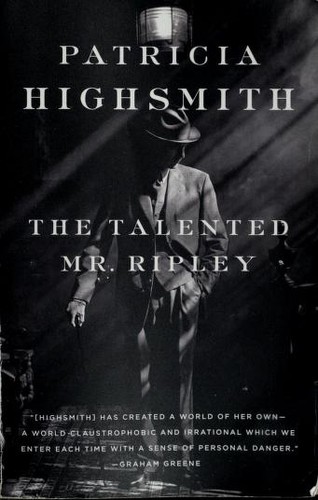
Tom Ripley is a small-time con man in New York, barely surviving on petty fraud, when a chance encounter leads a wealthy shipbuilder to hire him as an emissary: go to Italy, find my son Dickie, bring him home.
Patricia Highsmith · 1955 · 5h 15m
Full summary and key takeaways →The 12 questions
- 1.
Highsmith puts you inside Ripley's head for the entire novel. At what point, if ever, did you stop wanting him to get away?
- 2.
Ripley kills Dickie not out of rage but out of calculation — a practical solution to an acute problem. Does that make the act more or less disturbing than crimes of passion?
- 3.
The novel is set in postwar Italy among American expatriates with enough money to live without working. How does that world make Ripley's crimes possible — or does it actively invite them?
- 4.
Ripley's desire for Dickie is part envy, part imitation, and part something else. How did you read the homoeroticism, and does making it explicit change the novel?
- 5.
Compared to American Psycho or We Need to Talk About Kevin, which also use first-person antihero narration, does Highsmith earn her antihero more fully — or is the lack of explicit moral reckoning a cop-out?
- 6.
Ripley is aesthetically refined — he appreciates art, architecture, music. Does his genuine sensibility make him more or less disturbing as a killer?
- 7.
The novel ends with Ripley free and comfortable. Is that a critique of how wealth protects crime, a nihilist shrug, or something else?
- 8.
Freddie Miles and Herbert Greenleaf both get close to the truth. What stops them from finding it? Is it incompetence, or does Highsmith suggest something about how badly people want comfortable explanations?
- 9.
In Cold Blood (also 1955-era crime) treats its killers with sympathy and produces moral discomfort. Where does Highsmith's discomfort land differently from Capote's?
- 10.
Ripley has no stable identity. Is that a condition he was born with, or does Highsmith suggest it's something the class system creates in people left outside it?
- 11.
The Ripley series runs to five novels. Having read the first, do you want to keep following a character who will never change and never be punished?
- 12.
If the novel had ended with Ripley caught and convicted, would it be a better book — or would that ending be false to what Highsmith is arguing about the world?
How to run the discussion
- Pick six to eight, not all of them. An hour of real discussion covers fewer questions than anyone expects, and racing the list is what makes a book club feel like homework.
- Open with what people noticed, not what they concluded. Asking for a verdict first hardens opinions before anyone has heard each other.
- Let the disagreement run. The questions below that split a room are the ones worth the time; the ones everyone answers the same way can be skipped.
- Ask the quiet person a specific question. A direct, narrow question is far easier to answer than an open invitation to contribute.
Themes worth steering toward
If the conversation stalls, these are the threads that usually restart it.
Common questions
What are good book club questions for The Talented Mr. Ripley?
Here are 12 book club questions for The Talented Mr. Ripley by Patricia Highsmith, ordered to open easily and end somewhere worth arguing about. The strongest openers ask what each reader noticed rather than what they concluded, and the discussion usually turns on identity and reinvention, class anxiety, amorality and charm.
How long should a book club discussion of The Talented Mr. Ripley last?
Most groups run 60 to 90 minutes of actual discussion. That is roughly six to eight questions, not all of them, so pick the ones that suit your group rather than working down the list in order.
What are the main themes in The Talented Mr. Ripley?
Identity and reinvention, Class anxiety, Amorality and charm, Desire and imitation, Violence as solution. Those are the threads most likely to divide a room, which makes them the useful places to steer a discussion that has gone quiet.
Picking the next one? See books like The Talented Mr. Ripley or questions for other book club picks.
