Talk to The Tattooist of Auschwitz like its author wrote you back.
Get the ideas that fit your life — not generic summaries.
- Chat with the book
- Audiobook-style main ideas
- Adapts to your life and goals
- Helps you take action
What it argues
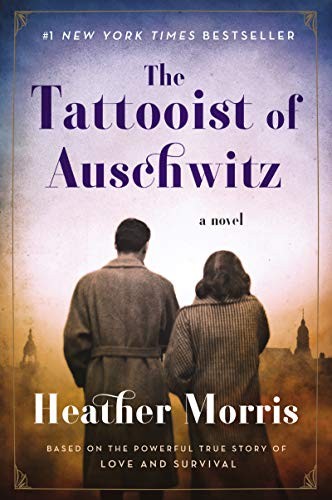
The Tattooist of Auschwitz is based on the true story of Ludwig (Lale) Sokolov, a Slovakian Jew who arrived at Auschwitz-Birkenau in 1942 and survived in part by becoming the camp's Tätowierer — the prisoner assigned to tattoo identification numbers onto incoming deportees. In that role, he moved more freely than most inmates, which brought access to food, barter goods, and eventually a young woman named Gita Furman, whose number he tattooed and whose survival became his purpose. The novel follows their story from deportation through liberation, and to their life together in postwar Bratislava and Australia.
The book is an act of testimony as much as fiction. Heather Morris, a New Zealand screenwriter, spent years interviewing Lale before his death in 2006 and originally developed his story as a screenplay. The novel form she ultimately chose is stripped-down and deliberately accessible — no literary ornamentation, plain declarative sentences, an almost screenplay-like focus on dialogue and action. This is a conscious choice: Morris wanted the story to be readable by the widest possible audience, and it succeeded commercially, selling over eight million copies.
What it gets right
- 1.
Lale's survival depended on accepting a role that implicated him in the system he was surviving — the novel refuses to present this as simple heroism and is better for it.
- 2.
Love as motivation under extremity is not sentimental here — it is strategic, goal-directed, and grounded in specific daily acts of care and risk.
- 3.
Morris's stripped-down prose is a deliberate choice to prioritize accessibility over literary texture; whether that trade-off is worth it will depend entirely on the reader.
What it covers
Who wrote it
Heather Morris is a New Zealand-born author and screenwriter who spent years working in Melbourne, Australia. She began developing The Tattooist of Auschwitz after meeting Ludwig (Lale) Sokolov in 2003 and recording his story over a period of three years before his death in 2006. Originally written as a screenplay, the story was redeveloped as a novel and published in 2018. It became an international bestseller, selling more than eight million copies and translated into over forty languages. Her follow-up novel, Cilka's Journey, continued the story of a character introduced in the first book.
