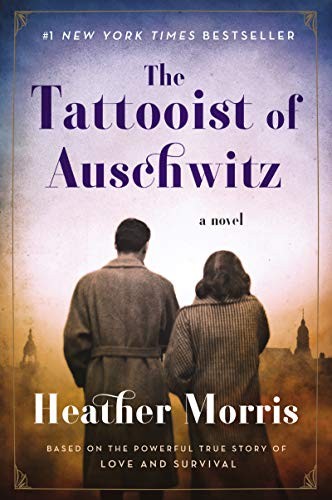
Talk to The Tattooist of Auschwitz like its author wrote you back.
Get the ideas that fit your life — not generic summaries.
- Chat with the book
- Audiobook-style main ideas
- Adapts to your life and goals
- Helps you take action
The Tattooist of Auschwitz, in detail
The Tattooist of Auschwitz is based on the true story of Ludwig (Lale) Sokolov, a Slovakian Jew who arrived at Auschwitz-Birkenau in 1942 and survived in part by becoming the camp's Tätowierer — the prisoner assigned to tattoo identification numbers onto incoming deportees. In that role, he moved more freely than most inmates, which brought access to food, barter goods, and eventually a young woman named Gita Furman, whose number he tattooed and whose survival became his purpose. The novel follows their story from deportation through liberation, and to their life together in postwar Bratislava and Australia.
The book is an act of testimony as much as fiction. Heather Morris, a New Zealand screenwriter, spent years interviewing Lale before his death in 2006 and originally developed his story as a screenplay. The novel form she ultimately chose is stripped-down and deliberately accessible — no literary ornamentation, plain declarative sentences, an almost screenplay-like focus on dialogue and action. This is a conscious choice: Morris wanted the story to be readable by the widest possible audience, and it succeeded commercially, selling over eight million copies.
The prose style is the book's most debated quality. Readers who come for the historical record find it thin on context; readers who come for the emotional arc find it immediate and affecting. Historians and scholars have noted that the novel takes liberties with the historical record — locations, timing, character identities — that go beyond what is typical for historical fiction. Morris acknowledged in interviews that she made composite characters and dramatized scenes she could not verify. The novel carries a caveat noting it is a work of fiction "inspired by" real events, though marketing positioned it closer to memoir.
If you read it as a love story set against the backdrop of the worst atrocity of the twentieth century, it works. Lale is a compelling protagonist — charming, morally compromised by his role, deeply pragmatic about survival, and genuinely committed to Gita. The novel does not shy away from the fact that his privileged position required him to participate, however minimally, in the machinery of the camps. Readers who want novelistic depth, historical rigor, or literary ambition should look elsewhere; readers who want a direct, emotional, quickly-absorbed account of two people surviving the unsurvivable will find this effective.
The big ideas
- 1.
Lale's survival depended on accepting a role that implicated him in the system he was surviving — the novel refuses to present this as simple heroism and is better for it.
- 2.
Love as motivation under extremity is not sentimental here — it is strategic, goal-directed, and grounded in specific daily acts of care and risk.
- 3.
Morris's stripped-down prose is a deliberate choice to prioritize accessibility over literary texture; whether that trade-off is worth it will depend entirely on the reader.
