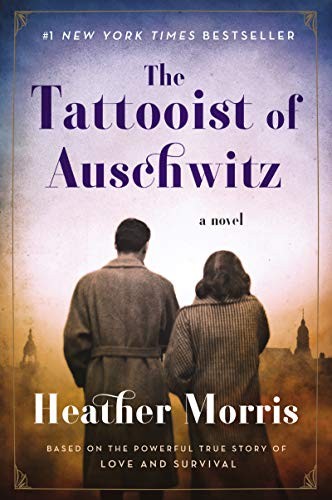
The Tattooist of Auschwitz by Heather Morris is a 2018 historical fiction book about survival, love under extremity, moral compromise. Lale's survival depended on accepting a role that implicated him in the system he was surviving — the novel refuses to present this as simple heroism and is better for it.
Summary
The Tattooist of Auschwitz is based on the true story of Ludwig (Lale) Sokolov, a Slovakian Jew who arrived at Auschwitz-Birkenau in 1942 and survived in part by becoming the camp's Tätowierer — the prisoner assigned to tattoo identification numbers onto incoming deportees. In that role, he moved more freely than most inmates, which brought access to food, barter goods, and eventually a young woman named Gita Furman, whose number he tattooed and whose survival became his purpose. The novel follows their story from deportation through liberation, and to their life together in postwar Bratislava and Australia.
The book is an act of testimony as much as fiction. Heather Morris, a New Zealand screenwriter, spent years interviewing Lale before his death in 2006 and originally developed his story as a screenplay. The novel form she ultimately chose is stripped-down and deliberately accessible — no literary ornamentation, plain declarative sentences, an almost screenplay-like focus on dialogue and action. This is a conscious choice: Morris wanted the story to be readable by the widest possible audience, and it succeeded commercially, selling over eight million copies.
The prose style is the book's most debated quality. Readers who come for the historical record find it thin on context; readers who come for the emotional arc find it immediate and affecting. Historians and scholars have noted that the novel takes liberties with the historical record — locations, timing, character identities — that go beyond what is typical for historical fiction. Morris acknowledged in interviews that she made composite characters and dramatized scenes she could not verify. The novel carries a caveat noting it is a work of fiction "inspired by" real events, though marketing positioned it closer to memoir.
If you read it as a love story set against the backdrop of the worst atrocity of the twentieth century, it works. Lale is a compelling protagonist — charming, morally compromised by his role, deeply pragmatic about survival, and genuinely committed to Gita. The novel does not shy away from the fact that his privileged position required him to participate, however minimally, in the machinery of the camps. Readers who want novelistic depth, historical rigor, or literary ambition should look elsewhere; readers who want a direct, emotional, quickly-absorbed account of two people surviving the unsurvivable will find this effective.
Talk to The Tattooist of Auschwitz like its author wrote you back.
Get the ideas that fit your life — not generic summaries.
- Chat with the book
- Audiobook-style main ideas
- Adapts to your life and goals
- Helps you take action
Key takeaways
- 1.
Lale's survival depended on accepting a role that implicated him in the system he was surviving — the novel refuses to present this as simple heroism and is better for it.
- 2.
Love as motivation under extremity is not sentimental here — it is strategic, goal-directed, and grounded in specific daily acts of care and risk.
- 3.
Morris's stripped-down prose is a deliberate choice to prioritize accessibility over literary texture; whether that trade-off is worth it will depend entirely on the reader.
- 4.
The novel demonstrates how quickly humans form community and meaning even in conditions designed to destroy both — Lale's network of barter and friendship is itself a form of resistance.
- 5.
Survival guilt is present but not foregrounded; Lale's postwar decades are marked by his need to bear witness, which ultimately produced Morris's interviews and this book.
- 6.
The book raises without fully resolving the question of where pragmatic collaboration ends and moral complicity begins — a question that applies to every prisoner who survived by being useful to the regime.
- 7.
Memory and its distortions shape the source material: Lale is an old man recounting events from sixty years earlier, and the novel implicitly acknowledges the limits of that record.
- 8.
The final chapters, set postwar, give the story its complete arc — showing that survival was only the beginning of a long life together, which is the point Lale most wanted Morris to convey.
Discussion questions
Use these on your own, with a book club, or as chat starters in Superbook. Book club version, ready to copy or print →
- 1.
Lale survived partly by becoming useful to the SS as the Tätowierer. Does his privileged position change how you see his heroism, his love story, or his survival?
- 2.
Morris made composite characters and dramatized unverifiable scenes. Where is the line between historical fiction and falsification of the historical record?
- 3.
The novel is told almost entirely from Lale's perspective. What do you think Gita's experience of the same events looked like — and why might Morris have stayed with Lale's viewpoint?
- 4.
Lale and Gita fall in love in the worst possible circumstances. Do you find that love story believable, or does the setting make it feel forced?
- 5.
How does The Tattooist of Auschwitz compare to Night by Elie Wiesel in terms of emotional impact, historical depth, and what each achieves as a piece of writing?
- 6.
The book was originally a screenplay. Do you feel that origin in the prose? What specifically reads as cinematic rather than literary?
- 7.
Lale bartered food and valuables to improve conditions for himself and others. Is that self-interest, altruism, or something the novel doesn't fully distinguish?
- 8.
Several characters help Lale without apparent self-interest — SS officers who look the other way, civilians who pass food. How does the novel handle moral complexity among the perpetrators?
- 9.
The novel sold over eight million copies and made Auschwitz's story accessible to readers who might not pick up more demanding accounts. Does commercial scale of Holocaust education justify narrative simplification?
- 10.
Lale wanted his story told, and he chose Morris to tell it. What does it mean for the author of a survivor's story to be a non-Jewish outsider? Does it matter?
- 11.
By the end of the novel, what has Lale paid for his survival? Is there an accounting the book presents explicitly or only implicitly?
- 12.
Scholars have criticized the historical inaccuracies. Did that affect your reading? Should readers approach this as fiction, memoir, or something else?
Themes
Frequently asked questions
-
Is The Tattooist of Auschwitz a true story?
It is based on the real story of Ludwig (Lale) Sokolov, who survived Auschwitz-Birkenau as the camp's tattooist and later told his story to Heather Morris. The novel takes significant liberties with documented history — composite characters, unverifiable dialogue, altered locations — and is best understood as historical fiction inspired by true events rather than memoir or biography.
-
Is The Tattooist of Auschwitz worth reading?
It depends on what you want from Holocaust literature. As an accessible, emotionally direct love story set in the camps, it works well. As historical fiction with literary depth or rigorous historical fidelity, it falls short. Most readers find it moving and fast to read; most historians find it oversimplified.
-
How difficult is The Tattooist of Auschwitz?
Very accessible. The prose is plain and undemanding, the chapters are short, and the story moves quickly. It reads more like a thriller than literary fiction. Most readers finish it in a day or two.
-
Is there a TV adaptation of The Tattooist of Auschwitz?
Yes. A six-episode miniseries was produced by Sky and Peacock in 2024, starring Harvey Keitel as the elderly Lale and Jonah Hauer-King as his younger self. The adaptation was generally well received.
-
Who shouldn't read this book?
Readers who want historically rigorous Holocaust literature, or who find simplified prose frustrating in the face of serious subject matter. For a more demanding account from a survivor, read Night by Elie Wiesel or Man's Search for Meaning by Viktor Frankl.
Similar books
Night
Elie Wiesel
The Hiding Place
Corrie ten Boom
Man's Search for Meaning
Viktor E. Frankl
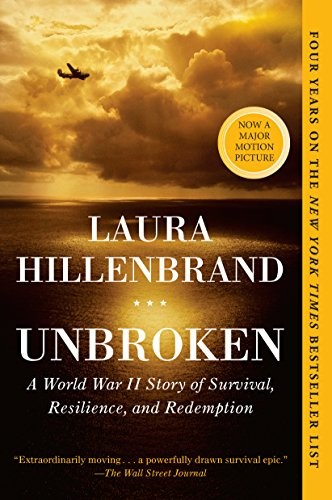
Unbroken: A World War II Story of Survival, Resilience, and Redemption
Laura Hillenbrand
