Science · Book club
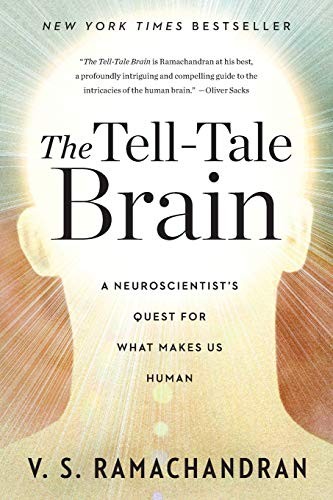
The Tell-Tale Brain: A Neuroscientist's Quest for What Makes Us Human book club questions
Here are 12 book club questions for The Tell-Tale Brain: A Neuroscientist's Quest for What Makes Us Human by V. S. Ramachandran, ordered to open easily and end somewhere worth arguing about. Copy them, print them, or bring them up one at a time.
The 12 questions
- 1.
Ramachandran's method is to use rare disorders to illuminate normal function. What does this approach assume about the relationship between the normal and the abnormal brain?
- 2.
The phantom limb and mirror box work suggests the brain runs an internal model of the body that can be updated. What other 'models' do you think the brain constructs that are similarly malleable?
- 3.
Capgras syndrome separates visual recognition from emotional resonance. Does this change how you understand what it means to recognize someone you love?
- 4.
Ramachandran is more speculative about mirror neurons than some of his peers. How do you evaluate science writing that mixes well-supported findings with more ambitious interpretations?
- 5.
The book argues that artistic sensibility, empathy, and language might all trace to specific neural architectures. Does a neurological explanation of these capacities diminish or enrich your understanding of them?
- 6.
Synesthesia is presented as an extreme version of something all brains do — cross-activate across sensory and conceptual domains. Do you notice any mild synesthetic tendencies in yourself?
- 7.
Ramachandran suggests consciousness is not a single faculty but a cluster of related processes. How does that view change how you think about questions like free will or personal identity?
- 8.
The book is enthusiastic and occasionally overreaches. How do you read popular science that blends certainty with speculation, and when does enthusiasm become a problem?
- 9.
Phantom limb pain is the brain maintaining an outdated map. What other outdated 'maps' — emotional or cognitive — do people maintain long after the territory has changed?
- 10.
The cases in the book involve people whose inner experience diverges radically from external reality. What does this tell you about the reliability of your own perceptions?
- 11.
Ramachandran speculates that mirror neurons enabled the cultural explosion of human prehistory. How much explanatory weight do you think a single neural mechanism can carry?
- 12.
What is the most interesting single case or finding in the book, and what does it suggest to you beyond what Ramachandran explicitly argues?
How to run the discussion
- Pick six to eight, not all of them. An hour of real discussion covers fewer questions than anyone expects, and racing the list is what makes a book club feel like homework.
- Open with what people noticed, not what they concluded. Asking for a verdict first hardens opinions before anyone has heard each other.
- Let the disagreement run. The questions below that split a room are the ones worth the time; the ones everyone answers the same way can be skipped.
- Ask the quiet person a specific question. A direct, narrow question is far easier to answer than an open invitation to contribute.
Themes worth steering toward
If the conversation stalls, these are the threads that usually restart it.
Common questions
What are good book club questions for The Tell-Tale Brain: A Neuroscientist's Quest for What Makes Us Human?
Here are 12 book club questions for The Tell-Tale Brain: A Neuroscientist's Quest for What Makes Us Human by V. S. Ramachandran, ordered to open easily and end somewhere worth arguing about. The strongest openers ask what each reader noticed rather than what they concluded, and the discussion usually turns on neuroscience, consciousness, perception.
How long should a book club discussion of The Tell-Tale Brain: A Neuroscientist's Quest for What Makes Us Human last?
Most groups run 60 to 90 minutes of actual discussion. That is roughly six to eight questions, not all of them, so pick the ones that suit your group rather than working down the list in order.
What are the main themes in The Tell-Tale Brain: A Neuroscientist's Quest for What Makes Us Human?
Neuroscience, Consciousness, Perception, Human nature, Brain disorders. Those are the threads most likely to divide a room, which makes them the useful places to steer a discussion that has gone quiet.
Picking the next one? See books like The Tell-Tale Brain: A Neuroscientist's Quest for What Makes Us Human or questions for other book club picks.
