Science · Book club
The Telomere Effect book club questions
Here are 12 book club questions for The Telomere Effect by Elizabeth Blackburn, ordered to open easily and end somewhere worth arguing about. Copy them, print them, or bring them up one at a time.
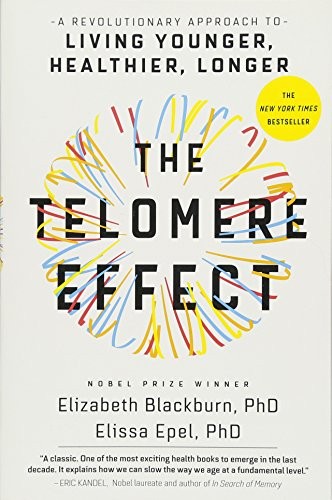
Elizabeth Blackburn shared the 2009 Nobel Prize in Physiology or Medicine for discovering telomerase, the enzyme that maintains and extends telomeres — the protective caps at the ends of chromosomes.
Elizabeth Blackburn · 2017 · 5h 30m
Full summary and key takeaways →The 12 questions
- 1.
Blackburn won the Nobel Prize for the basic science; the book is about translating that science into behavior change. Where do you find the translation most convincing and where does it feel like a stretch?
- 2.
The book suggests that how you appraise challenges — as threats versus opportunities — affects your cellular aging. How much agency do you feel you have over your default appraisal style?
- 3.
Childhood adversity produces telomere shortening that persists into adulthood. How does that finding change how you think about the long-term costs of adverse early environments?
- 4.
Rumination — repetitively processing negative events — is identified as a significant accelerant of telomere shortening. What practices have you found actually interrupt rumination, as opposed to just managing it temporarily?
- 5.
The book is co-written by a biologist and a psychologist. How does that collaboration shape the book's argument, and where do the two disciplines seem to strain against each other?
- 6.
Exercise has the strongest evidence for telomere maintenance. If that's true, why do you think it remains so difficult to maintain for most people despite being free and well-evidenced?
- 7.
The research on social connection and telomere length suggests that isolation accelerates aging at the cellular level. How does that reframe what loneliness costs?
- 8.
Blackburn and Epel are careful about what the research supports versus what it suggests. Where did you find yourself wanting stronger claims than they were willing to make?
- 9.
Purpose and meaning are associated with longer telomeres. How would you measure whether your current life provides enough of either?
- 10.
The book covers telomeres in the context of cancer, where uncontrolled telomerase activation allows tumor cells to become immortal. How does that dual role — telomerase as both protective and potentially dangerous — shape how you think about the research?
- 11.
What's one specific change to your stress response or daily routine that you think would have the largest impact on cellular aging based on what the book describes?
- 12.
The authors note that telomere length is associated with disease risk at the population level but is not a reliable individual diagnostic. What does that limitation say about how to use this science personally?
How to run the discussion
- Pick six to eight, not all of them. An hour of real discussion covers fewer questions than anyone expects, and racing the list is what makes a book club feel like homework.
- Open with what people noticed, not what they concluded. Asking for a verdict first hardens opinions before anyone has heard each other.
- Let the disagreement run. The questions below that split a room are the ones worth the time; the ones everyone answers the same way can be skipped.
- Ask the quiet person a specific question. A direct, narrow question is far easier to answer than an open invitation to contribute.
Themes worth steering toward
If the conversation stalls, these are the threads that usually restart it.
Common questions
What are good book club questions for The Telomere Effect?
Here are 12 book club questions for The Telomere Effect by Elizabeth Blackburn, ordered to open easily and end somewhere worth arguing about. The strongest openers ask what each reader noticed rather than what they concluded, and the discussion usually turns on aging, telomeres, cellular biology.
How long should a book club discussion of The Telomere Effect last?
Most groups run 60 to 90 minutes of actual discussion. That is roughly six to eight questions, not all of them, so pick the ones that suit your group rather than working down the list in order.
What are the main themes in The Telomere Effect?
Aging, Telomeres, Cellular biology, Stress, Longevity. Those are the threads most likely to divide a room, which makes them the useful places to steer a discussion that has gone quiet.
Picking the next one? See books like The Telomere Effect or questions for other book club picks.
