Religion & Spirituality · Book club
The Tibetan Book of Living and Dying book club questions
Here are 11 book club questions for The Tibetan Book of Living and Dying by Sogyal Rinpoche, ordered to open easily and end somewhere worth arguing about. Copy them, print them, or bring them up one at a time.
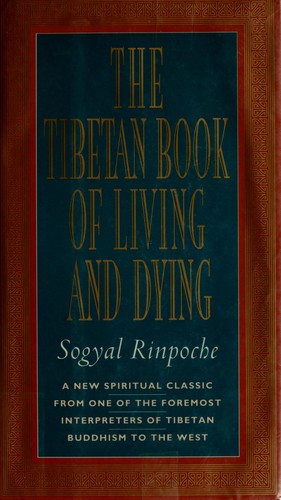
The Tibetan Book of Living and Dying is Sogyal Rinpoche's comprehensive introduction to the Tibetan Buddhist understanding of death and the dying process, written for a Western audience unfamiliar with the tradition.
Sogyal Rinpoche · 1992 · 10h 0m
Full summary and key takeaways →The 11 questions
- 1.
Sogyal argues that Western culture's denial of death prevents genuine living. Do you see that denial at work in your own life or environment?
- 2.
The teaching suggests that fully accepting impermanence changes your priorities. If you took impermanence seriously this week, what would change?
- 3.
The Tibetan understanding of death involves extensive spiritual preparation over a lifetime. Is that kind of preparation possible within a secular life, or does it require a religious framework?
- 4.
The book describes near-death experiences and their parallels to Tibetan teaching on the bardos. How do you evaluate that kind of cross-cultural convergence as evidence for the teaching?
- 5.
Sogyal gives practical guidance on supporting the dying. Has the book changed how you think about what you would want or what you would offer to someone at the end of life?
- 6.
The ground luminosity is described as pure consciousness arising at death. Is that a meaningful concept to you, or does it require more background in Buddhist metaphysics to evaluate?
- 7.
The idea that how we die reflects how we have lived is both comforting (it rewards a good life) and terrifying (it demands accountability). Which response do you have?
- 8.
Tibetan Buddhism preserves detailed maps of consciousness at death. Is that a feature of Tibetan wisdom, a cultural construction, or something in between?
- 9.
The book has been influential in hospice work. What does it offer to secular caregivers that conventional training might miss?
- 10.
If you knew you would die in six months, what would you do with the time? How does your answer compare to how you're actually living?
- 11.
The book treats death as the supreme teacher. Is there a less extreme version of that teaching available to someone who is not near death?
How to run the discussion
- Pick six to eight, not all of them. An hour of real discussion covers fewer questions than anyone expects, and racing the list is what makes a book club feel like homework.
- Open with what people noticed, not what they concluded. Asking for a verdict first hardens opinions before anyone has heard each other.
- Let the disagreement run. The questions below that split a room are the ones worth the time; the ones everyone answers the same way can be skipped.
- Ask the quiet person a specific question. A direct, narrow question is far easier to answer than an open invitation to contribute.
Themes worth steering toward
If the conversation stalls, these are the threads that usually restart it.
Common questions
What are good book club questions for The Tibetan Book of Living and Dying?
Here are 11 book club questions for The Tibetan Book of Living and Dying by Sogyal Rinpoche, ordered to open easily and end somewhere worth arguing about. The strongest openers ask what each reader noticed rather than what they concluded, and the discussion usually turns on death, impermanence, consciousness.
How long should a book club discussion of The Tibetan Book of Living and Dying last?
Most groups run 60 to 90 minutes of actual discussion. That is roughly six to eight questions, not all of them, so pick the ones that suit your group rather than working down the list in order.
What are the main themes in The Tibetan Book of Living and Dying?
Death, Impermanence, Consciousness, Compassion, Liberation. Those are the threads most likely to divide a room, which makes them the useful places to steer a discussion that has gone quiet.
Picking the next one? See books like The Tibetan Book of Living and Dying or questions for other book club picks.
