The Turn of the Key by Ruth Ware is a 2019 thriller book about technology and surveillance, unreliable narration, isolation. The smart-home conceit updates The Turn of the Screw's central ambiguity for the surveillance age: is the house haunted, or is the technology being deliberately weaponized against Rowan?
Summary
Rowan, a young nanny, writes a series of letters from prison to a solicitor she hopes will take her case. She insists she didn't do it — and she's been charged with the murder of one of the children in her care. The house where it happened is a converted Scottish manor that belongs to two successful architects who have filled it with smart-home technology: every light, lock, camera, and appliance controlled by an app. It was supposed to be the perfect job. It went badly wrong almost from the beginning.
The novel is Ruth Ware's reworking of Henry James's The Turn of the Screw — same isolated house, same governess narrator, same ambiguity about whether the threat is supernatural or psychological, same sense that the house itself is malevolent. Ware's updating is elegant: where James had ghosts, Ware has smart-home technology that behaves unexpectedly, doors that lock themselves, lights that come on in empty rooms, sounds from locked spaces. The ambiguity operates on the same frequency.
Ware is a reliable writer of high-concept domestic thrillers with confident structural control. The epistolary frame — letters from prison — means the reader knows from page one that something terrible happened; the tension is entirely about the how and why. The Scottish setting is deployed effectively: the isolation, the remoteness, the sense that help is far away, all do real atmospheric work. The children are credibly unsettling rather than cartoonishly supernatural.
The novel is more effective as a reading experience than as a puzzle. The mechanics of the reveal depend on a fairly conventional unreliable-narrator move, and attentive genre readers may see it coming. But Ware's real strength is atmosphere and pace, and both are good here. The house feels genuinely threatening, the claustrophobia accumulates, and the final third moves fast. For readers who want a smart-home gothic, this is close to the definitive version.
Talk to The Turn of the Key like its author wrote you back.
Get the ideas that fit your life — not generic summaries.
- Chat with the book
- Audiobook-style main ideas
- Adapts to your life and goals
- Helps you take action
Key takeaways
- 1.
The smart-home conceit updates The Turn of the Screw's central ambiguity for the surveillance age: is the house haunted, or is the technology being deliberately weaponized against Rowan?
- 2.
The epistolary frame (letters from prison) removes the question of whether Rowan survives and redirects all suspense toward the question of what she did and what actually happened.
- 3.
Rowan's class anxiety — she has lied about her qualifications to get the job — shapes everything she perceives about the family and the house, making her an unreliable observer in a structurally interesting way.
- 4.
Children who refuse to explain things, who know secrets they won't share, and who seem to be testing the narrator — Ware uses this dynamic from James and makes it work in a contemporary register.
- 5.
The Scottish isolation is functional, not decorative: it removes every safety valve and makes each escalation feel more consequential than it would in an urban setting.
- 6.
Technology here is neither neutral nor benign — the smart home's omniscience serves the paranoia of the plot in the same way the Victorian house's locked rooms served James's.
- 7.
Ware holds the line between supernatural and psychological ambiguity longer than most contemporary thrillers allow themselves to, which creates a specific kind of readerly discomfort.
- 8.
The reveal recontextualizes Rowan's reliability in ways that are fair but not telegraphed — it rewards re-reading without making the first read feel like a cheat.
Discussion questions
Use these on your own, with a book club, or as chat starters in Superbook. Book club version, ready to copy or print →
- 1.
Rowan lies about her qualifications before the story begins. Does that lie make her ultimately responsible for what happens, or is the novel more complicated about causation?
- 2.
The smart-home technology could be read as surveillance gone wrong, or as a ghost story in modern clothing. Which reading did you find yourself in, and did it shift?
- 3.
Ware is openly reworking The Turn of the Screw. Does knowing that enhance the reading experience or constrain it? Did the intertextuality feel like enrichment or like a structural cage?
- 4.
The children in the novel are credibly unsettling. What specifically makes them threatening — is it what they do, what they know, or the gap between how they present and what they seem to understand?
- 5.
The isolation of the Scottish setting is partly self-imposed by the employers' design philosophy. What does the novel suggest about the relationship between architectural aspiration and domestic danger?
- 6.
Rowan's class anxiety is visible in almost every scene where she interacts with the family's world. How does it shape her reliability as an observer — what does she see clearly and what does she miss?
- 7.
The letters-from-prison frame means we know Rowan is a charged suspect from page one. How does that foreknowledge shape your sympathy for her through the middle sections?
- 8.
The novel holds ambiguity about whether the threat is supernatural. By the end, does it fully resolve that ambiguity, or does some of it remain? Does the answer matter?
- 9.
What does the smart home represent in the novel beyond a plot mechanism — is it a comment on something about how we live now?
- 10.
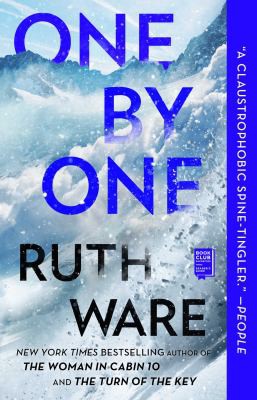
Compare this to The Woman in Cabin Ten, also by Ware. Which do you find more effective, and what accounts for the difference?
- 11.
The employer couple are largely absent from the house but omnipresent through technology. What does their specific form of absent authority do to the household?
- 12.
The ending provides legal resolution but emotional ambiguity. What do you think Rowan's life looks like a year after the events the letters describe?
Themes
Frequently asked questions
-
Do I need to read The Turn of the Screw to appreciate this?
No. The novel works independently. Knowing the James source adds an extra layer — you understand what the ambiguity is doing and can track where Ware diverges — but it's not required.
-
Is The Turn of the Key scary?
Atmospheric and unsettling rather than conventionally scary. The dread is slow-building and domestic rather than visceral. If you find locked houses, unreliable perceptions, and children who know things they shouldn't more unnerving than monsters, this will work on you.
-
How does it compare to Ware's other books?
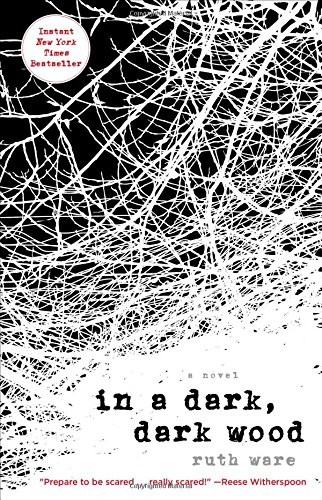
It's among her strongest. The smart-home conceit is more resonant than the cruise ship of The Woman in Cabin Ten, and the James intertextuality gives it an extra structural layer. In a Dark, Dark Wood is probably her most purely fun entry; this one is the most thematically ambitious.
-
Who shouldn't read this?
Readers who find unreliable narrators frustrating rather than interesting, or who want psychological depth beyond the genre's conventions. The character work is serviceable rather than deep.
-
Is there a twist?
Yes, and it's fairly executed. Experienced thriller readers may identify it earlier than the novel intends, but it doesn't cheat — the signals are in the text.