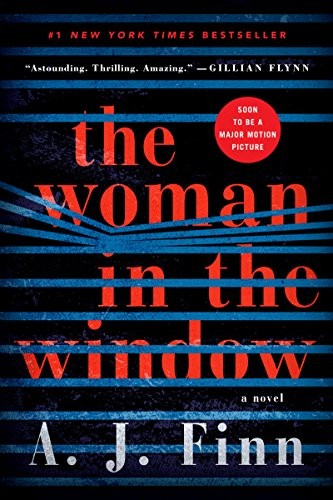
The Woman in the Window by A.J. Finn is a 2018 thriller book about agoraphobia and confinement, unreliable perception, voyeurism. Confined space as narrative engine: Anna's townhouse is both prison and observatory, and Finn uses the physical limits to control exactly what the reader can see.
Summary
Anna Fox is a child psychologist who hasn't left her Manhattan brownstone in ten months. She fills the days with old black-and-white films, wine she's not supposed to drink on her medication, and watching the neighbors through the lens of her camera. She knows their routines. She studies their windows. Then one night she witnesses what appears to be a violent crime across the park — and nobody believes her.
The book is fundamentally about the gap between what we see and what we know. Anna's agoraphobia isn't a simple plot device; it shapes what information the reader can trust. Her unreliable narration — blurred by alcohol, medication interactions, and the distortions of trauma — turns even the most basic observations into questions. Finn leans hard into the Rear Window tradition, but the psychological element runs deeper than Hitchcock ventured: Anna isn't just trapped in a chair, she's trapped in a mind that actively works against her.
Finn writes with visible craft and clear commercial instincts. The plot construction is tight, the misdirection is mostly earned, and the pacing accelerates convincingly in the final third. The novel wears its cinematic influences openly — not just Hitchcock but Gaslight, Wait Until Dark, and the whole postwar paranoid-woman genre — and does so affectionately rather than academically. The twist lands harder if you've been too comfortable trusting Anna's perspective, which most readers will have been.
This is a book that rewards fast reading. The prose isn't the point; the architecture is. Readers who want psychological depth and nuanced character work may find Anna's interiority thinner than they'd like. But readers looking for a tightly wound, propulsive thriller with a smart unreliable-narrator conceit will find it delivers what it promises. It's a beach read that takes itself seriously enough to justify the label "psychological thriller" rather than just "thriller."
Talk to The Woman in the Window like its author wrote you back.
Get the ideas that fit your life — not generic summaries.
- Chat with the book
- Audiobook-style main ideas
- Adapts to your life and goals
- Helps you take action
Key takeaways
- 1.
Confined space as narrative engine: Anna's townhouse is both prison and observatory, and Finn uses the physical limits to control exactly what the reader can see.
- 2.
Unreliable narration here isn't a parlor trick — it's structurally honest, because Anna's medication and alcohol create documented perceptual distortions the reader tracks in real time.
- 3.
The Rear Window template is updated by making the watcher herself the primary suspect: the novel questions whether surveillance reveals truth or projects it.
- 4.
Agoraphobia is rendered with enough specificity to function as more than metaphor — the panic responses and avoidance logic feel clinically grounded, not Gothic-atmospheric.
- 5.
The tension between Anna's professional expertise (reading people, assessing psychological states) and her own compromised perception creates a productive irony the book sustains throughout.
- 6.
The final reveal works partly because Finn has planted the pieces fairly — on re-reading, the clues are visible. This distinguishes it from thrillers that simply withhold information.
- 7.
The cinematic intertextuality — Anna watching old films while living in one — adds an extra layer: she's aware of the genre conventions even as she falls into them.
Discussion questions
Use these on your own, with a book club, or as chat starters in Superbook. Book club version, ready to copy or print →
- 1.
Anna is a trained psychologist who can't accurately perceive her own situation. Does the novel suggest her professional expertise is undermined by trauma, or was it always overconfident?
- 2.
How much of your trust in Anna's narration did you consciously calibrate as you read? At what point did you stop trusting her, and why?
- 3.
The book draws heavily on Hitchcock's Rear Window. What does having a female protagonist change about the voyeurism dynamic — is the reader implicated differently?
- 4.
Anna self-medicates with wine in ways she knows are dangerous. Is the novel sympathetic to that, or is it framing her as complicit in her own unreliability?
- 5.
The neighbors Anna watches are idealized before she really knows them. What does the book say about how we construct narratives around the people we observe from a distance?
- 6.
When Anna is finally believed, it comes late and partially. What does the novel suggest about how society receives testimony from women who are visibly mentally unwell?
- 7.
The twist recontextualizes several earlier scenes. Did you feel it was earned, or did it depend on information being withheld unfairly?
- 8.
Anna's relationship with her therapist is complicated throughout. How does the therapeutic relationship function in the novel — as genuine care, as plot mechanism, or as something murkier?
- 9.
The film Anna watches most obsessively is Gaslight. Is the novel commenting on that plot, reenacting it, or subverting it?
- 10.
How does the physical space of the house shape your reading of Anna's psychology? Would the novel work as well set somewhere more open?
- 11.
Finn builds most of the tension through dramatic irony — we suspect things before Anna does. At what point did that tension tip into frustration for you, if at all?
- 12.
The novel ends on a recovery note. Does that feel earned given what Anna has been through, or does it resolve too neatly?
Themes
Frequently asked questions
-
Is The Woman in the Window worth reading?
If you enjoy psychological thrillers with unreliable narrators, yes. It's one of the better-executed entries in the post-Gone Girl wave of the genre. The twist is genuinely surprising, the pacing is excellent, and the agoraphobia premise gives it a distinctive angle. If you've already read heavily in this subgenre you may find it familiar.
-
How does it compare to Gone Girl or The Girl on the Train?
It's tighter and more carefully constructed than The Girl on the Train, and closer in craft to Gone Girl, though less interested in dissecting marriage or gender dynamics. The Women in the Window is more of a pure thriller — the psychological element serves the plot rather than being the point in itself.
-
Is there a movie adaptation?
Yes. The Netflix film version starred Amy Adams and was released in 2021. The adaptation is serviceable but thinner than the novel — it loses much of the interiority that makes Anna's unreliability interesting on the page.
-
Who might not enjoy this book?
Readers who want literary depth, complex prose, or characters who exist beyond the demands of the plot will likely find it frustrating. The novel is built around architecture and misdirection, not psychological nuance for its own sake.
-
Does it have a satisfying ending?
The thriller plot resolves cleanly and the final reveal is earned. The emotional resolution — Anna beginning to recover — is present but not dwelt upon. Readers looking for a neat emotional bow may find it slightly abrupt; readers who just want the puzzle solved will be satisfied.
Similar books
In Cold Blood
Truman Capote
The Psychopath Test
Jon Ronson

The Gift of Fear: Survival Signals That Protect Us from Violence
Gavin de Becker
Thinking, Fast and Slow
Daniel Kahneman
